
Conservation of seagrass ecosystems – safeguarding food security and resilience in vulnerable coastal communities
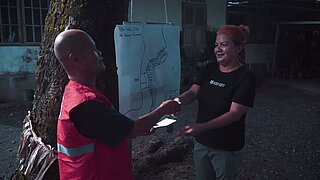
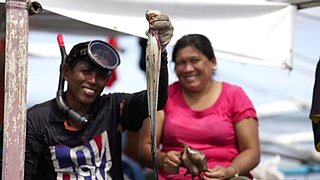
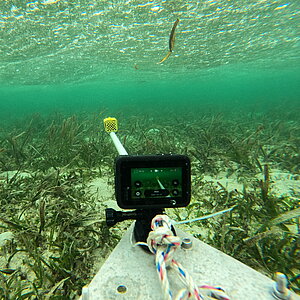
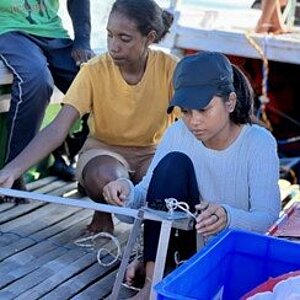
Seagrass is an essential food source for dugongs and other marine wildlife and provides key ecosystem services (e.g. fisheries productivity and carbon sequestration). Seagrass ecosystems are declining globally due to pressure from coastal development, fishing and boating, pollution and climate change. Information on the status of seagrass ecosystems and the services that they provide is lacking. The project contributes to reducing these knowledge gaps by engaging local NGOs and communities in the conservation of seagrass. NGOs are trained in participatory science to enable them to collect data and identify key seagrass areas. This information is then used to engage communities and decision makers in developing policies for seagrass conservation. In parallel, the project implements alternative business models in coastal communities to improve livelihoods and contribute funds for seagrass conservation. This enhances the sustainability of seagrass ecosystems in the Indo-Pacific.
- Countries
- India, Indonesia, Malaysia, Philippines, Thailand, Timor-Leste
- IKI funding
- 5,280,000.00 €
- Duration
- 01/2019 till 12/2026
- Status
- open
- Implementing organisation
- Secretariat of Convention on the Conservation of Migratory Species of Wild Animals (CMS) - Abu Dhabi
- Political Partner
-
- Department of Environment and Natural Resources (DENR) - Philippines
- Ministry of Commerce, Industry and Environment - Timor Leste
- Ministry of Environment, Forest and Climate Change (MoEFCC) - India
- Ministry of Marine Affairs and Fisheries - Indonesia
- Phuket Marine Biological Centre - Thailand
- Sea Turtle and Marine Endangered Species Research Centre - Malaysia
- Implementing Partner
-
- Blue Ventures
- Marine Research Foundation MARECET
State of implementation/results
- Key policy developments (2023–2026):
- Thailand:
- Integration of the Dugong and Seagrass Conservation Plan into the Trang Provincial Development Plan; designation of a 286 ha protected area on Koh Mook as well as expansion of protection measures (e.g. boating routes) and strengthening of local governance structures.
- Indonesia:
- Integration of seagrass data into marine spatial planning and inclusion in national climate policy (NDC 2025); update of national seagrass maps and development of further climate mitigation measures.
- Philippines:
- Integration of seagrass ecosystems into ECAN zoning in Palawan and strengthening of sustainable coastal management.
- Timor-Leste:
- Establishment of a 247 ha locally managed marine area (LMMA) in Hera based on Tara Bandu customary law.
- Malaysia:
- Revision of the national Dugong Action Plan as well as ongoing efforts to establish a protected area in Johor; discussions on accession to the Dugong MoU are ongoing.
- India:
- Delays in project activities due to parallel initiatives in Palk Bay, while at the same time identifying financing options for seagrass conservation (blue carbon).
- Collection of comprehensive datasets on seagrass distribution, biodiversity, carbon storage (blue carbon) and dugong populations across six countries; publication of a global dugong conservation status report (2025) as well as further studies and monitoring data as a basis for policy decisions.
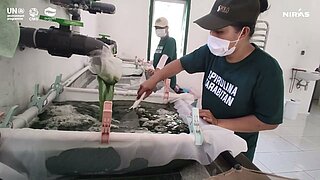
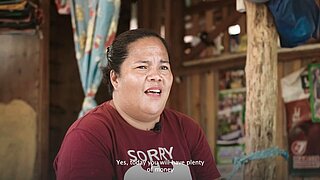
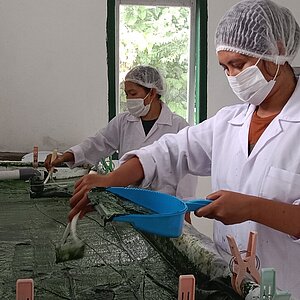
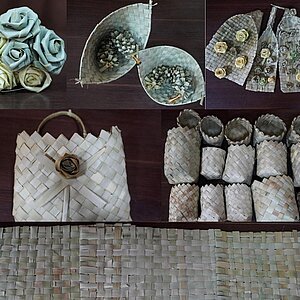
- Establishment of sustainable income sources with direct contributions to marine conservation, including ecotourism (Thailand), community homestays (Timor-Leste), spirulina production (Indonesia) as well as new livelihood models for coastal communities in India.
- Contributions to global processes, including events and publications within the framework of the IUCN World Conservation Congress 2025 as well as a side event at CMS COP15 (03/2026); strengthening of regional cooperation and knowledge exchange formats.
- Development and provision of training materials, videos and open knowledge resources on seagrass mapping, blue carbon and monitoring; participatory communication formats increase the visibility of seagrass ecosystems and their importance for climate and biodiversity protection.
- Information on the IKI complaints mechanism is available on the Dugong and Seagrass Hub project website (www.dugongseagrass.org ).
- Dedicated social media channels have been established for the website on
- Twitter (twitter.com/… )
- Instagram (www.instagram.com/… )
- Facebook (www.facebook.com/… ).
Project website:
Latest Update:
10/2026
Project relations
Legend:
The link has been copied to the clipboard