
Deforestation-free supply chains: Agroforestry systems for smallholders in cocoa cultivation
The cultivation of fine flavoured cocoa for export is one of the most important sources of income for small producers in Ecuador. However, not all smallholder cooperatives have adequate traceability systems or specialised knowledge of the EU Regulation on Deforestation Free Products (EUDR). This could lead to a loss of preferential access to the European market. The project contributes to the conservation of areas of high biodiversity value and to the creation and safeguarding of income for smallholder families. To this end, capacities are being built in four cooperatives to fulfil the requirements of the new regulation and to consolidate trade relations with buyers in the EU. In addition, agroforestry systems are being promoted and a system for vegetation and traceability is being developed. An appropriate multiplier effect is ensured through the integration of the project into the provincial coordination bodies for a sustainable cocoa supply chain.
- Countries
- Ecuador
- IKI funding
- 633,599.99 €
- Duration
- 11/2024 till 11/2027
- Status
- open
- Implementing organisation
- International Rural Development Service e.V. (ILD)
- Implementing Partner
-
- Ecuadorian Populorum Progressio Fund - FEPP
State of implementation/results
2025:
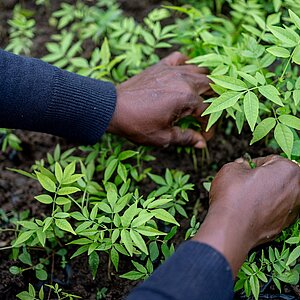
- The project continues the expansion of agroforestry systems in the provinces of Esmeraldas and Manabí. Two clonal gardens and five nurseries are operational and ensure the production of plant material for climate-adapted cocoa systems. Six demonstration farms serve as learning sites for training on sustainable cocoa management and agroforestry. In Esmeraldas, a mother garden has been partially established. In Manabí, key farms are used to select suitable species in terms of productivity, pest resistance, and site adaptation.
- Organisational analyses have been completed in all six producer organisations. On this basis, training and capacity-building plans have been developed and implemented, with a focus on the EU Deforestation Regulation (EUDR) and sustainable supply chains. In total, 357 farms covering 1,155.79 ha of cocoa area are registered. Initial results show progress in organisational development as well as increased participation of women in leadership structures (53%). Women’s and youth agendas were jointly developed with the organisations. In all organisations, young female and male promoters have been trained to act as local focal points. EUDR-related information and training formats have been delivered.
- Cocoa sales from the six producer organisations were consolidated. In parallel, technical coordination groups were established to bring together expert institutions and project partners and improve coordination between activities.
- The project launch in Quito brought together all six producer organisations as well as national and international partners. The event strengthened cooperation between producer organisations, state institutions and implementing partners and laid the foundation for further implementation.
Latest Update:
10/2026
Project relations
Legend:
The link has been copied to the clipboard