
Reach of educational and networking measures from IKI projects between 2015-2023
At a glance
received IKI support in capacity development through training or networking.
Based on the data reported for ‘SI 4 - Capacity People’.
Comparable to …
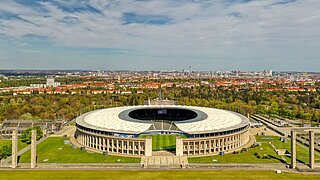
As a comparison, the number of people that the IKI supported through training or networking measures could fill Berlin’s Olympic Stadium four times over.
What is measured
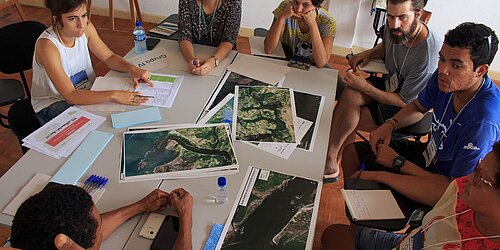
The IKI collects data on the reach of all training and networking activities for IKI projects that contribute to the development of personal or professional skills through SI 4 - Capacity People.
‘SI 4 - Capacity People’ definition: ‘Number of people directly supported by IKI projects through networking and training to address climate change and/or to conserve biodiversity.’
This includes participants in various training formats (e.g. study programs, massive open online courses, advanced training courses), as well as individuals who received on-the-job training or were able to establish professional networks with the support of the project. The indicator does not include individuals who passively receive information – for instance through newsletters – without participating in training, as well as attendees of events that do not focus on capacity development or address it only marginally (e.g. steering committee meetings).
Projects are also required to further break down their data by gender and type of stakeholder, and to provide additional information on the content of the skill development activities.
The details
Of all the standard indicators, SI 4 is the most frequently reported. So far, 99 projects have submitted plausible actual values. Most of these projects fall under the funding area ‘Mitigation of greenhouse gas emissions’, while the greatest reach has been achieved in the area of ‘Adaptation to the impacts of climate change’. The measures supporting capacity and/or network development are highly diverse, ranging from multi-year training programs to fostering networking through dialogue platforms. Compared to last year’s SI assessment, the actual value increased by over 150,000 people, bringing the total number of people reached to 306,781.
Plausible target and current values for ‘SI 4 - Capacity People’
In total, 99 projects reported on ‘SI 4 - Capacity People’.
Gender
The reporting projects provided information on gender for approximately half of the supported individuals. This is partly because the IKI prioritises handling personal data with sensitivity, especially in contexts with a higher risk of discrimination. 22 percent of the supported individuals identify themselves as women, while 0.1 percent identify themselves as non-binary.
‘SI 4 - Capacity People’ - Gender
Nearly the half of the 99 projects reporting on ‘SI 4 - Capacity People’ provided information on gender.
Groups of actors
The projects provided information on stakeholder groups for only 47 percent of the supported individuals. Private individuals and civil society represent the largest groups.
‘SI 4 - Capacity People’ - Group of actors
The 99 projects reporting on ‘SI 4 - Capacity People’ provided information on stakeholder groups for only 47 per cent of the people supported.
Project example: Transformative pathways – indigenous peoples and local communities leading and scaling up conservation and sustainable use of biodiversity

Philippines, and Thailand – in self-determined land and resource management, as well as in developing community-based monitoring systems to showcase results and successes. Three staff members were selected as part of the technical ad-hoc expert group for indicators under the CBD framework and participated in preparatory meetings.
By the end of 2023, the project had already supported 5,578 members of Indigenous Peoples and Local Communities (IPLC) through capacity-building activities, the majority of whom were private individuals. They participated in training sessions and other formats focused on sustainable management and biodiversity conservation.
The link has been copied to the clipboard