

Contributions of IKI projects to to the protection and sustainable use of ecosystems 2015–2024
At a glance
of land put under (improved) protection and/or sustainable use.
Based on the data reported for the standard indicators ‘SI 2 - Ecosystems’ and ‘Action Ecosystem’.
Comparable to …
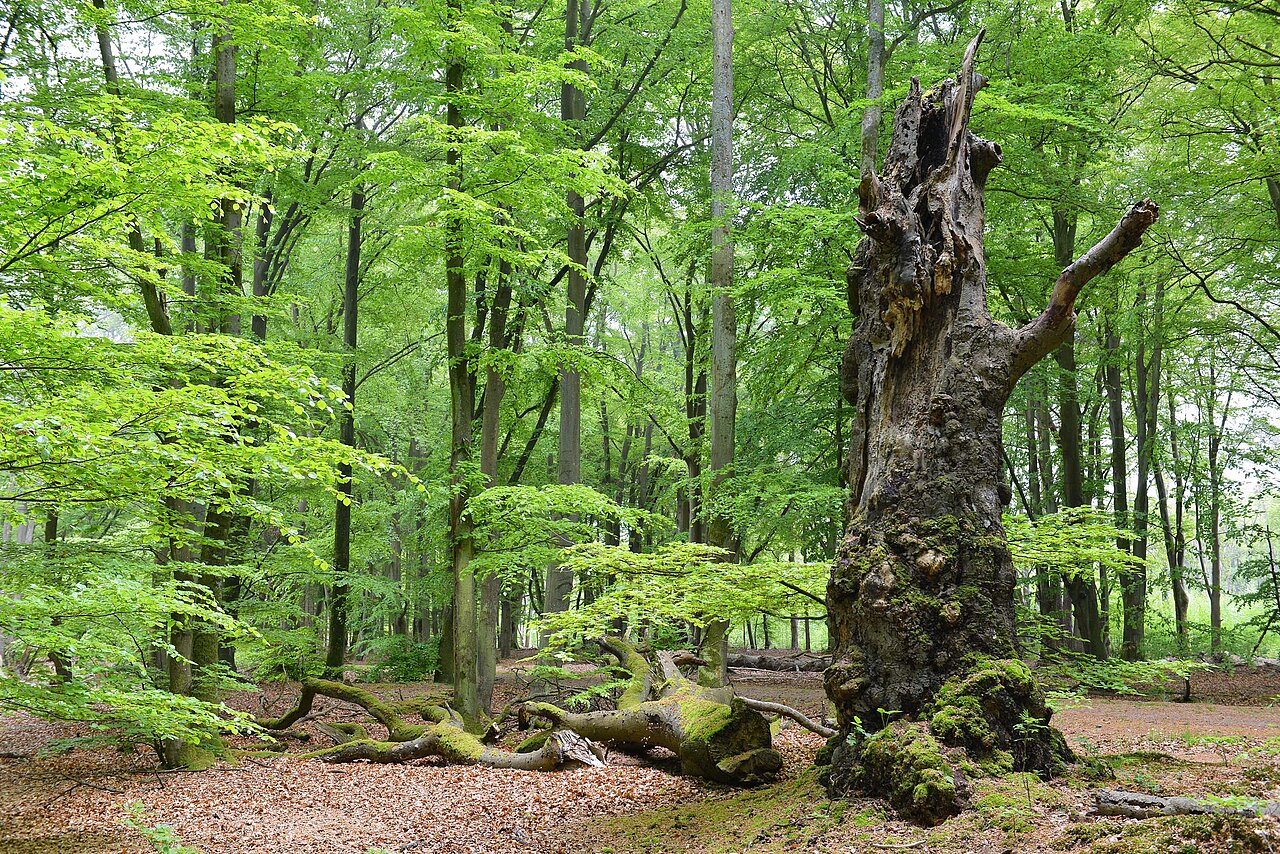
27.7 million hectares correspond to 77 per cent of Germany’s land mass. If the results were applied to the Federal Republic of Germany, three quarters would be protected or under sustainable use (source: World Bank).
What is measured
The IKI uses the ‘Action Ecosystems’ (AE) indicator and the new ‘SI 2 - Ecosystems’ indicator to identify ecosystems that have been improved and sustainably used thanks to the work of its projects. Ongoing IKI projects that submitted an interim report before 2022 and have not voluntarily switched to the new Standard Indicators report using the old AE indicator. All more recent IKI projects report using SI 2.
‘SI 2 - Ecosystems’: 'Area of ecosystems with improved conservation and sustainable use due to project measures (in hectares)’
‘Action Ecosystems’ definition: 'Area of ecosystems improved or protected by project measures (in hectares/kilometres of coastline)’
Both indicators measure positive effects on the qualitative state or use of ecosystems arising directly from project activities or project results. These include measures for the conservation of ecosystems and biodiversity as well as measures for the sustainable use of land and resources. Improvements also include IKI projects that were able to prevent the immediate deterioration of the ecosystem. The data is only recorded if the envisaged improvement is achieved. For example, only the area of an established conservation site counts – and not an area where plans for future conservation are being made.
The details
For the period from 2015 to 2024, 28 projects report plausible actual values for SI 2. Most of these projects fall under the funding areas ‘Adaptation to the impacts of climate change” and “Conservation of biological diversity’. The projects reporting on SI 2 placed a total of 4,019,097 hectares of ecosystem area under (improved) conservation and/or sustainable use in the period from 2015 to 2024. Compared to the previous year’s SI analysis, this indicator shows an increase of approx. 170,000 hectares. About 21 per cent of these areas are marine or coastal ecosystems, while the remaining hectares are terrestrial ecosystems.
Plausible current values for ‘SI 2 - Ecosystems’ Area of ecosystems with improved protection/sustainable use
A total of 28 projects reported on the area with improved conservation/sustainable use in the data for the Standard Indicator ‘SI 2 - Ecosystems’.
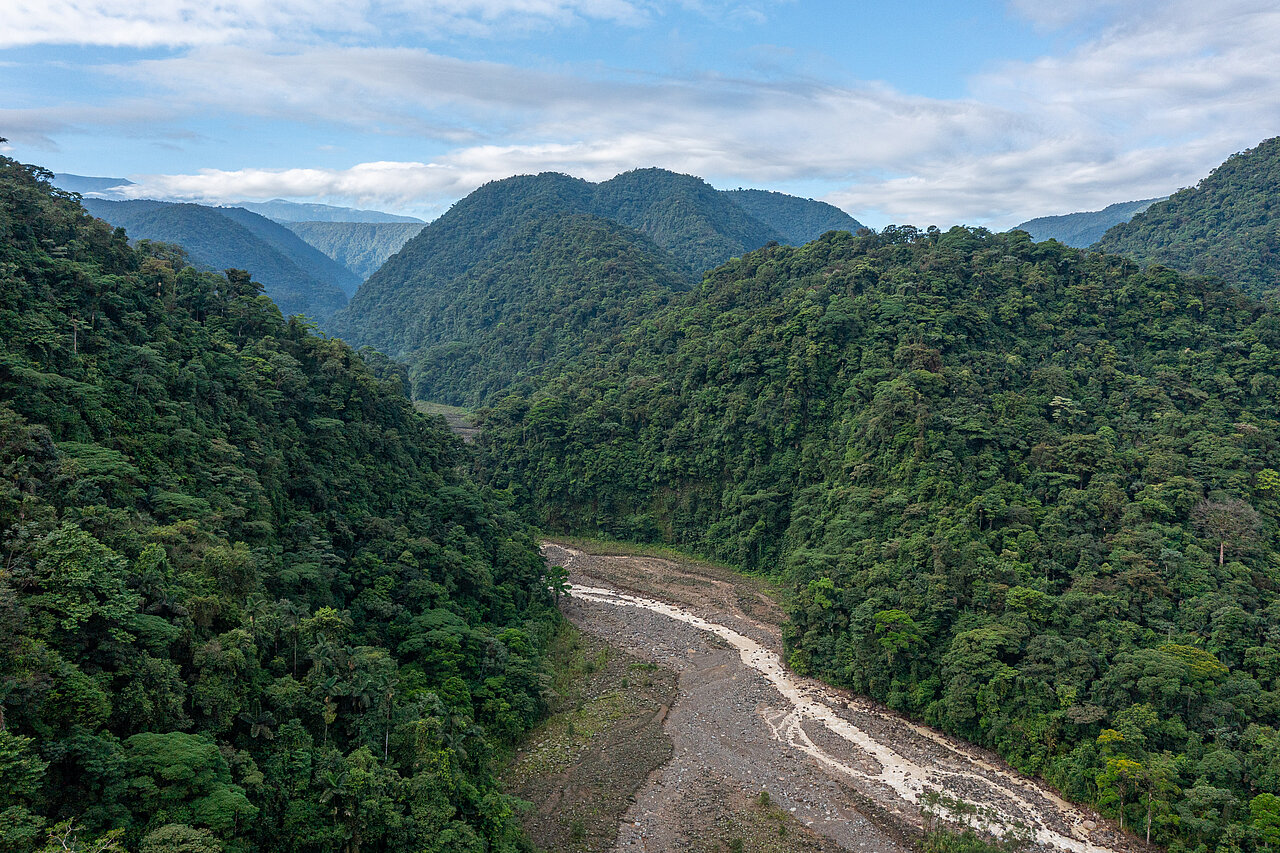
Type of ecosystem for ‘SI 2 - Ecosystems’
An additional 63 projects report plausible actual values for the AE Standard Indicator. Projects in the funding area ‘Conservation of biological diversity’ make up the majority of the actual values achieved. In total, the projects stated that they had placed 23,717,087 hectares of ecosystem area under (improved) conservation and/or sustainable use. Compared to the previous year’s SI analysis, this indicator shows an increase of approx. 480,000 hectares.
Plausible current values for ‘Action Ecosystems’ Area of ecosystems with improved conservation/sustainable use
A total of 63 projects reported on the area with improved conservation/sustainable use in the data for the standard indicator ‘Action Ecosystems’.
Aiming to allow the different types of conservation areas in countries and regions to be compared on an international scale, the International Union for the Conservation of Nature (IUCN) has published guidelines on management categories for conservation areas. They are used within the framework of international reporting obligations, in particular towards the Convention on Biological Diversity (CBD).
Half the IKI projects reporting on AE or SI 2 work in areas that fall under IUCN protected area types. These projects are most frequently active in national parks (category II), protected landscapes or seascapes (category V) and protected areas with sustainable use of natural resources (category VI).
More than 90 per cent of projects reporting on SI 2 or AE provide information on the type of improvement measures they conducted. IKI projects most commonly work on restoring ecosystems and improving the management of conservation and other areas. Reduced deforestation and reforestation also play a significant role.
Project contributions in IUCN protected areas
Information from a total of 42 projects reporting on the standard indicators ‘Action Ecosystems’ and ‘SI 2 - Ecosystems’. Multiple responses possible.
Project example: The restoration of Mexican mangrove forests creates opportunities for social development
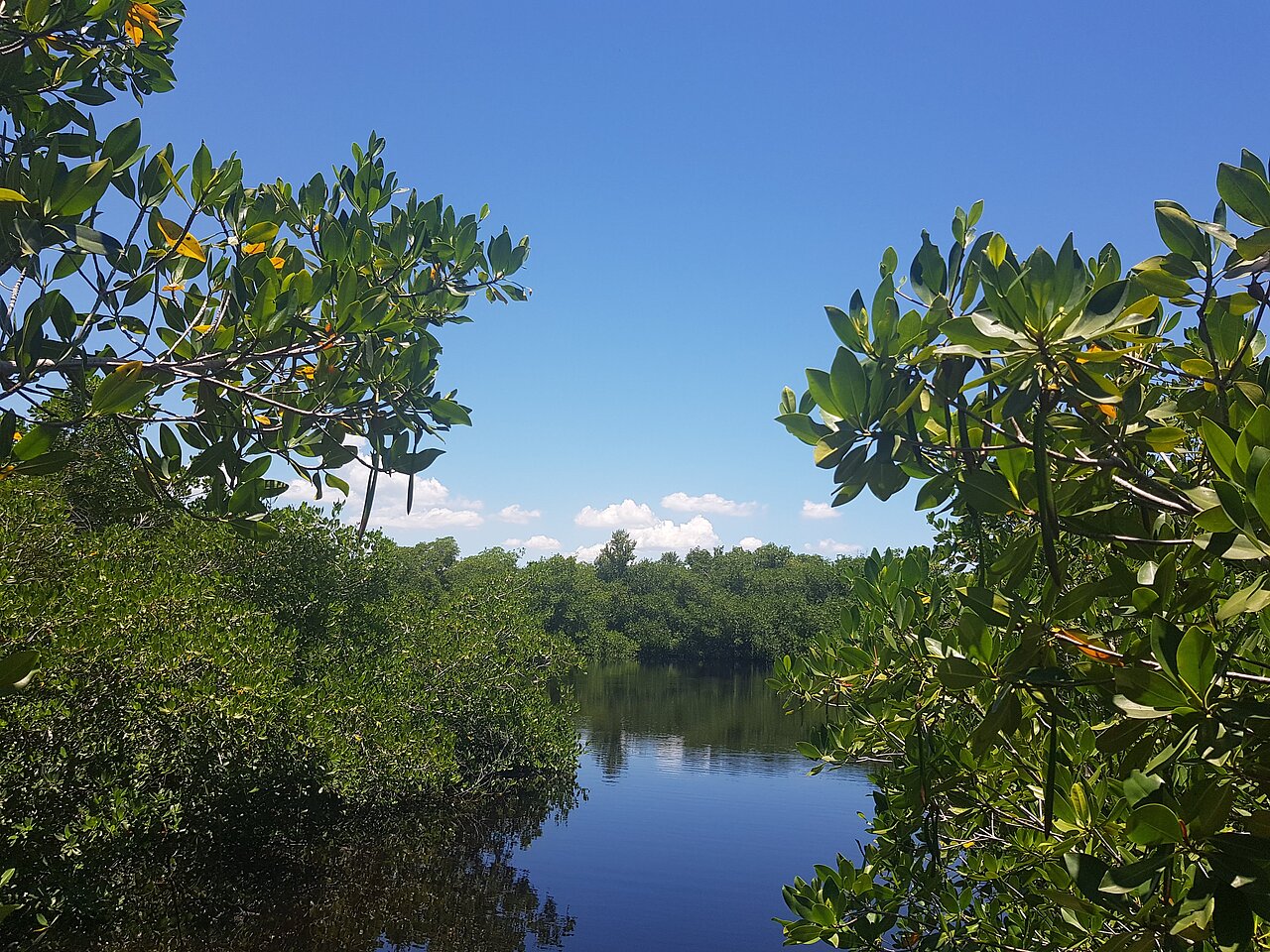
The project has developed a biodiversity monitoring system that can be used to generate data and reports in order to prepare guidelines for biodiversity conservation and mangrove management. To improve connectivity between ecological conservation/protected areas and strengthen the restoration process, more than 20.5 km of lagoon channels were made accessible, 1,000 m of fire barriers were installed, and more than 25 km of fences were built to protect conservation areas. A point of sale for mangrove honey has also been established in Mexico City.
By the end of the project in December 2021, the project measures had protected, sustainably managed or restored a total of 4,239.40 hectares of mangrove forests.
The link has been copied to the clipboard