
Capital leveraged by IKI projects 2015–2023

At a glance
in private finance mobilised for climate or biodiversity action by IKI projects.
Based on the data reported for ‘SI 5 - Leveraged Finance’.
in private finance catalysed for climate or biodiversity action by IKI projects.
Based on the data reported for ‘SI 5 - Leveraged Finance’.
in public finance mobilised for climate or biodiversity action by IKI projects.
Based on the data reported for ‘SI 5 - Leveraged Finance’.
in public finance catalysed for climate or biodiversity action by IKI projects.
Based on the data reported for ‘SI 5 - Leveraged Finance’.
What is measured
‘SI 5 - Leveraged Finance’ definition: ‘Volume of private and/or public finance leveraged for climate action or biodiversity purposes in EUR.’
The indicator distinguishes between public and private financing. Public financing includes all transactions from governments, bilateral donor organisations, multilateral development banks, and other multilateral organisations (including the Green Climate Fund, the Adaptation Fund, and the Global Environment Facility). Private financing tracks all transactions from private banks, companies, NGOs, foundations and private individuals.
Using the indicator ‘SI 5 - Leveraged Finance’, the IKI captures, among other things, parts of its contribution to international climate finance. Data on private sector mobilisation is particularly relevant for reporting on the new collective quantified goal for climate finance set by COP29, which aims to provide 300 billion US dollars annually from 2035 onwards to support climate action in developing countries.
In case of mobilisation, the funding mechanisms implemented by the projects directly leverage additional funds. This occurs, for example, when an IKI project utilises mechanisms such as the establishment of credit lines, the provision of guarantees, investments in multi-donor funds, or simple co-financing agreements. If these measures lead to further investments by additional stakeholders, these amounts are considered mobilised. To ensure international data comparability, IKI projects report all mobilised funds in accordance with the OECD-DAC mobilisation methods.
In the case of catalysation, the technical support provided by the projects indirectly leverages additional funding. For example, a project may offer feasibility studies, capacity development, or other technical services that make financial investments in climate action and biodiversity conservation more attractive and profitable. If such support leads to investments, IKI projects can report these funds as catalysed.
The details
Six projects, all from the funding area ‘Mitigation of greenhouse gas emissions’, have so far reported plausible actual values for capital mobilisation. The amount of public capital mobilised currently stands at 233.9 million euros, while private mobilisation has reached 372.5 million euros. This means that private mobilisation has increased by more than 127 million euros compared to the reporting period up to 2022.
Plausible current values for ‘SI 5 - Leveraged Finance’ Mobilised finance
In total, six projects reported on mobilised finance in the data on ‘SI 5 - Leveraged Finance’.
Compared to mobilised capital, the catalysed funds reported by 18 projects amount to 1.96 billion euros, which is twice as high. Unlike mobilised capital, the reported amounts cannot be fully attributed to the IKI. Instead, IKI projects have contributed to enabling these investments.
Plausible current values for ‘SI 5 - Leveraged Finance’ Catalysed Finance
In total, 18 projects reported on catalysed public finance in the data on ‘SI 5 - Leveraged Finance’
Project example: Climate Finance Partnership
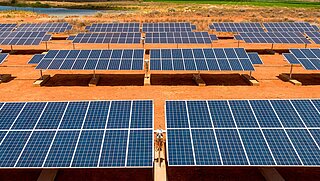
EMCAF is an umbrella fund designed to support fund managers in implementing commercially viable climate mitigation and adaptation projects. It operates globally across emerging and developing countries. Thematically, EMCAF focuses on investments in renewable energy and energy efficiency but also covers areas such as sustainable transport, forestry, land restoration, water supply, wastewater management, and the circular economy. In 2022, during Germany’s G7 Presidency, the G7 recognised EMCAF as a flagship project for international climate finance.
Through a blended finance model, EMCAF mobilises significant private capital by reducing risks for private investors in higher-risk sectors. At the umbrella fund level, IKI investments in the highest-risk tranche (First Loss) directly trigger private investments in the lower-risk tranche (Senior Tranche). Using this mechanism, the IKI has already mobilised 109.7 million euros in private capital. It is expected that EMCAF’s investments will generate even greater indirect leverage effects at downstream levels
Back to the overview page of the evaluation of the IKI Standard Indicators.
The link has been copied to the clipboard