

A new approach for rethinking climate-related loss and damage in the Pacific
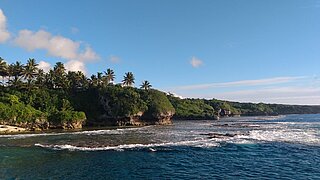
The IKI is developing innovative ways of recognising and responding to both economic and non-economic climate impacts.
Across the Pacific, the impacts of climate change are no longer a distant threat but a present and escalating reality. A new regional initiative seeks to change the way these losses are understood, measured, and addressed — especially those that are often invisible but deeply felt: the loss of culture, community cohesion, and spiritual connection to place.
A broader understanding of loss
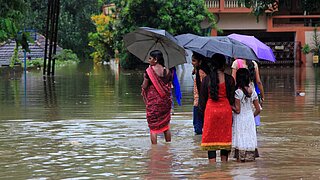
Historically, loss and damage assessments have concentrated on tangible impacts such as infrastructure damage or agricultural losses. But for Pacific communities, the consequences of climate change go far beyond the economic. Losing a burial site to erosion or being forced to abandon traditional fishing practices due to marine ecosystem changes can have profound cultural and psychological effects that defy monetary valuation.
This IKI-project addresses these overlooked dimensions by co-developing a practical, community-informed assessment framework that captures both economic and non-economic losses. Working with local stakeholders and national governments, the project team will help document and quantify losses that are often underreported or poorly understood, such as displacement from ancestral land, degradation of biodiversity, and erosion of cultural heritage.
Dr Christopher Bartlett, Head of Climate Strategy for the Ministry of Climate Change, Vanuatu, described how climate change impacts are affecting his home country:
“Communities across Vanuatu are already experiencing compounding, cascading, and intensifying climate risks — ranging from extreme events like cyclones, coastal flooding, and marine heatwaves, to slow onset hazards such as sea level rise and ocean acidification. Yet there is still limited understanding of how these risks interact over time and space, and how they result in irreversible losses, including of cultural heritage, biodiversity, health, and identity.”
Linking science and community voices
One innovative aspect of the project will be the use of downscaled climate hazard projections, tailored to the unique geographies of the participating countries. These projections, combined with local data on the limits of current adaptation practices, will be used to generate sector-specific loss and damage forecasts. These forecasts will provide decision-makers with robust, context-sensitive information to guide planning and investments.
By integrating community knowledge into the design of the assessment tools and projections, the project ensures that the lived experiences of climate impacts are reflected in national strategies. This is crucial for enhancing access to climate finance mechanisms such as the Loss and Damage Fund and other international support channels.
Strengthening national and regional capacities
The project aims to build capacity across multiple levels, from community organisations to government agencies, so that Pacific nations can independently assess and respond to climate-related losses.
Filomena Nelson, Climate Change Adaptation Adviser at IKI implementing organisation SPREP, sees this five-year project as a unique opportunity to deepen understanding of loss and damage while developing tools that can support vulnerable communities: “The long-term nature of the BOLD project enables us to invest in the critical relationships in each country as well as across the region. This will help us to develop resources that respond directly to local priorities and needs.”
Looking ahead
As the project gets underway, its impact will lie not just in new data or models, but in the affirmation that what Pacific communities value most, namely their land, culture, and sense of belonging, has a rightful place in climate policy and action.
“Vanuatu has identified a need for participatory tools and training on long-term loss and damage needs assessments so that this knowledge can be fed into national decision-making systems for planning and resource allocation,” concluded Dr Bartlett. “We look forward to the BOLD project helping us bridge these science-policy-practice gaps."
The link has been copied to the clipboard
Contact
IKI Office
Zukunft – Umwelt – Gesellschaft (ZUG) gGmbH
Stresemannstraße 69-71
10963 Berlin
Funding priority
IKI Strategy
The IKI aims to achieve maximum impact for the protection of the climate and biodiversity. To this end, it concentrates its funding activities on prioritised fields of action within the four funding areas. Another key element is close cooperation with selected partner countries, in particular with the IKI's priority countries.
About the project
The IKI-funded Building Our Loss and Damage Response (BOLD) project is led by the Secretariat of the Pacific Regional Environment Programme (SPREP) and Climate Analytics.