
Asia’s Transport Shift: From Vision to Implementation
Launched as a multi-country, multi-partner project – as part of the International Climate Initiative (IKI) – the NDC Transport Initiative for Asia (NDC-TIA) supports China, India, and Vietnam in decarbonising their transport systems in line with their Nationally Determined Contributions (NDCs).
Over the last few years, NDC-TIA has built deep partnerships, guided evidence-based policymaking, and helped shift the narrative from ambition to implementation. From helping to shape national EV policies to building local knowledge platforms, the initiative has done more than advise – it has enabled change.
The Challenge: Aligning Transport Policy with Climate Goals
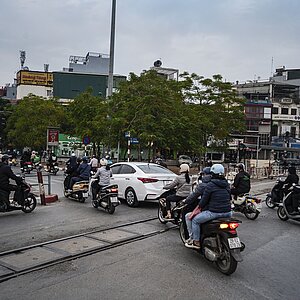
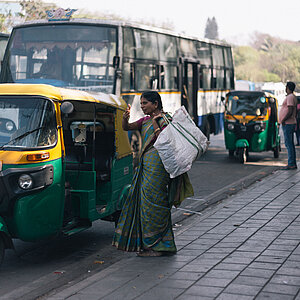
Transport emissions in Asia are growing rapidly, reaching a total of 25,129 million tonnes in 2021, driven by economic growth, urbanisation, and often a lack of up-to-date fuel economy and vehicle standards. Most countries lack coordinated strategies, the necessary tools and data, to effectively address these emissions.
In China, India, and Vietnam, the challenges are different, but government ministries and sector stakeholders often work independently, making it difficult to align goals and develop coherent strategies. Thus, the challenge is not only technical but also institutional, cross-cutting, and urgent.
The Response: Building Coalitions, Tools, and Policies

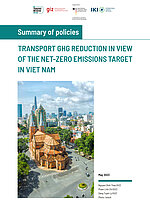
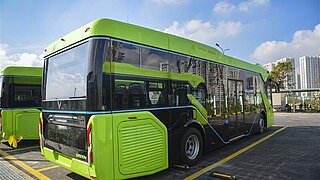
NDC-TIA’s core strength lies in its holistic, multi-stakeholder approach: implemented by a consortium of seven expert organizations, the project combined technical assistance with political dialogue to engage ministries, city governments, think tanks, and civil society. In India, the initiative supported the development of e-mobility policies and charging infrastructure. In China, it shaped vehicle emissions standards and strengthened local climate actions. And in Vietnam, it helped embed electric mobility into legislation while advancing greenhouse gas tracking and fuel economy standards.
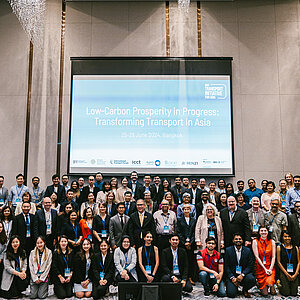
These country-specific efforts were linked through regional activities, including a major conference with 130 participants from 15 countries, the dissemination of 96 widely used knowledge products, and the “Women on the Move” mentoring network, which linked around 30 organisations across Asia – creating a cohesive platform for collaboration and knowledge exchange.
The Result: Systems Transformed, Ambitions Raised
NDC-TIA’s efforts have led to significant policy and institutional changes across the region. Four countries have adopted more ambitious transport targets, contributing to their NDCs, while five new transport mitigation actions have been launched in partner countries. For example, the project supported Ho Chi Minh City's first e-mobility action plan, which has since been integrated into the city’s master plan. Additionally, five long-term, multi-stakeholder processes focusing on transport decarbonisation were initiated.
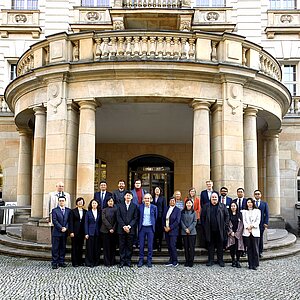
New national plans for electric vehicles and emission standards are now in place or underway. At the regional level, the project has accelerated progress by establishing the Council for Decarbonising Transport in Asia, which provides a shared vision for the region, and by facilitating knowledge exchange that has advanced regulatory development.
The Story Doesn’t End Here
As countries prepare their 2025 NDC submissions, the tools, platforms and partnerships established by NDC-TIA will continue to shape and drive transport strategies. This initiative has proven that decarbonizing transport is not only possible, it is already happening. From national ministries to local municipalities, systems are actively evolving. What started as a technical challenge has become a powerful story of collaboration, leadership and shared vision.
The way forward is clear: scale up this transformation, deepen regional cooperation, and ensure that no one is left behind in the transition to clean, accessible, and affordable mobility for all.
The link has been copied to the clipboard
Contact
IKI Office
Zukunft – Umwelt – Gesellschaft (ZUG) gGmbH
Stresemannstraße 69-71
10963 Berlin
More information
Funding priority

The IKI Strategy
The IKI aims to achieve maximum impact for the protection of the climate and biodiversity. To this end, it concentrates its funding activities on prioritised fields of action within the four funding areas. Another key element is close cooperation with selected partner countries, in particular with the IKI's priority countries.