
Caribbean Climate Adaptation Partnership Wins UN Award
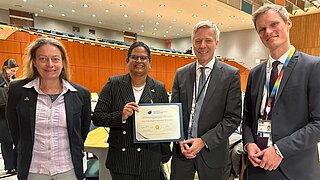
The EbA Facility, supported by the IKI, was recognised for its innovative approach to strengthening resilience through nature.
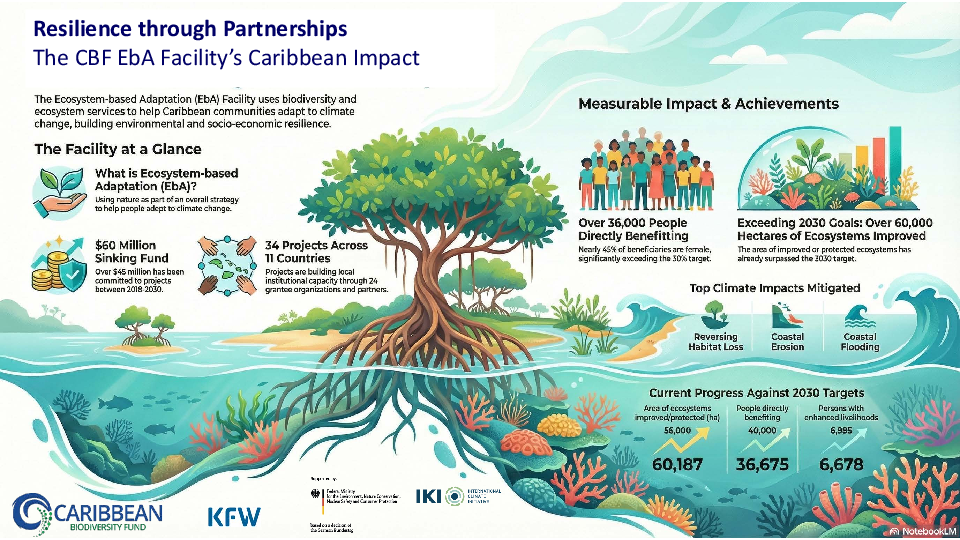
The Ecosystem-based Adaptation (EbA) Facility has won the 2025 United Nations Small Island Developing States (SIDS) Partnership Award in the Environmental category for its groundbreaking work in helping Caribbean communities adapt to climate change.
The EbA Facility was selected from partnerships worldwide for its measurable impact, innovation and potential for replication across small island developing states. It is supported by Germany’s International Climate Initiative (IKI) and implemented by KfW Development Bank in cooperation with the Caribbean Biodiversity Fund.
A Replicable Model
The UN SIDS Partnership Award recognises the EbA Facility not only for past achievements, but also as a replicable model for climate adaptation finance. Key success factors include:
- Local leadership combined with expert technical support
- Competitive funding mechanisms that drive innovation while building networks
- Long-term financing horizons (up to 2030) enabling strategic planning
- Co-financing requirements that leverage additional resources
- Systematic monitoring enabling learning and adaptive management
As small island developing states worldwide confront intensifying climate impacts, the EbA Facility offers a proven pathway to harness nature’s resilience, empower communities to lead, foster innovation through collaboration, and sustain long-term commitment to transformative change.
With a fifth call for proposals currently underway, the EbA Facility continues to expand its reach across the Caribbean, demonstrating that investing in nature is investing in resilient futures.
Nature-Based Solutions at Scale
Since 2016, the EbA Facility has committed over USD 45 million to 34 projects in 14 Caribbean countries, resulting in:
- Over 60,000 hectares of coastal and marine ecosystems improved or better protected
- More than 36,000 people directly benefiting, including over 16,000 women
- USD 6.4 million in co-financing leveraged from grantees
- Pioneering innovations in coral and mangrove rehabilitation
The facility demonstrates how strategic investment in ecosystem health can simultaneously address climate adaptation, biodiversity conservation and sustainable livelihoods—priorities at the heart of IKI’s mission.
Caribbean Innovation with Global Potential
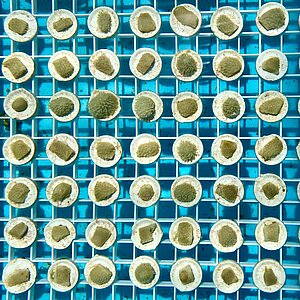
EbA Facility grantees are pioneering techniques that are reshaping Caribbean marine conservation. In the Dominican Republic, AI-assisted coral rearing facilities have been developed. Sexual coral reproduction methods have already been transferred from the Dominican Republic to Cuba through peer-to-peer learning, where partners created a national coral spawning calendar.
Jamaica is advancing cost-effective “silvicultural” approaches to coral mass propagation, while Eastern Caribbean teams are piloting “Assisted Gene Flow” models for exchanging coral genetic material to prevent local extinction.
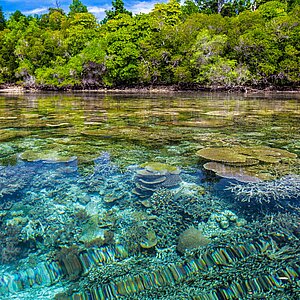
These innovations address a critical challenge, as Caribbean coral reefs have declined by over 50 per cent since the 1970s, undermining both biodiversity and the natural coastal protection upon which millions depend.
From Local Demonstration to National Scale
A project in Saint Lucia illustrates the facility’s approach to community engagement. Initial resistance to vetiver grass planting—due to fears that it would harbour venomous snakes—later transformed into widespread adoption through patient dialogue and demonstration.
When a technical manager from the national water company witnessed the technology’s effectiveness for riverbank stabilisation, he piloted it at a flood-prone reservoir. The company has since adopted vetiver systems at vulnerable infrastructure sites nationwide. This trajectory from scepticism to institutional scaling exemplifies the transformative potential of well-implemented, community-engaged adaptation.
Measuring Impact with IKI Indicators
The EbA Facility employs a comprehensive monitoring framework with 17 indicators, including three IKI action indicators:
- Action Ecosystems, where the area is improved or protected through project measures
- Action Mitigation, where greenhouse gas emissions are reduced or carbon stocks enhanced
- Action People, where the numbers of people are directly supported to adapt to climate change
Additional custom indicators measure further dimensions, including threats addressed, livelihoods enhanced and the integration of gender equality.
Knowledge Networks Amplifying Impact
Beyond individual projects, the EbA Facility has built lasting infrastructure for knowledge exchange:
- An EbA Network WhatsApp group connects 40 current and former grantees and their implementation partners
- The Caribbean Coral Health Forum includes 112 newsletter subscribers and 53 active practitioners exchanging technical information
- Regular webinars and field visits ensure that innovations developed in one location benefit communities across the region
The link has been copied to the clipboard
Contact
IKI Office
Zukunft – Umwelt – Gesellschaft (ZUG) gGmbH
Stresemannstraße 69-71
10963 Berlin