


“Youth personify hope”
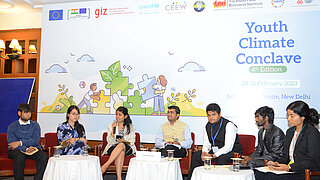
The fourth edition of the Youth Climate Conclave (YCC) was held in India in 2023. After the successful support of the IKI in the first years, it took place for the first time without direct IKI support This demonstrates how the IKI can catalyse innovative ideas and initiatives.
An interview with Dr Livleen K Kahlon, Senior Fellow & Associate Director, Environment Education and Awareness at TERI about the importance of youth in climate action.
What is the Youth Climate Conclave?
The Youth Climate Conclave (YCC) is an innovative, Climate Change Education (CCE) program and rests on twin principles of capacity building and competition. It is a collaborative idea conceptualized with support of like-minded partners in the year 2019.
The meaning of the famous phrase of Victor Hugo, the French poet, “Nothing is more powerful than an idea whose time has come” is well understood in context to the journey of Youth Climate Conclave. Since its establishment, there has been no looking back and the program has evolved into a much-awaited annual feature amongst the younger population. It is globally recognised that there is a dire need for citizen centric approaches to combat climate change, which can facilitate changes in behavior that resonate with eco-friendly lifestyles. Youth are harbingers of change and form a majority of the global population. Hence, we need to connect with the younger population and help them embark on a journey of learning about climate change, thereby bringing a paradigm shift in their behavior. We need to create both formal and non-formal integration of climate education into their learnings.
What is the goal of the YCC?
YCC focuses on channeling youth energy towards responsible thinking to drive transformative changes in our society. It falls within the United Nations Decade of Action (2020-2030), to deliver Sustainable Development Goals (SDGs) by 2030. The timing of YCC also coincides with India taking up the role of G20 presidency and popularization of mission LiFE (Lifestyle for Environment). Awareness about these developments, along with promotion of climate science and sustainable development are the key motivation for organization of the YCC in 2023. Along with enhancement of technical knowledge, this conclave also focused on strengthening 21st century skills amongst the youth. These include critical thinking, creativity, scientific understanding, communication, collaboration, multilingualism, problem solving, ethics, social responsibility and digital literacy. Participants of the conclave also draft a ‘Youth Pledge’ that is presented annually at the World Sustainable Development Summit.
Who can participate in the YCC?
School students in the age bracket of 13-18 years, undergraduate and post graduate students in the age bracket 19-25 years from recognized academic institutions. Also young professionals willing to voice their opinions and contribute towards a sustainable future are admitted.
Which topics were the focus in 2023? What was one of the main outcomes or key achievements of the YCC?
YCC 2023 focused on capacity building of youth on issues related with the science of climate change, and the global processes related to it, along with role of stakeholders in advancing climate change action and environmental sustainability.
Project YCC has evolved into a prestigious program that has seen several spin-offs since its inception in 2019. Key here are the presentation of the Youth Working Document at the Pre-COP 26 youth event in Milan, Italy, an in-person session on ‘Youth, Science and Climate Action’ organised in honor of a visit by Executive Vice-President Frans Timmermans from the European Green Deal, European Commission (EC) in October 2021 and a special Youth Plenary organized under TERI’s flagship global summit for 2022 and 2023.
Other milestones were an interactive session of youth with The president of the EC Ursula von der Leyen in April 2022 and the presentation of the project at Paris Peace Forum (2022). Each of these activities are important achievements of the YCC and they encourage us to work towards more of these opportunities.
From your point of view, why are the youth so important in the fight against climate change?
We are living in the age of Anthropocene, a term that defines a new planetary epoch, wherein humans are shaping bio-geophysical composition and processes of planet Earth. There is an overwhelming evidence that all Earth systems, which means the atmosphere, hydrosphere and lithosphere are greatly altered in the current epoch by anthropogenic activities. Youth make a majority proportion of world population. Hence, it is important to involve youth in climate action by investing in building awareness and providing them with opportunities to include their views in the respective decision making processes. They need to be oriented towards sustainability leadership roles through intensive training and imparting transversal skills. Equal opportunities to build competencies in young people need to be supported to integrate sustainability in thought and practice when they pursue any field and vocation in future.
What do the youth do differently from adults?
Youth personify hope. Youth are indeed harbingers of transformative changes through a re-aligned vision of innovation, change and diversity to minimize the impact of anthropogenic activities that contribute towards rising carbon emissions. Youth bring in a fresh perspective and their frank utterances will help to usher an era of opportunities towards transformations in realms of economic and social development. The current global governance model need a youth driven policy response that is tailored to specific local contexts and needs. With age as an asset, youth can dare to experiment and create new narratives to address environmental challenges. It is in this context that intergenerational dialogues have an important role to play, wherein pooling of experiences of elderly generations are balanced with a zeal and commitment of an energetic younger population.
What can climate policy makers learn from young people’s approaches?
It is the duty of policy makers to reflect the youths contribution and interests when designing policies that propel socio-economic growth. It is also important to embed practices that include youth voices and choice in global learning spaces. Policies need to be drafted that create a fresh and uninhibited perspective around roles, responsibilities, competencies and rights of youth to deliberate responsibilities of nations towards provision of climate change viewpoints.
Part of the YCC is also always a photo and video competition. What impresses you most about the submissions?
Each entry to the competition is an opportunity of learning. The impressive aspect is the unique perspectives related to sustainable lifestyles, climate justice, and low carbon emission pathways conveyed through these competitions. Enthusiastic participation of youth conveys a message that they care for their environment. As long as these conversation corridors are open and youth are able to bring in their views, there is hope. We need to sit back, and view these masterpieces of concern and commitment with an open mind to be able to charter an onward journey balanced on priorities, growth and success of our younger population.
The link has been copied to the clipboard
Contact
IKI Office
Zukunft – Umwelt – Gesellschaft (ZUG) gGmbH
Stresemannstraße 69-71
10963 Berlin
Interview partner
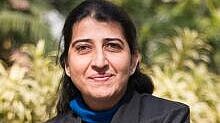
Dr Livleen K Kahlon, Senior Fellow & Associate Director, Environment Education and Awareness at TERI about the importance of youth in climate action.
YCC partners
Previous YCC were implemented under the project “Strategic Partnerships for the Implementation of the Paris Agreement (SPIPA)”, co-financed by the EU and the International Climate Initiative (IKI). TERI is one of the YCC partners.