
Forest Guardians: Indigenous communities protect Brazil's forests and the climate
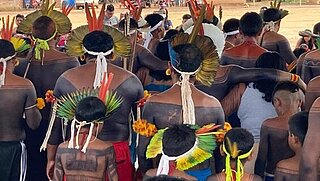
In the Cerrado region of Brazil, the IKI is strengthening indigenous peoples in two pilot areas. Monitoring, sustainable small-scale projects and the supporting of indigenous women contribute to the protection of territories, biodiversity and the climate.
Areas managed or inhabited by indigenous peoples often host a high degree of biodiversity, due to the fact that indigenous peoples habitually apply sustainable forms of farming that are in harmony with nature. They therefore make an important contribution to the conservation of biodiversity and climate change mitigation.
Protection against illegal encroachment as well as food security and reliable income opportunities are basic prerequisites for securing indigenous territories. This is where the IKI’s “Forest Guardians” project in Brazil begins.
The project strengthens the capacities of indigenous peoples in the pilot areas of Xerente/Funil and Urubu Branco with the aim of improving the monitoring of the territories. It also provides funding for small-scale projects promoting the sustainable use of natural resources in the areas. This maintains the rights of indigenous peoples in Brazil - and protects the forests at the same time - which in turn contributes to climate protection.
Participatory selection of pilot regions
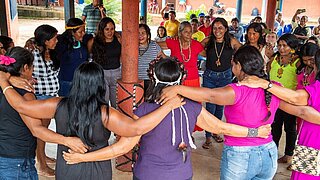
The selection of the project areas took place in several steps. The Brazilian partners MPI (Brazilian Ministry of Indigenous Peoples) and FUNAI (National Foundation for Indigenous Peoples) attached particular importance to strengthening the territories of indigenous peoples in the Cerrado region.
Focus on an important water catchment area
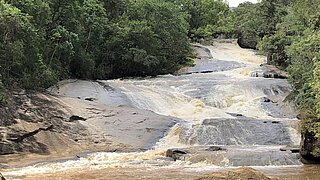
The Brazilian Cerrado region is a tropical savannah that is amongst the most important water catchment areas in South America. The region is ecologically valuable and plays an important role in climate change mitigation and the conservation of biodiversity, but: soy cultivation is constantly contributing to the destruction of the ecosystem and threatening the local habitats of the indigenous peoples.
Involving indigenous communities
After the Brazilian partners suggested cooperation with the indigenous territories of Xerente and Funil in the Brazilian state of Tocantins and Urubu Branco in the state of Mato Grosso, followed by several months of discussions and consultations with representatives of the territories. This ensured that the indigenous communities had all the necessary information regarding the objectives and activities of the project, thus enabling them to reach an informed decision in terms of their participation.
Meetings were held in both territories to present the project. Furthermore, representatives of the indigenous peoples, local indigenous organisations and indigenous women's collectives had the opportunity to formulate their priorities for the joint implementation of the project.
Planning project activities together
In September 2025, the time had come at last: representatives of the Brazilian partners MPI and FUNAI, national indigenous organisations and the indigenous territories of Xerente/Funil and Urubu Branco came together in a three-day workshop to jointly plan the first specific activities in the areas.
First project activities strengthen the participation of indigenous women
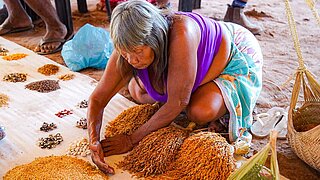
The project places special emphasis on encouraging the participation of indigenous women in local area monitoring collectives and small-scale socio-biodiversity projects that focus on the interrelationships between biological diversity and the diversity of sociocultural systems.
One of the initial project activities involved representatives from the pilot areas attending the first conference of indigenous women and the subsequent march in the capital city Brasília. Here, they networked with women from other indigenous territories and participated in debates with representatives of civil society organisations and state institutions.
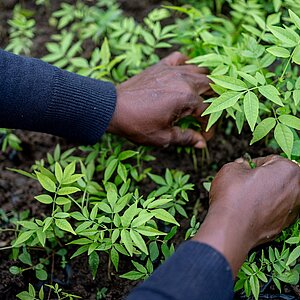
The participation of women from the project areas in an indigenous seed exchange market in the state of Tocantins additionally enabled them to exchange traditional types of seeds, which form an important basis for their own cultivation and food security in their territories, with other indigenous peoples.
Linking local activities with national policy
However, sustainable development of the territories is not possible without appropriate national policy framework conditions. That is the reason why the IKI’s “Forest Guardians” project is part of the initiative “Strengthening Technical and Institutional Capacities of Indigenous Peoples for Forest Protection in Brazil”, which is supported by the Federal Foreign Office and the Federal Ministry for Economic Cooperation and Development (BMZ).
The IKI project supports the implementation of the Brazilian Policy for Territorial and Environmental Management of Indigenous Lands (PNGATI) at a local level. At the same time, local learning experiences are being processed and included in decision-making and national policy processes as part of the “Indigenous Rights and Territories” sister project (BMZ).
Here, local activities and political consultation processes go hand in hand at a national level. For the strengthening of the Forest Guardians. For climate protection and the conservation of biodiversity.
The link has been copied to the clipboard
Contact
IKI Office
Zukunft – Umwelt – Gesellschaft (ZUG) gGmbH
Stresemannstraße 69-71
10963 Berlin