
German Year in Mexico – working together towards an energy transition
The democratisation of energy and climate policy in Mexico offers opportunities for sustainable development at a local level.
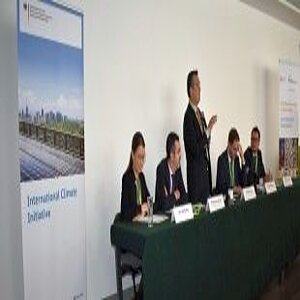
With the help of a recently passed energy transition law, Mexico aims to reduce its greenhouse gas emissions by 22 per cent by 2030. As part of the German Year in Mexico, representatives from both countries met at the beginning of March for a two-day workshop in Mexico City and discussed how to successfully implement and democratise the energy transition process.
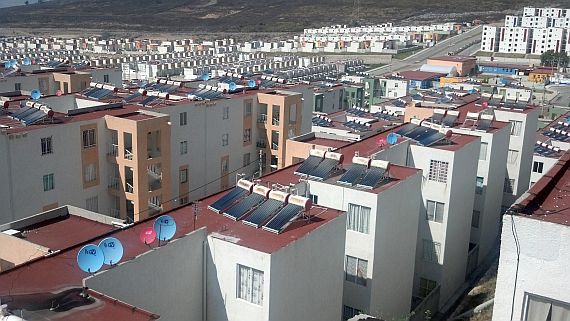
During the event, Germany presented its experience with its own energy transition, the diversity of actors involved, and citizen participation. Energy cooperatives are one of the more well-known forms of this participation. It was emphasised that factors such as supporting municipalities and boosting the local economy were major for the success of Germany’s energy transition. In addition, Mexican representatives from the public, private and academic sectors presented the legal framework for democratisation of their country’s energy transition. Participants also discussed interfaces and possibilities for local development. Representatives from Mexico City and the State of Sonora presented successful examples of the energy transition at federal, state and municipal level, and reported that conditions for using solar in Sonora were particularly favourable due to the average local solar irradiation and intensity.
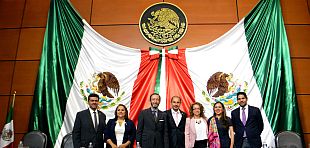
The workshop was organised by the Deutsche Gesellschaft für Internationale Zusammenarbeit (GIZ) GmbH together with the German Embassy and the Climate Commission of the Mexican Chamber of Deputies as part of the Mexico-Germany Climate Protection Alliance. The German Environment Ministry (BMUB) is funding this alliance as part of its International Climate Initiative (IKI). In the framework of this cooperation, the project advises the Mexican partners on issues such as options to reduce greenhouse gas emissions and on adaptation strategies to counteract the adverse effects of climate change.
The Mexican federal states and private sector are actively involved in drawing up, implementing and monitoring climate change measures. Policy and technical forums bolster the climate policy dialogue process and enable key federal, state and local actors to network and exchange ideas with umbrella organisations, non-governmental organisations and private companies.
The IKI project also focuses on promoting renewable energy and implementing nationally appropriate mitigation actions (NAMAs). In this area, energy efficiency measures were developed for small and medium-sized enterprises and freight transport. This will also help boost the Mexican economy’s competitiveness.
The workshop underlined the importance of including civil society in the transformation process to ensure measures are successful. In addition, participation of the private and public sectors is necessary to gain societal acceptance of the energy reform. Green technologies facilitate the decentralisation of the energy supply system and have great potential for fostering local added value chains and citizen participation. Over the course of the workshop, representatives from both countries demonstrated a strong willingness to work together on climate change and sustainable energy issues.
The link has been copied to the clipboard
Contact
IKI Office
Zukunft – Umwelt – Gesellschaft (ZUG) gGmbH
Stresemannstraße 69-71
10963 Berlin
![[Translate to English:] Hand in Hand gegen den Klimawandel](/legacy/Bilder/2017/171026_Hand_in_Hand_Thumbnail190x107.jpg)
Related Publications
-
 05/ 2022 | IKI Evaluation
Mexican-German Climate Change Alliance (Phase II)
German with executive summary in English (PDF, 1 MB)