

New blog provides information on sustainable transport in China
The Deutsche Gesellschaft für Internationale Zusammenarbeit (GIZ) GmbH has launched a new blog on sustainable transport. The blog presents news and provides information on events and current studies in four thematic areas.
Rapid urbanisation and economic growth in China have greatly accelerated the demand for mobility over the past two decades. As a result, fossil fuel consumption and the emission of greenhouse gases in the transport sector are increasing more quickly than in other sectors. Low emission transport solutions in China would not only significantly reduce greenhouse gases but also bring other advantages, such as improved air quality, less traffic and greater road safety.
In recognition of this, the Deutsche Gesellschaft für Internationale Zusammenarbeit (GIZ) GmbH has launched a new blog on sustainable transport at www.sustainabletransport.org (external). The blog presents interesting news, information on events and current studies in four thematic areas: transport and climate change, electro-mobility, green logistics and urban transport.
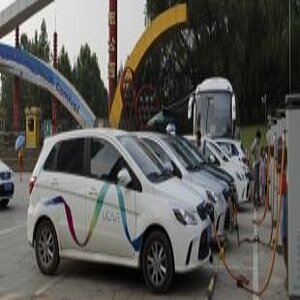
The International Climate Initiative (ICI) is currently supporting two sustainable transport projects in China. They are being implemented by GIZ and are aimed at expanding the use of electro-mobility and introducing measures for transport demand management in Beijing. A completed ICI project promoted the use of model environmental technologies to recover volatile hydrocarbons at petrol stations.
The link has been copied to the clipboard
Contact
IKI Office
Zukunft – Umwelt – Gesellschaft (ZUG) gGmbH
Stresemannstraße 69-71
10963 Berlin