

Supporting Climate Women Negotiators
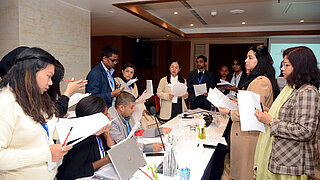
An IKI-funded project focuses on training women from the Least Developed Countries to engage effectively in negotiations around the UNFCCC.
The IKI-funded project “UNFCCC Capacity Building for Least Developed Countries” aims to equip the next generation of delegates from the Least Developed Countries (LDCs) with the knowledge, practical skills, and confidence they need to actively shape and influence critical decisions within the UN climate negotiations.
The project delivers regional training designed to enable participants to advocate effectively for ambitious climate action on behalf of their countries. The project places particular emphasis on women’s participation. With support from the IKI, nearly 100 women have already been trained, accounting for more than 60 per cent of all early-career negotiators supported.
Delivery through LDC expertise and partnerships
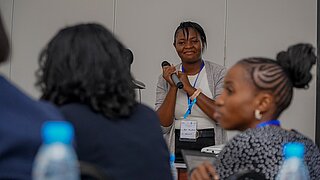
A central pillar of the IKI-funded project is its regional workshop programme, designed to strengthen the meaningful participation and leadership of women from LDCs in the UN climate negotiations. Immersive three-day trainings bring together delegates from Francophone Africa and Anglophone Africa and from Asia and the Pacific region respectively to deepen their understanding of key negotiation issues and develop practical skills through interactive simulations. Recognising the persistent underrepresentation of women in climate negotiations, the project actively encourages countries to nominate female delegates and commit to ensuring that each cohort comprises at least 50 per cent women.
The regional workshops are co-designed and delivered by experienced LDC negotiators and project partners. The project also works closely with the Chair of the LDC negotiating group to ensure alignment with group priorities and negotiating strategies.
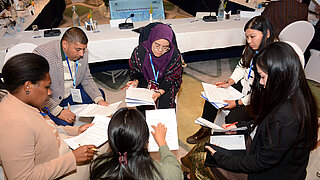
Early-career delegates from Least Developed Countries (LDCs) take part in realistic UNFCCC mock negotiation sessions, receive tailored guidance from experienced LDC negotiators and legal experts, and build supportive peer networks that extend beyond the workshops themselves.
Alumni of training programmes contribute their thematic expertise and practical experience, demonstrating the project’s peer-to-peer model and helping to ensure long-term sustainability. Showcasing women alumni as role models and technical leaders further reinforces visible pathways for women’s progression within the negotiations process.
Participants are also invited to join training sessions convened in advance of the mid-year UN climate talks in Bonn and the annual UN Climate Conference (COP). Engagement and tailored support continue throughout these meetings through daily check-ins, creating space for reflection and peer learning as part of a holistic package of support.
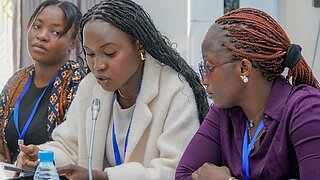
Why supporting LDC women negotiators is critical
This way, the IKI-project addresses two challenges at once: With limited financial resources, the LDCs often struggle to make their voices heard in the UN climate negotiations, despite being among the most vulnerable to the impacts of climate change. New delegates frequently attend their first sessions with little prior exposure to the complexity and procedural demands of the negotiations process.
The persistent underrepresentation of women in the climate negotiations is also well documented. Despite growing calls for gender equity, participation remains heavily skewed towards men. Fewer than one third of delegates at the 2024 negotiations in Azerbaijan (COP29) were women. More granular data further indicates that, even when women are included in national delegations, speaking time and decision-making roles are still predominantly occupied by men.
These disparities carry significant consequences. The perspectives of women from LDCs are vital to the negotiations. In many contexts, women maintain close links to local ecosystems through their professional and domestic responsibilities and are often among those most immediately and severely affected by climate change. By equipping early-career women from LDCs with the skills, confidence and visibility required to contribute meaningfully, the project helps to rebalance who influences global climate decision-making. In doing so, it supports the development of more inclusive, representative and responsive climate policies.
Looking ahead: a lasting approach to women’s leadership in climate diplomacy
The 2026 programme will deliver two regional training workshops. The first will convene negotiators from across Anglophone and Francophone Africa in preparation for the mid-year UN climate meetings in Bonn. The second will bring together delegates from Asia and the Pacific ahead of COP31. Each workshop will prioritise support for early-career women delegates from Least Developed Countries (LDCs).
By training delegations from these regions annually and working alongside long-standing implementing partners, the programme provides consistent support to new women delegates and creates space for transformative capacity development, enabling meaningful and sustained participation in the UNFCCC process.
The benefits extend well beyond the workshops themselves. Participants carry forward the skills, knowledge and professional networks they have developed as they assume greater responsibilities and grow into leadership roles within the LDC Group. In turn, they share their experience with peers, introduce new voices and help ensure that the group remains active, technically strong and representative. Intergenerational exchange continues to reinforce the group’s effectiveness, with each cohort building on the foundations laid by its predecessors.
In this way, a new generation of women climate negotiators from LDCs is stepping forward — equipped, connected and ready to lead.
The link has been copied to the clipboard
Contact
IKI Office
Zukunft – Umwelt – Gesellschaft (ZUG) gGmbH
Stresemannstraße 69-71
10963 Berlin
Gender in the IKI

Achieving gender justice is is a key factor for the IKI, because the potential of all those involved should be harnessed and contribute to improved climate action and biodiversity conservation.