


Fighting the desert with sustainable farming
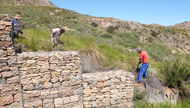
The arid landscape of the Namaqualand is witnessing a natural catastrophe in the making - decreasing rainfall coupled with a growing population of humans and cattle. The sparse green cover is shrinking at a time when it has to feed a growing number of animals and farmers. That's led to a dramatic loss in biodiversity and soil fertility, gradually turning Namaqualand from a semi-desert into a full-fledged one. Together with the Nama people, the organization "Conservation International" is trying to stop that from happening. The Nama are one of the oldest indigenous peoples in southern Africa. They have long worked in the region's many mines. But as increasing numbers of them close down, many Nama have turned to farming and are trying to survive by raising cattle without having the requisite know-how. Members of Conservation International are now teaching them all about sustainable agriculture. That includes plans for pasture- and water management in order to secure a livelihood for the Nama and protect the region's biodiversity. The newly-minted farmers are learning how to keep predators such as leopards, jackals and wild cats at bay without poisoning them. And shepherd dogs are taking over the protection of the sheep and goats. But will all that be enough to stop the Namaqualand from turning into a full desert?
The link has been copied to the clipboard
Information
Length
06:55 Minutes
Date of publication
2014
Project
Ecosystem-based adaptation in marine, terrestrial and coastal regions
Global Ideas

Related Videos

Related Publications

Further publications related to the International Climate Initiative and its projects can be found in the publications section of our website.