
Green Economy Transformation and Decarbonization Pathways in the Context of Economic Recovery
The economic and social impacts of the COVID-19 pandemic threaten progress in addressing the climate crisis. In order to promote economic recovery and at the same time strengthen or at least sustain the momentum for decarbonisation, comprehensive policy approaches are needed that combine economic recovery, environmental and social transformation (so-called Inclusive Green Recovery). The Inclusive Green Economy (IGE) concept offers a blueprint for this. The project strengthened the relevant international partnerships and alliances to promote the Inclusive Green Economy (PAGE, GO4SDGs, GGKP, Green Fiscal Policy Network). It also supported the partner countries in the preparation and implementation of policy solutions for the transformation towards an inclusive green economy through targeted technical advice, learning formats and stakeholder consultations, among other things.
- Countries
- Argentina, Costa Rica, Indonesia, South Africa
- IKI funding
- 3,750,000.00 €
- Duration
- 03/2022 till 12/2025
- Status
- completed
- Implementing organisation
- Deutsche Gesellschaft für Internationale Zusammenarbeit (GIZ) GmbH
- Political Partner
-
- Department of Forestry, Fisheries and the Environment (DFFE) - South Africa
- Ministry of Economy - Argentina
- Ministry of Environment and Energy (MINAE) - Costa Rica
- Ministry of Environment and Forestry (KLHK) - Indonesia
- Implementing Partner
-
- United Nations Environment Programme (UN Environment)
State of implementation/results
- Project completed.
- The project built on alliances and partnerships established in the predecessor project "Green Economy Transformation in cooperation with the Partnership for Action on Green Economy (PAGE), GET 3.0". To further establish Inclusive Green Economy (IGE) as a strategy for economic recovery, the project promoted the implementation of national IGE approaches in partner countries. Activities on sustainable infrastructure and green fiscal policy were supported by the implementation partner United Nations Environment Programme (UNEP).
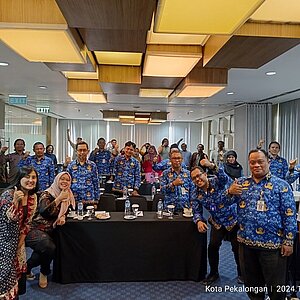
- In Indonesia, the project collaborated with the Ministry of Environment and Forestry. The cooperation focused on biodiversity and adaptation finance. For example, an assessment of financing options of protected areas was implemented for two national parks.
- In South Africa, in collaboration with the Department of Forestry, Fisheries and the Environment (DFFE), an informal green economy multi‑stakeholder group (including government, academia, civil society, business, finance and international organisations) was supported to help break down silos by bringing together diverse skill sets and expertise. Additionally, the project promoted circular economy by organising a national stakeholder dialogue on circular economy practices in various sectors (agriculture, mining, manufacturing and energy). Furthermore, the project developed recommendations for an improved integration of informal waste pickers in municipal waste management systems.
- The cooperation with the Ministry of Planning and Economic Policy in Costa Rica focused on identifying and developing instruments for sustainable infrastructure in public investments together with the implementing partner UNEP. Further project activities focused on identifying public circular economy finance mechanisms to support the implementation of the national circular economy strategy launched in July 2023. Furthermore, the project supported the Ministry of Finance and the Ministry of Environment in their common work on green fiscal policy.
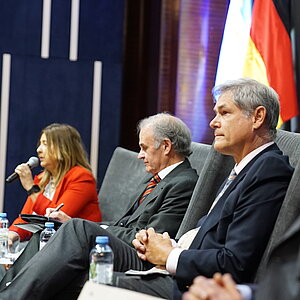
- The project activities in Argentina focused on promoting circular economy practices, including recycling in the industry sector. In collaboration with the Ministry of Economy’s Directorate for Sustainable Industry, the project supported the legislative process towards the implementation of an Extended Producer Responsibility (EPR) system, involving key stakeholders from the legislative, regulatory and private sectors. The project also supported the Undersecretariat of Environment in updating the country's National Sustainable Consumption and Production Strategy and a new action plan for its implementation. Additionally, at regional level, the project supported the Province of Córdoba in implementing and disseminating its work on circular economy.
Latest Update:
04/2026
Further links
- Working paper: Gender equality and informality in low-carbon transitions
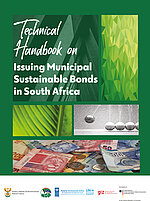
- Technical Handbook on Issuing Municipal Sustainable Bonds in South Africa
- Working paper: Gender equality and informality in low-carbon transitions
- Handbook: Technical Handbook on Issuing Municipal Sustainable Bonds in South Africa
- Website: Integration of the Green Business Guide in the I-GO Assistant Tool of the Green Industry Platform
- Report: National Circular Economy Stakeholder Dialogue in South Africa
- Webinar: Building an enabling environment for sustainable infrastructure: the EnABLE toolkit
- Webinar: Upstream decision-making to finance climate resilient infrastructure
- UNOPS opening remarks: Bridging the infrastructure gap
- Video: First International Climate Conference "Latin American Commitment", Córdoba, Argentina
- Article: GET: Transforming Public Finance for a Climate Future and the Circular Economy in Costa Rica
Project relations
Legend:
The link has been copied to the clipboard