
Integrating electric 2 & 3-wheelers into existing urban transport systems in developing countries
The transport sector makes a massive contribution to air pollution and climate change. Two and three-wheeled vehicles are the primary means of transport in many Asian and African countries, so switching to electromobility offers enormous potential for reducing greenhouse gas. The project developed programmes in six countries for the transition from internal combustion engines to electric and non-motorised two and three-wheelers. The aim was to integrate these modes of transport into existing urban transport systems. A political framework was created that will drive the general development of electric mobility in the target countries, so these countries should serve as models for climate-friendly changes in other countries’ transport sectors. This intervention had a direct impact on the population of the countries by reducing air pollution, improving national energy security, creating green jobs and helping to reduce poverty and inequality.
- Countries
- Ethiopia, Kenya, Philippines, Thailand, Uganda, Viet Nam
- IKI funding
- 3,333,500.00 €
- Duration
- 04/2017 till 06/2024
- Status
- completed
- Implementing organisation
- United Nations Environment Programme (UN Environment) - Kenya
- Political Partner
-
- Department of Alternative Energy Development and Efficiency (DEDE) - Thailand
- Department of Energy (DOE) - Philippines
- Energy Regulatory Commission - Kenya
- Ethiopian Road Transport Authority - Äthiopien
- Ministry of Energy and Mineral Development - Uganda
- Viet Nam Register of the Ministry of Transport - Viet Nam
- Implementing Partner
-
- Clean Air Initiative for Asian Cities Center, Inc. (Clean Air Asia) - Philippinen
- Sustainable Transport Africa (STA) - Kenya
State of implementation/results
- Project completed.
- Organization of the Global Conference on Electric Two and Three Wheelers in Bangkok, Thailand between 9th and 12th of October 2023: Representatives from eleven Asian, ten African, four Latin American countries and several international experts convened to exchange knowledge on the electrification of two and three wheelers in low and middle income countries (www.unep.org/…).
- Publication of the Global Emerging Market Overview for Electric 2- & 3- Wheelers (www.unep.org/…).
- UEMI and UNEP co-developed an online Electric Mobility toolbox providing a one-stop-shop for e-mobility professionals to find comprehensive literature and tools on all aspects of e-mobility (emobility.tools ).
- Development of a free tool to estimate the potential for energy, emissions and cost savings from shifting to electromobility (www.unep.org/…).
- Development of a free database containing information on fiscal, regulatory and other policies related to electromobility in countries around the world (www.unep.org/…).
- Publication of policy guidelines for electric 2- & 3-wheelers for Southeast Asia by UNEP and Clean Air Asia (cleanairsolutions.asia/…).
Burundi:
- A sensibilization campaign on e-mobility was implemented between July 2023 and February 2024 with high-level workshops in the capital Bujumbura and 4 regional workshops across the main regions in the country.
- A national baseline analysis on 2&3 wheelers and a policy review and strategic approach for the introduction of e-mobility in Burundi has been finalized.
Kenya:
- The National Treasury, through its 2023 Budget Statement has committed to the roll-out of EV charging infrastructure and the provision of incentives for e-mobility, which should be developed with the support of UNEP and partnering agencies (www.treasury.go.ke/…).
- In March 2022, a workshop on vehicle charging and battery swapping infrastructure was held (www.unep.org/…).
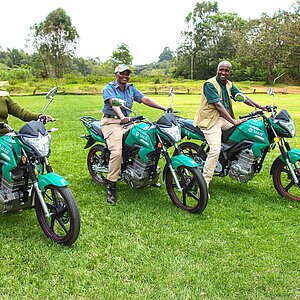
- In March 2021, pilot projects were launched in Kenya with Kenya Power and Lighting Company, Kisumu City, and the Karura Forest (www.youtube.com/…;v=opysUfh5t18).
- Support of the Kenya Bureau of Standards (KEBS) in developing standards and specifications for electric mobility in Kenya (UN-Environment and GIZ) (kenyalaw.org/…).
Uganda:
- Pilot project launched in April 2021 with 50 electric motorcycles to be tested for various uses.
Philippines:
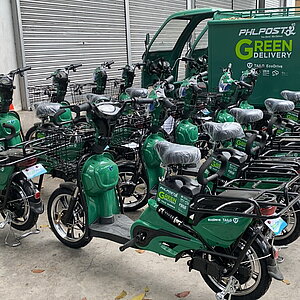
- 20 electric bicycles (e-bikes) and 10 electric tricycles (e-trikes) were donated to the Philippine Postal Corporation by the UNEP and Chinese electric vehicle (EV) manufacturer TailG (cleanairasia.org/…).
- Working with the Department of Energy, Department of Trade and Industry, Land Transportation Office and other Philippine partners in the development of national standards for electric road vehicles.
Thailand:
- In June 2023, a total of 50 electric motorcycles were delivered for a pilot project in cooperation with the Electricity Generating Authority of Thailand and Stallion (finance.yahoo.com/…).
- In March 2021 a stakeholder workshop was held on the topic of "Mainstreaming electromobility in Thailand" (www.youtube.com/…).
Latest Update:
04/2026
Project relations
Legend:
The link has been copied to the clipboard