
Kwale - Tanga Coast - Transboundary conservation and sustainable management of coastal and marine biodiversity
The aim of the project is to protect marine and coastal biodiversity in the Kwale-Tanga and RUMAKI regions by establishing participatory management of marine and coastal resources. The project supports responsible government agencies and communities to better manage and protect conserved areas. A multi-stakeholder committee in each region is overseeing the governance of selected protected areas and drive key decisions. The committee evaluates and supports sustainable use solutions of the ecosystems by the inhabitants and their organisations. The project’s target group does therefore obtain a stronger awareness of the triad of biodiversity, ecosystem services and sustainable management. Project results are disseminated in relevant networks, digital platforms, and institutions, nationally, regionally and internationally. As a result, neighbouring regions do also benefit from the experiences and results of the project through knowledge transfer.
- Countries
- Kenya, Tanzania
- IKI funding
- 5,000,000.00 €
- Duration
- 01/2023 till 03/2027
- Status
- open
- Implementing organisation
- Deutsche Gesellschaft für Internationale Zusammenarbeit (GIZ) GmbH
- Political Partner
-
- Ministry of Environment, Climate Change and Forestry (MECCF) - Kenya
- Ministry of Livestock Development and Fisheries, Fisheries - Tanzania
- Implementing Partner
-
- CORDIO East Africa
- Mwambao Coastal Community Network
- World Wide Fund for Nature (WWF) - Tanzania
State of implementation/results
- The project conducted a study to analyse the economic viability of coastal communities, especially women and youth, through the sustainable use of natural coastal and marine resources.
- The project is working on the creation of a broad multi-stakeholder platform for the participation of relevant groups of people in the elaboration and formulation of a transboundary marine conservation area Kenya-Tanzania (TBCA), especially with the involvement of representatives of the local coastal population.
Kenya:
- A three-day training course was held for 40 rangers, scouts and specialists on marine and coastal protection, gender and human rights. Participants from government agencies and the coastguard strengthened their expertise and cooperation.
- The project collaborates with the community-based organisation Mikoko Pamoja, which developed the world's first blue carbon project in the voluntary market, to implement mangrove protection and restoration and strengthen local structures.
- The project conducted a study on the potential of blue carbon and sustainable fisheries in Kwale County by the Kenya Marine and Fisheries Research Institute (KMFRI).
- The project implemented an intensive, one-year training and mentoring program for beekeepers in Kwale and Tanga, which supports 56 people, including 21 women, to strengthen their skills and abilities in honey production and marketing and to act as multipliers.
- In order to better integrate and strengthen the position of the local population living in the vicinity of the transboundary marine conservation approach, the project has organized information events in all affected communities, and handed these over to elected representatives for the TBCA multi-stakeholder processes. Elected representatives of these communities will contribute these positions to the TBACA multi-stakeholder processes and actively participate in the negotiation process as an active party.
Tanzania:
- The project participated in a workshop to validate the revised beach management units (BMU) guidelines for Tanzania in February 2025 and facilitated the participation of ten BMU members.
- The project organised an exchange of experiences between communities in Mkinga and on Mafia Island. The management plan for the Boma-Mahandakini community forest management project was adopted with the participation of over 90 representatives from the local population and administration.
- The project developed action plans for two new village land councils in the Kimtomwage region. In addition, eight measures from the existing management plans have already been successfully implemented.
- In August, the first national dialogue on the development of guidelines for Other Effective Conservation Measures (OECMs) took place under the leadership of the Vice President Office. The recognition of OECMs is an important contribution to the implementation of the revised NBSAPs (2025-2030). Regions for the pilot establishment of OECMs were proposed.
- The project coordinated the renovation plans for the fish market in Somanga with district authorities and communities and proposals for income-generating measures were integrated and an environmental impact assessment was carried out. Project partners appreciated the conducted human rights training, which is now being replicated in all marine protected areas in the country.
Latest Update:
04/2026
Further links
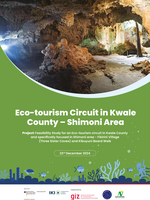
- PANORAMA Solution: Community-Based Bat Conservation and Ecotourism Development at the Three Sisters Giant Caves, Fikirini Village (Kwale, Kenya)
- Study: Collaborative Fisheries Management Area Governance Assessment for Tanga (Tanzania)
- Study: Shimoni–Vanga Joint Co-Management Area Governance Assessment (Kenya)
- Study: Sustainable Finance Assessment of Beach Management Units in Kwale County
Project relations
Legend:
The link has been copied to the clipboard
![[Translate to English:] Cover "Collaborative Fisheries Management Area Governance Assessment for Tanga (Tanzania)"](/fileadmin/_processed_/1/0/csm_20260107_Governance_Assessment_Report-_Tanga_Cover_8c407a1789.jpg)