
Managing invasive species in community forests for forest restoration and sustainable agriculture
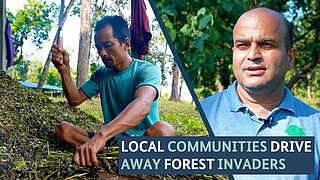
Invasive Alien Plant Species (IAPS) are growing burden in natural and managed ecosystems across scales and their threats to biodiversity are increasing with global environmental changes. Many of Nepal´s community forests are affected by IAPS being among the world's 100 worst invasive species (Mikania micrantha, Chromolaena odorata and others). IAPS are hindering biodiversity, compromising ecosystem services and affecting forest dependent people's access to forest resources. The Project combined natural regeneration of community forests with sustainable agriculture through biomass management of IAPS. The project adopted a participatory action research approach and worked with local communities. The project further worked to strengthen capacity of forest technicians for effective management of IAPS in forests through training and knowledge management.
- Countries
- Nepal
- IKI funding
- 107,624.00 €
- Duration
- 02/2022 till 03/2024
- Status
- completed
- Implementing organisation
- Forest Resources Studies and Action Team
State of implementation/results
Further Information can be found on the website of IKI Small Grants: iki-small-grants.de
Latest Update:
04/2026
Project relations
Legend:
The link has been copied to the clipboard