
YouthEnergy: activating youth potentials for driving the just energy transition in Argentina
Systematic use of its outstanding renewable energy resources would enable Argentina to put its economy on a sustainable development path and achieve the Paris climate goals. Young people have a wide range of potentials that are crucial for shaping this future. The project empowers young people to drive a just energy transition. It focuses on students from technical schools and on youth organizations. Young people will be empowered to communicate and disseminate knowledge to address climate change, the energy transition, and related gender, class, and ethnic inequalities; become innovators and designers of future energy systems; and actively participate in energy policy at the local and international levels. Participating schools, organizations, and state authorities will be able to apply and disseminate the methods and tools developed.
- Countries
- Argentina
- IKI funding
- 677,594.00 €
- Duration
- 02/2024 till 01/2027
- Status
- open
- Implementing organisation
- Wuppertal Institute for Climate, Environment and Energy GmbH - Germany
- Implementing Partner
-
- 500RPM
- Siemens Foundation Argentina
State of implementation/results
The project has implemented the following activities:
- Since June 2025: Teacher trainings on renewable energies are held in the three provinces.
- May till June 2025: Three online webinars fostered youth participation in the just energy transition debate: 'The Basics of the Energy Transition in Argentina', 'Renewable Energies: Opportunities and New Technologies', and 'Energy Transition with a Social Justice and Gender Perspective'.
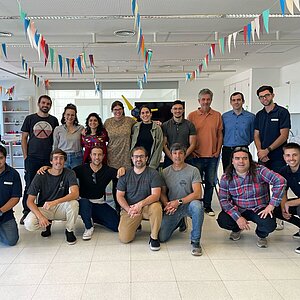
- March till July 2025: A 2-day training workshop was held in Buenos Aires for the provincial operational referents to strengthen youth capacities in energy solutions and renewable energies. The workshop presented materials developed by the YouthEnergy team on renewable energies, green hydrogen technologies, and hybrid systems (wind and solar). These referents are responsible for sharing this knowledge with technical school teachers throughout 2025.
- In March 2025, the project team held co-evaluation meetings in each province with authorities, schools, teachers, and students to assess progress, share lessons, and identify areas for improvement. Positive outcomes led to an unplanned expansion: in Chubut’s Cordilleran region, the provincial government, supported by private companies, replicated climate change trainings in 30 additional schools, each receiving a didactic kit.
- July till September 2025: Launch of in-person youth forums in each province to discuss challenges, opportunities, and strategies for provincial energy transitions.
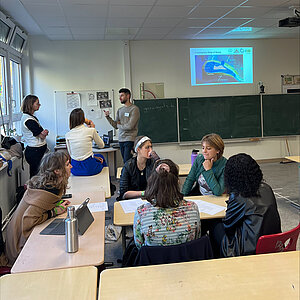
- April till November 2024: The referents replicated the workshops for technical school teachers in the three provinces, with support from the YouthEnergy team. The trained teachers subsequently implemented the didactic materials in their classrooms.
- July 2024 till March 2025: Decentralized renewable energy systems for educational purpose were constructed and installed in three rural technical schools one in each province, with active involvement of teachers and students. Field visits prepared the sites. Hands-on workshops on system construction and installation were implemented.
- March 2024 and October 2024: ‘Train-the-trainers’ sessions were delivered in all three target provinces. To prepare for this, provincial operational referents attended a 2-day in-person workshop in Buenos Aires on climate change, followed by an online training on just energy transition.
- March 2024: strategic alliances were established with the education ministries of Neuquén, Chubut, and Mendoza to provide institutional support in collaborating with technical schools. These alliances were renewed in March 2025.
- The project team adapted and supplemented didactic materials on climate change with a gender-sensitive approach, drawing on resources from the Office for Climate Education (OCE), and developed new materials on just energy transitions. All materials have been published and are available online.
Latest Update:
04/2026
Project relations
Legend:
The link has been copied to the clipboard