
Partnership for energy efficiency in buildings (PEEB)
In the building sector, all trends are pointing upward, with dramatic consequences for the climate. By 2060, the buildings floor area will double. The construction and operation of buildings is responsible for 38% of greenhouse gas emissions from energy. Better design of buildings combined with efficient technology presents a massive – and largely unused – opportunity for climate mitigation and adaptation. PEEB was established to respond to the urgent need to mobilise investments for green and resilient buildings. PEEB is a modular and scalable multi-donor partnership to transition towards a zero-emission and resilient built environment. Attractive financing solutions for construction and renovation projects with high climate impact via the development bank AFD are combined with policy advice and capacity-building by GIZ. With co-funding from the Global Climate Fund (GCF) for “PEEB Cool”, activities are scaled up to 11 countries. PEEB shares results widely via GlobalABC and other networks.
- Countries
- Albania, Argentina, Costa Rica, Djibouti, Indonesia, North Macedonia, Mexico, Morocco, Nigeria, Senegal, Sri Lanka, Tunisia, Viet Nam
- IKI funding
- 10,920,000.00 €
- Duration
- 10/2017 till 12/2028
- Status
- open
- Implementing organisation
- Deutsche Gesellschaft für Internationale Zusammenarbeit (GIZ) GmbH
- Political Partner
-
- Federal Ministry of Environment - Nigeria
- Fiscal Policy Agency under the Ministry of Finance - Indonesia
- Government of North Macedonia
- Ministry for Environment and Sustainable Development (MEDD) - Senegal
- Ministry of Agriculture and Environment (MAE) - Vietnam
- Ministry of Economy - Argentina
- Ministry of Energy Transition and Sustainable Development - Marokko
- Ministry of Environment - Sri Lanka
- Ministry of Environment - Tunisia
- Ministry of Environment and Energy (MINAE) - Costa Rica
- Ministry of Environment and Natural Resources (SEMARNAT) - Mexico
- Ministry of National Territory Planning, Urban Planning, Housing and City Policy – Morocco
- Ministry of Natural Resources and Environment (MoNRE) - Viet Nam*
- Ministry of Tourism and Environment of Albania
- Ministry of Urbanism, Environment and Tourism - Republic of Djibouti
- Secretariat of Finance and Public Credit (SHCP) - Mexico
- Implementing Partner
-
- ADEME - Agence de la transition écologique - France
- AFD - Agence Française de Développement
- United Nations Environment Programme (UN Environment) - France
State of implementation/results
- As part of the partnership, the AFD development bank established a €2.2 billion financing pipeline for large-scale energy-efficient building projects.
- First phase of PEEB (2017–2022):
- Between 2017 and 2022, the IKI-funded project supported policy measures and regulations in five partner countries (Mexico, Morocco, Senegal, Tunisia, and Vietnam) based on analyses of the building sector. Two concepts for national housing programs to mobilize private-sector financing for green buildings were developed. 800 people were trained on key topics related to green buildings (e.g., financing, policy enforcement, energy-efficient hospitals). 12 flagship publications on topics such as private capital mobilization and Nationally Determined Contributions (NDCs) for buildings, health infrastructure, and embodied carbon were developed and presented at international and regional events.
- Second phase of PEEB (2023–2028):
- To channel investments into green and resilient building projects, PEEB is working on transparent greenhouse gas calculations through baseline studies on greenhouse gas emissions. Financial incentive programs will mobilize private-sector financing. Methodological and practical work on utilizing the cooperation mechanisms under Article 6 of the Paris Agreement for the building sector supports partner countries in mobilizing funds.
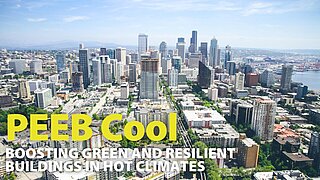
- In 2023, co-financing from the Green Climate Fund for “PEEB Cool” enabled a massive expansion of PEEB. PEEB Cool will collaborate with 11 countries in hot climates across Africa (Djibouti, Morocco, Nigeria, Tunisia), Asia (Indonesia, Sri Lanka), Eastern Europe (Albania, North Macedonia), and Latin America (Argentina, Costa Rica, Mexico) to combat the negative impacts of climate change by improving energy efficiency in buildings and increasing resilience.
- Albania:
- Launch of the monitoring and verification platform for recording, verifying, and reporting energy savings and CO₂ emissions in accordance with the Energy Efficiency Act.
- Argentina:
- Two learning networks on energy efficiency for hospitals and schools in the provinces of Córdoba, Santa Fe, and Entre Ríos as a structured framework for embedding energy efficiency and energy management practices in public buildings.
- Costa Rica:
- Energy simulation in a hospital of the Costa Rican Social Security Institute, including a catalog of measures with a cost-benefit analysis to increase energy efficiency in the healthcare sector.
- Support for embedding more ambitious climate targets in the building sector within the NDCs, including incorporation into the National Decarbonization Plan as well as several building-related regulations and policies.
- Mexico:
- Inclusion of energy efficiency requirements in the national standard for hotel construction.
- Support for energy-efficient hotels through technical consulting for national hotel chains and a technical guide on energy efficiency in hotels
- Technical guide on improving energy efficiency in public office buildings
- Morocco:
- Support for the private sector and the Moroccan Building Alliance in implementing sustainable buildings
- Enforcement of building codes through support for the Ministry of Housing and training for 100 government officials
- Proposal for a national financing mechanism for residential buildings through technical studies and resource mobilization with the Ministry of Housing and the state housing company Al Omrane
- Technical guide on energy efficiency in buildings
- Nigeria:
- Energy audits in 14 hospitals as the basis for a transferable financing model to increase energy efficiency in the health sector.
- Technical support to anchor more ambitious climate targets in the building sector within the NDCs, including revision of the National Building Code with energy efficiency and resilience requirements, as well as measures for climate-friendly cooling and air conditioning technologies.
- North Macedonia:
- Support in compiling a national inventory of public buildings to enable evidence-based decision-making and prioritization of investments in energy efficiency in the public sector.
- Reintroduction of the national monitoring and verification platform for recording, verifying, and reporting energy savings and CO₂ emissions in accordance with the Energy Efficiency Act.
- Senegal:
- Advising the Ministry of the Environment on the development of energy efficiency regulations through feasibility studies and a roadmap
- Training on financing energy efficiency measures for banks, architects, and engineers
- First large-scale analysis of energy consumption in buildings and the construction sector in Senegal.
- Sri Lanka:
- A pilot study to assess the feasibility of the Energy Efficiency Building Code was initiated.
- Tunisia:
- Development of guidelines for energy-efficient hospitals
- Training for energy managers in the healthcare sector and architects to expand hospital projects in the healthcare sector
- Technical improvements to the national IT tool (CLIP II) for calculating compliance with the Energy Performance of Buildings Directive and support in the preparation of energy performance certificates
- Mapping of the current and future building stock and energy demand in collaboration with KfW and UNESCWA, as well as the preparation of a study on the mapping of public buildings in Tunisia in collaboration with the Tunisian National Energy Management Agency (ANME)
- Viet Nam:
- Funding training for policymakers and providing recommendations on private investment in green buildings
- Supporting the Ministry of Construction in developing an NDC roadmap for the construction sector
- Developing the concept and feasibility study for a national green housing program for middle-income households.
Latest Update:
10/2026
Further links
Project relations
Legend:
The link has been copied to the clipboard
Related Videos

![[Translate to English:]](/fileadmin/_processed_/3/9/csm_20240702_launch_peeb_cool_launch_1d1d69b7d1.jpg)
![[Translate to English:]](/legacy/_processed_/5/5/csm_Indien_EE_Solar_Frau_bfcf99c425.jpg)
Related Publications
-
 02/ 2025 | Tool/Open source product
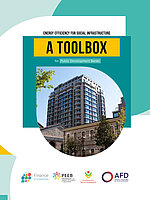
Energy Efficiency for Social Infrastructure: a toolbox for development banks
English (PDF, 7 MB)
-