
Transformative Low Carbon and Climate Resilient Pathways of Costa Rica
Costa Rica has ambitious NDC and SDG goals to become a resilient, inclusive and carbon neutral economy by 2050. However, there is a lack of capacities in order to develop “green and blue” production standards in relevant sectors. TRANSFORMA consolidates a country driven stakeholder coordination and NAMAs in the agricultural sector. It is aiming to conserve coastal marine biodiversity, as well as to create innovative financing incentives to unlock additional financial resources and stimulate private sector investments. Fishery families and farmers in coffee, livestock and banana production benefit directly due to low carbon and climate resilient value chains. The outputs and results of TRANSFORMA are contributing to long-term climate resilience, ecological sustainability of key ecosystems, significantly achieving Costa Rica’s decarbonisation of its economy.
- Countries
- Costa Rica
- IKI funding
- 12,312,000.00 €
- Included preparation phase
- 228,000.00 €
- Duration
- 10/2021 till 02/2027
- Status
- open
- Implementing organisation
- Deutsche Gesellschaft für Internationale Zusammenarbeit (GIZ) GmbH
- Political Partner
-
- Ministry of Environment and Energy (MINAE) - Costa Rica
- Implementing Partner
-
- Conservation International Foundation - Costa Rica
- CRUSA Costa Rica United States of America Foundation for Cooperation
- FUNBAM Fundación Banco Ambiental
- Tropical Agricultural Research and Higher Education Center (CATIE) - Costa Rica
- United Nations Development Programme (UNDP)
State of implementation/results
- Low carbon and resilient agricultural production:
- Livestock: 1026 farmers participated in field days and learned from low carbon livestock experiences (24% women). 308 cattle farmers received seed capital from GIZ and Fundecooperacion (adaptation fund) to implement low carbon good livestock practices (GLP); through e.g. Fundecooperacion and Banco Nacional they are accessing green loans.
- Coffee: More than 3200 coffee farmers (29% women) were trained on good agricultural practices (GAP) during field days in coordination with the Ministry of Agriculture (MAG) and the National Coffee Institute (ICAFE). Through the pilot phase of the Development Bank System’s (SBD) sustainable policy incentives and loans for the transformation of 200 coffee farms are available. A diagnosis on low carbon manufacturing practices was implemented on 60 coffee processing plants.
- Musaeceae: 60 small- and medium-scale Musaceae farms (20% indigenous-owned) received training and technical support implementing two GAP on 330 hectares, by Tropical Agricultural Research and Higher Education Center (CATIE) and MAG. Additionally, CATIE provided seed capital (GIZ and SBD) to improve sustainable production in 49 small and medium enterprises.
- Measurement, Reporting and Verification (MRV): UNDP and GIZ support e.g. MAG, ICAFE, and the Banana Corporation (CORBANA) to determine the ex-ante greenhouse gas (GHG) emissions baseline for coffee, livestock and Musaceae farms. Additionally, land crop cover maps were generated in the three land sectors.
- Climate finance: Fundacion Banco Ambiental (FUNBAM) promotes the National Forest Fund´s (FONAFIFO) financial mechanisms for agroforestry in the three land sectors. As the new the rulebooks developed with support of two loan funds were approved by FONAFIFO additional finance was made available for investing in TRANSFORMA’s prioritized sectors. GIZ and FUNBAM support the application process. CATIE, GIZ jointly with the bank BAC are piloting the manual for regenerative coffee. 66 initiatives received funding and implemented technological innovations aiming at improving sustainable, resilient, and low carbon production in the three land sectors.
- Blue economy
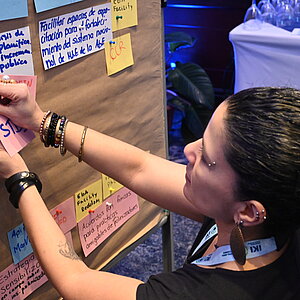
- A participatory Marine Spatial Planning (MSP) process was launched with the establishment of the Local Marine Committee (LMC) and the initiation of the Marine Master Plan. More than 150 stakeholders were engaged across a 2.183 square kilometres area.
- Ten integrated improvement plans were implemented across 177 square kilometres, are strengthening five small-scale coastal fishing and aquaculture value chains. The plans foster sustainable production and include e.g. infrastructure upgrades and market analyses.
- Across 212 square kilometres mangroves ecosystems, shrimp farm delimitation and restoration diagnostics were part of sustainable use strategies. Local stakeholders engaged in efforts related to blue finance mechanisms and capacity-building.
- Climate finance: FUNBAM supports implementing the Ministry of Environment’s new program to protect marine ecosystems and provide additional income to coastal residents to reward their contribution to the protection of mangroves and sustainable mussel fishing.
Latest Update:
10/2026
Project relations
Legend:
The link has been copied to the clipboard