
Large-scale transformation towards biodiversity-friendly, climate resilient agriculture through risk finance solutions and enabling policy and trade frameworks
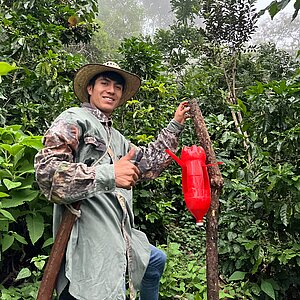
The agricultural sector has considerable potential to protect ecosystems, the conservation of which in turn strengthens the adaptability and resilience of smallholder producers to the impacts of climate change. The project specifically promotes biodiversity-friendly production of coffee, cocoa and bananas in the partner countries, and along their entire value chains. Comprehensive, scientifically-based analyses are used to identify the potential for environmental, economic and political change, as well as innovative financing approaches. The project develops risk financing solutions, trains producers in biodiverse, climate-resilient farming practices, and improves access to finance. It uses communication campaigns to target policymakers, trade, industry and consumers, raising awareness of the value of biodiversity and supporting structural change.
- Countries
- Dominican Republic, Guatemala, Mexico
- IKI funding
- 14,054,248.00 €
- Duration
- 07/2022 till 07/2031
- Status
- open
- Implementing organisation
- OroVerde - Die Tropenwaldstiftung
- Political Partner
-
- Ministry of Agriculture (MAGA) - Guatemala
- Ministry of Agriculture - Dominican Republic
- Ministry of Environment and Natural Resources (SEMARNAT) - Mexico
- Implementing Partner
-
- Biodiversity International
- Centro para la Educación y Acción Ecológica, Naturaleza, CEDAE
- Fundación Capital
- Fundación Defensores de la Naturaleza - Guatemala
- Johann Heinrich von Thünen-Institut (Bundesforschungsinstitut für Ländliche Räume, Wald und Fischerei - vTI) - Germany
- Plataforma Nuup, A.C.
- ProNatura Sur
- Südwind e.V.
- United Nations University Institute for Environment and Human Security (UNU-EHS)
State of implementation/results
- The baseline surveys are largely complete; most recently, the biodiversity baseline was finalised. The socio-economic study has already been completed in Guatemala and Mexico.
- A cross-organisational gender committee now continuously monitors and advises on the implementation of the gender action plan, whilst also serving as a community of practice for all project-related diversity issues.
- Risk management profiles have been drawn up for the project countries, identifying laws, regulations and guidelines on disaster risk reduction and mapping the key government actors along the agricultural value chain.
- In Guatemala, young people and women involved in cocoa production have been trained in the ‘PhotoVoice’ technique. The aim is to empower them and, through photos and personal stories, to highlight the connection between biodiversity, habitat and livelihoods.
- A six-month training course on biodiversity-friendly coffee production has been successfully completed in Mexico. The aim was to strengthen the skills of technical staff and producers – with a focus on sustainability, gender equality, quality and productivity. In addition, the programme provides training in financial management and dealing with climate risks.
- The first pilot phase of parametric insurance in Mexico has been successfully completed; the product is now being adapted for the second phase to align with the phenological stages of coffee cultivation in southern Mexico.
- In all three project countries, the target group is being trained in the citizen science app ‘iNaturalist’ to contribute collectively to biodiversity monitoring
- In October 2026, the project will be represented at CBD COP 17 in Armenia
Latest Update:
10/2026
Project relations
Legend:
The link has been copied to the clipboard