
Building a Sustainable Future: Why Training on Natural Refrigerants Matters

The Greener Reefers project, supported by the IKI, provides training and connects stakeholders across countries, promoting knowledge exchange and capacity building for greener maritime transport.
The refrigeration industry is at a crossroads. Refrigerated containers—better known as reefers—are essential to global trade, preserving food, pharmaceuticals, and other temperature-sensitive goods over long supply chains. But the traditional refrigerants they rely on—hydrofluorocarbons (HFCs)—are among the most potent greenhouse gases in use today. With a global warming potential much higher than that of CO₂, their continued use poses a serious threat to international climate goals.
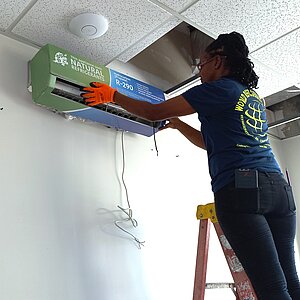
The good news is that a solution is within reach. Natural refrigerants such as carbon dioxide (R744) and propane (R290) offer a sustainable alternative. They have zero ozone depletion potential, lower global warming potential, and often superior energy efficiency. These technologies make it possible to maintain the global cold chain while significantly reducing environmental impact.
The Greener Reefers Project
Efforts are already underway to accelerate this transition. The Greener Reefers project of the International Climate Initiative (IKI) addresses the critical skills gap by providing training, resources and guidance for technicians and educators.
Its goal is simple but powerful: to ensure that climate-friendly refrigeration solutions can be safely and widely implemented, helping the industry reduce emissions without compromising the global supply of perishable goods.
But technology alone cannot drive this change. Around the world, many technicians and educators still lack the specialized knowledge needed to install, maintain, and teach these new systems safely. Closing this skills gap is essential to accelerate the adoption of climate-friendly refrigeration and make meaningful progress toward a sustainable future.
South Africa: Durban as a pioneering hub for the sustainable future of reefers
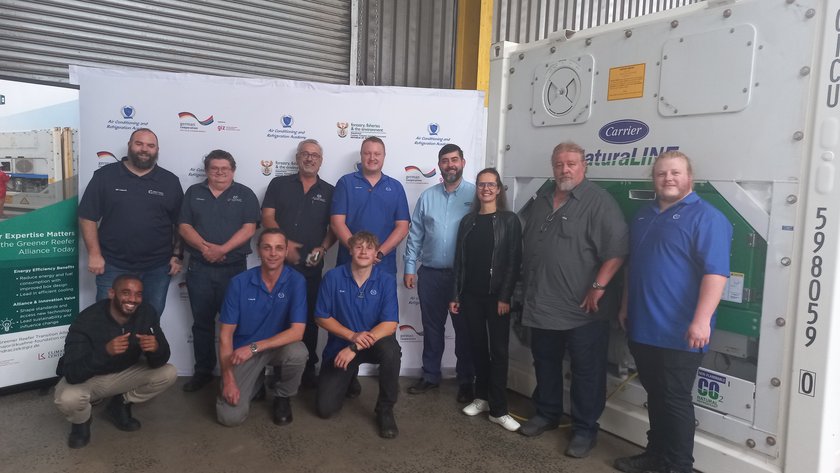
In 2024, Durban was South Africa's second largest exporter, trading in ore, delivery trucks, cars and large construction equipment. In July 2025, the city hosted its first training on CO₂-based refrigerated containers, bringing together seven technicians from local training centers. Participants were enthusiastic and actively engaged in learning more about the only reefer that uses a natural refrigerant.
The training combined theory with hands-on practice, enabling participants to troubleshoot real CO₂ reefer units while learning safe handling practices and energy-efficient operations. South Africa's strong commitment to the Montreal Protocol and its Kigali Amendment as well as the Paris Agreement, while addressing a critical national skills gap in the refrigeration sector, is critical to the implementation and continuation of this collaboration.
The long-term impact is strengthened by the donation of CO₂ reefer units on behalf of the project to training centers, enabling them to continue to provide hands-on training for future technicians. Each center will continue to offer this first-of-its-kind training, including increasing the number of female technicians in the trainings. By 2026, over 55 South African technicians are expected to be certified in CO₂-based refrigeration technologies.
Costa Rica: Training Educators for a Sustainable Future
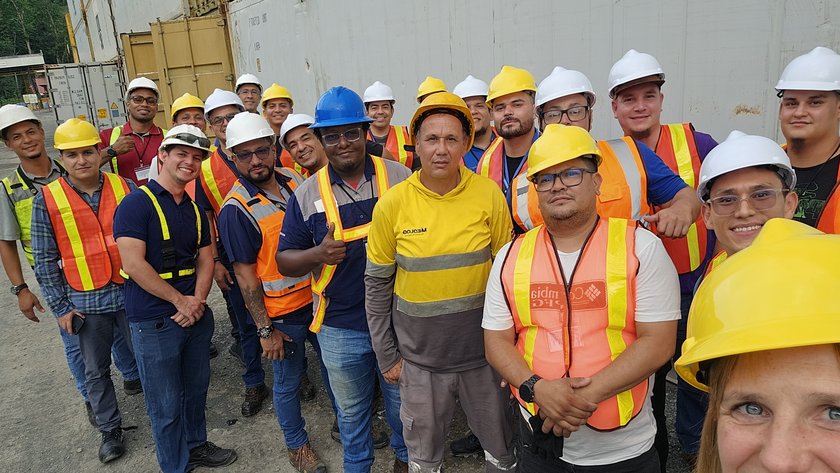
Puerto Limón in Costa Rica is the Caribbean hub for fruit exports to the world. The largest fruit producer also has its logistic centers here. The four-day CO₂-based training program brought together 20 educators from across the country, representing key institutions shaping technical education nationwide.
The training of teachers as multipliers for the new generation of RAC technicians is crucial for embedding the knowledge of CO2 as a natural refrigerant in different applications, not only for reefers. The trainings expand the knowledge of technicians and educators, helping future generations to understand the importance of responsible refrigeration. The main challenge is to change existing paradigms and raise awareness—among technicians and the public—about energy efficiency and climate impact.
Looking ahead
With more than 4 million refrigerated containers in operation worldwide, switching to greener systems could dramatically reduce greenhouse gas emissions. Governments, industry, and educators are encouraged to take action— implementing supportive policies, expanding training, sharing knowledge, and accelerating the transition to a sustainable refrigeration sector.
Aligned with international agreements, the IKI project ensures that these technologies are practical, safe, and scalable. From Durban to Puerto Limón, its trainings show how international collaboration can empower local communities, advance global climate goals, and prepare workers for the green jobs of tomorrow.
The link has been copied to the clipboard
Contact
IKI Office
Zukunft – Umwelt – Gesellschaft (ZUG) gGmbH
Stresemannstraße 69-71
10963 Berlin