
Connecting Projects and Powering Transitions
IKI workshops strengthen climate action in India
India has been a priority partner country of the International Climate Initiative (IKI) since 2008. Today, 26 IKI-funded projects are supporting innovative approaches to climate mitigation, adaptation, biodiversity conservation and the strengthening of carbon sinks, in line with the IKI Strategy to 2030. Against this backdrop, the IKI India Interface Project convened key stakeholders in New Delhi through two workshops that underscored the value of cooperation, peer learning and strategic partnerships.
United by Local Action and Trustful Cooperation
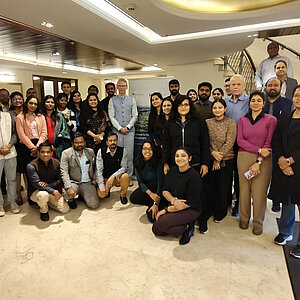
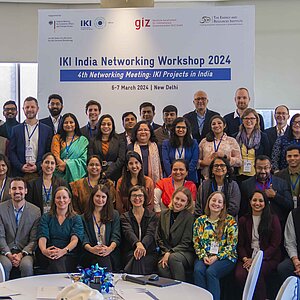
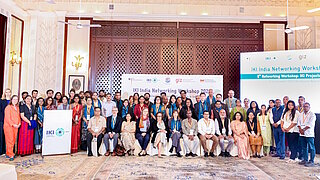
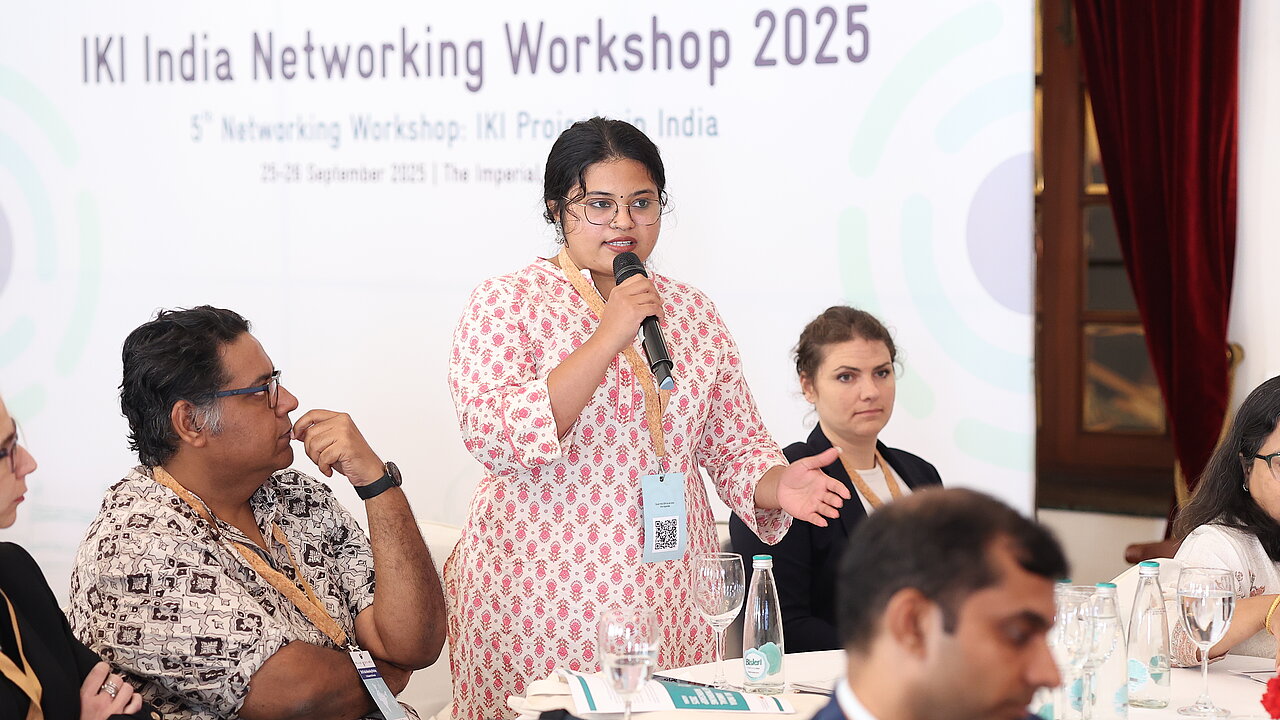
The 5th annual IKI Networking Workshop brought together 114 participants from across the IKI community in India. Jointly organised by the IKI India Interface Project and The Energy and Resources Institute (TERI), the two-day event aimed to strengthen exchange among IKI projects, foster synergies and enhance dialogue on climate and biodiversity policy developments between India and Germany.
High-level representatives from German and Indian ministries, state governments, Zukunft - Umwelt - Gesellschaft (ZUG) gGmbH and the German Embassy in Delhi contributed to strategic discussions. Participants included representatives from IKI India projects, partner organisations, think tanks, research institutes, NGOs and youth organisations—creating a diverse space for mutual learning and collaboration.
Keynote speeches highlighted the shared Indo-German commitment to advancing global climate and biodiversity goals through local action, trustful cooperation and evolving partnerships. Discussions reflected on international and national frameworks such as the Paris Agreement, India’s Nationally Determined Contributions, the forthcoming National Adaptation Plan and the Convention on Biological Diversity within India’s updated National Biodiversity Strategy and Action Plan.

Sharing Expertise on IKI Priority Topics
Expert inputs and interactive formats focused on priority themes including industrial decarbonisation, advancing climate adaptation through mobilisation of public and private finance, private sector engagement, ecosystem restoration and the strengthening of carbon sinks. An interactive poster exhibition enabled participants to showcase project experiences, exchange best practices and identify opportunities for collaboration across mitigation, adaptation and biodiversity.
A visual highlight was the live scribing corner, where a graphic artist captured key messages and discussions in real time—adding a creative and engaging dimension to the exchange.
Advancing Public Sector Leadership in Industrial Decarbonisation
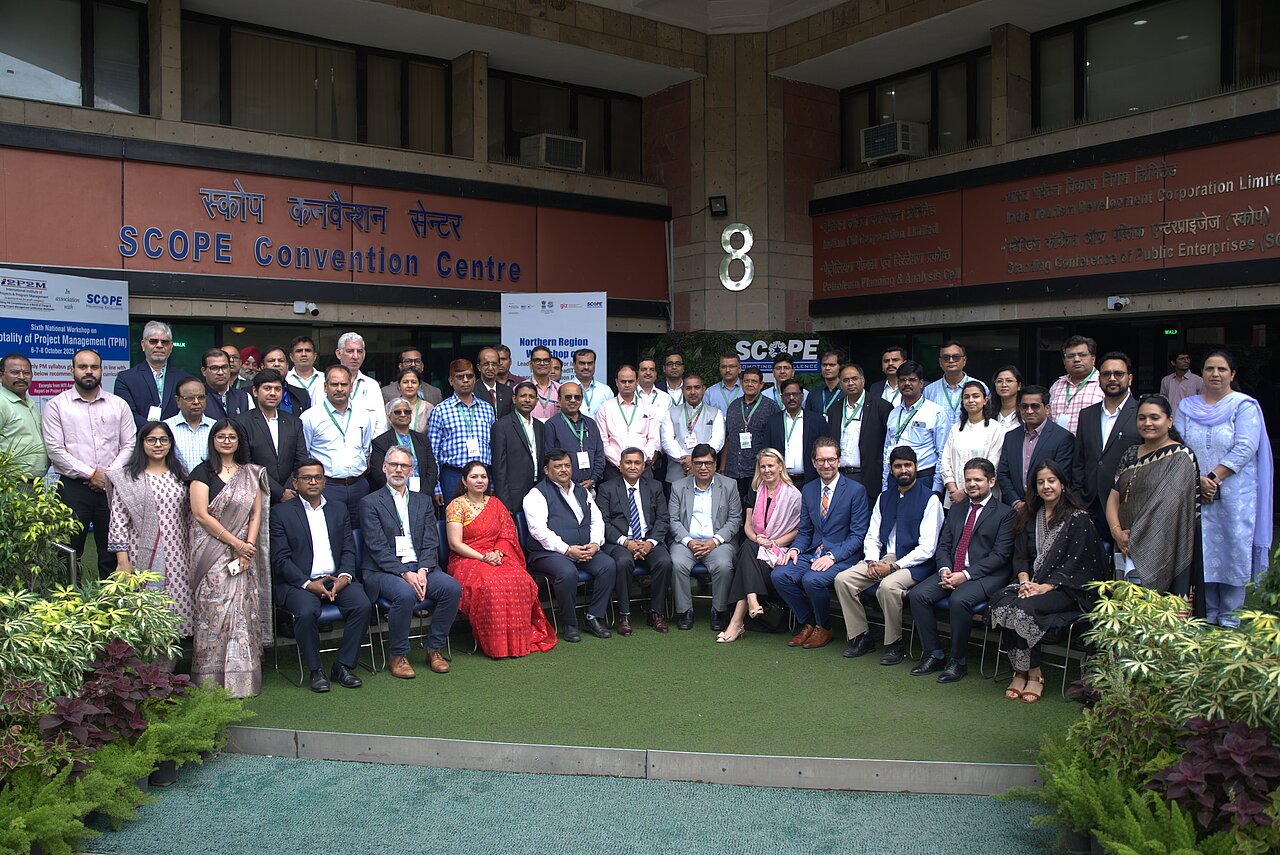
Building on this collaborative momentum, the IKI India Interface Project also partnered with the Standing Conference of Public Enterprises (SCOPE) to strengthen public sector engagement in the Leadership Group for Industry Transition (LeadIT). The regional outreach workshop, held in October 2025 in New Delhi, marked the first in a planned series to encourage Public Sector Enterprises (PSEs) to join the global platform co-launched by India and Sweden, in which Germany is also a member.
While several Indian private companies are already members of LeadIT, public sector participation remains limited—despite many PSEs actively pursuing net-zero and decarbonisation pathways. The workshop highlighted how LeadIT can support peer learning, global collaboration and access to clean technologies and climate finance.
Partnerships for a Just and Competitive Transition
Thirty-seven participants from public and private sector companies, ministries, financiers and technology providers took part. Representatives from the Indian Ministry of Environment, Forest and Climate Change (MoEFCC) and the LeadIT Secretariat introduced the platform and addressed questions from participants. Existing members such as Steel Authority of India Limited (SAIL) and Tata Motors shared their experiences, while KfW presented financing options for decarbonisation investments.
Several PSEs—including Bharat Heavy Electricals Limited (BHEL), Gas Authority of India Limited (GAIL), National Thermal Power Corporation (NTPC) and National Buildings Construction Corporation Limited (NBCC)—showcased their ongoing sustainability initiatives. A concrete example of innovation supported through IKI cooperation was presented by JK Cement, which highlighted India’s first commercial launch of LC3 cement, developed with support from Indian Institute of Technology Delhi through the IKI Interface Project.
Turning Ambition into Action
Together, the two workshops demonstrated how the IKI in India connects projects, institutions and sectors to translate policy priorities into tangible action. From community-wide networking to targeted industrial outreach, the exchanges reinforced a shared message: effective climate and biodiversity action depends on strong partnerships—and what is good for the climate is also good for development, competitiveness and public sector leadership.
The link has been copied to the clipboard
Contact
IKI Office
Zukunft – Umwelt – Gesellschaft (ZUG) gGmbH
Stresemannstraße 69-71
10963 Berlin