

Empowering young women in Kiribati through horticulture training

In our new series “Youth Empowerment and Action Highlight” – or IKI YEAH for short – we present successful initiatives from IKI projects that empower young people to engage in sustainable transformation. In this edition, we visit Kiribati.
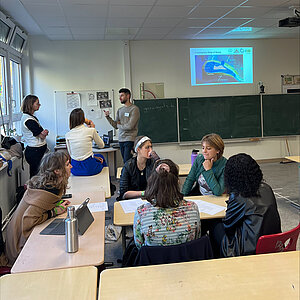
The project “Blue-Green Development in Kiribati”, funded by the International Climate Initiative (IKI), asked ten communities in South Tarawa — the capital of Kiribati — to self-identify their preferred training areas for livelihood development. In light of climate change most community members, especially young women, expressed a strong interest in horticulture. Locally based experts delivered the training sessions, on their own land or through home visits to the participants’ garden plots. As the project focuses on women’s empowerment in a traditionally male-dominated governance environment, it was essential to create clear and accessible opportunities for young women to shape their own futures.
Results
Due to the high demand for horticultural training — particularly among young women — more households were reached earlier in the project than originally planned. In 2023, 68 households received direct training, followed by another 80 in 2024.
As of December 2024, 102 households are continuing their horticulture activities independently of project support. Given the average household size in South Tarawa is seven, the outreach has had a substantial impact on local livelihoods and food security. The project team is currently developing a practical handbook on horticulture in atoll soils to support long-term uptake.
Lessons Learned
The success of the training would not have been possible without the support of local experts. Deeply embedded in their communities, they speak the local language and understand the context, not to mention being immensely qualified and well-respected across the Pacific. Finding good local coaches is crucial, and the project’s use of framework agreements, combined with fair pay, has been key to securing skilled trainers.
Tailoring training schedules to the needs and responsibilities of young women — through flexible formats, home visits, and the provision of tools — proved essential to enabling participation. Direct engagement with local women’s groups directly motivated young women and girls to participate.
Replication Potential
The forthcoming handbook on horticulture in atoll soils will serve as a key resource for other islands interested in replicating the approach. Demand for similar training is growing across Kiribati and even from neighbouring Pacific countries such as Tuvalu.
The link has been copied to the clipboard
Contact
IKI Office
Zukunft – Umwelt – Gesellschaft (ZUG) gGmbH
Stresemannstraße 69-71
10963 Berlin
[Translate to English:] Jugendengagement in der IKI
[Translate to English:]
Erfahren Sie mehr, wie die IKI junge Menschen beim Klima- und Biodiversitätsschutz unterstützt.