
First Francophone Forum on the NAP process
The first Francophone Forum on National Adaptation Planning (NAP) was held in Benin. It brought together experts and policy-makers from eleven countries.
The first Francophone Forum on the National Adaptation Plan (NAP) process took place in Grand-Popo in Benin from 28 to 31 August. It closes the gap between the strong need for information and exchange on adaptation planning in Francophone countries of Africa and the previously mostly Anglophone event formats on the topic. It was organised by the Ministry of Environment and Sustainable Development (MCVDD) of Benin and the IKI project ‘Science-based support for National Adaptation Plan (NAP) processes in francophone Least Developed Countries (LDCs) of sub-Saharan Africa’, supported by the NAP Global Network.
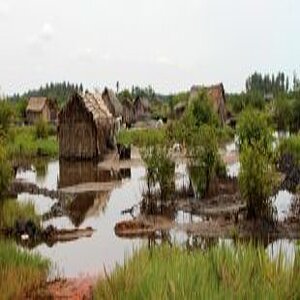
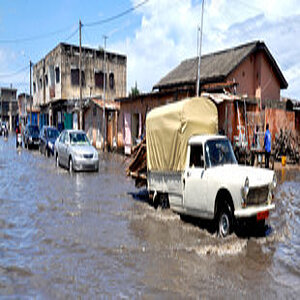
The least developed countries (LDCs) of sub-Saharan Africa are already being severely impacted by the adverse impacts of climate change. Droughts, heat waves, storms and flooding from heavy rainfall are occurring in ever-shorter intervals. At the same time, the countries have only limited capacities for adapting to the changes. They lack financial resources, and information on effective adaptation planning is often not available, or only in English. Moreover, international events between experts and policy-makers are usually conducted in English. However, it is important for representatives of Francophone countries to actively participate in order to benefit from positive examples and to learn from the challenges other countries are facing.
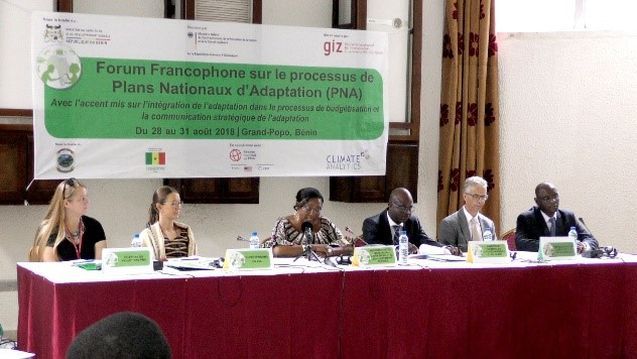
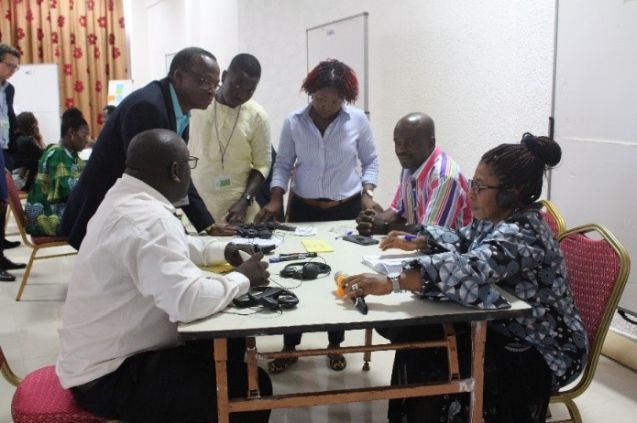
The forum was held over four days at the end of August. It was opened by representatives of the German Environment Ministry (BMU) and the Ministry of Environment of Benin. The participants from eleven countries subsequently discussed issues ranging from the integration of adaptation into budgetary planning to strategic communication on adaptation and presented examples from their countries.
Integrating adaptation into budgetary planning was highlighted as an integral part of all adaptation efforts. These cannot be realised unless sufficient financial resources are allocated to adaptation measures in the countries’ national and sectoral budgets. Improved strategic communication on adaptation could also contribute to achieving this goal by raising awareness of the issue among decision-makers and by informing other stakeholders such as the private sector and the general public about climate change and adaptation.
In addition to more than 50 participants from Francophone countries (Benin, Burkina Faso, Côte d’Ivoire, Haiti, Madagascar, Mali, Senegal and Togo), three participants from non-Francophone countries (Ghana, Jamaica and Nigeria) also contributed their experiences from their countries’ advanced adaptation strategies, thereby enriching the exchange at the forum.
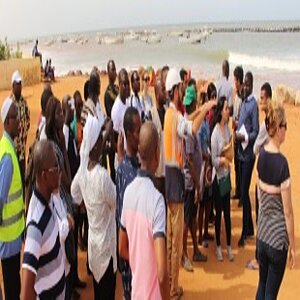
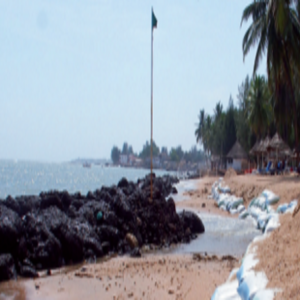
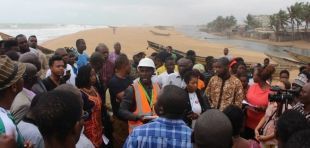
After the forum, the participants visited three sites in Grand-Popo and Cotonou along the shoreline of Benin which are being hit particularly hard by erosion. This gave them the opportunity to learn about adaptation measures such as breakwaters and discuss them with experts and locals. Since the villages are located very close to the Togolese border, it became clear how important it is to coordinate measures across borders in order to enhance positive effects and prevent negative impacts.
A further Francophone Forum on the NAP process is being prepared. It will aim to strengthen the new network and further develop the capacities of experts and policy-makers.
The link has been copied to the clipboard
Contact
IKI Office
Zukunft – Umwelt – Gesellschaft (ZUG) gGmbH
Stresemannstraße 69-71
10963 Berlin