
From Pastures to Power: Empowering Herder Women in Mongolia
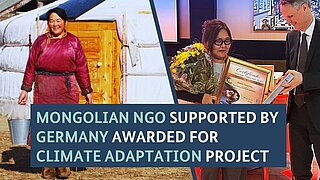
An IKI Small Grants project empowered Mongolian herders – especially women – on sustainable livestock and climate adaptation and was honored with the Energy Globe Award for the project.
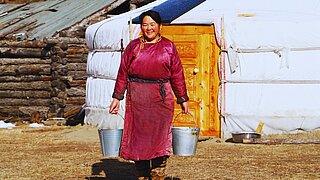
Arkhangai province, located in central Mongolia, is characterised by a diverse natural landscape with rugged terrain and high peaks. Its numerous rivers and lakes contribute to the region's lush greenery and fertile valleys. For local communities, the picturesque landscape is also a key source of income: a large share work as herders, producing goods such as dairy products and cashmere wool.
However, Mongolia faces serious climate-related challenges that undermine the livelihoods of herders. These include frequent natural disasters and desertification. Increasing livestock numbers accelerate land degradation. A project by the local non-governmental organisation Mongolian Women’s Fund (MONES) addressed these challenges with a special focus on supporting women herders. They are adapting their livestock practices to better cope with climate change challenges and to safeguard their income base. Sustainable pastoralism contributes to the conservation of the Mongolian steppe, one of the largest remaining grassland ecosystems.
Sustainable herding to strengthen incomes and environment
Supported by the IKI Small Grants programme, the organisation trained herders on sustainable livestock management, animal welfare, and responsible cashmere production to enhance their knowledge, leadership capabilities, and climate adaptation skills. By improving productivity, securing more stable income sources and focusing on livestock quality over quantity, the project reduces vulnerability to climate change while promoting responsible use of natural resources.
Empowering women to lead

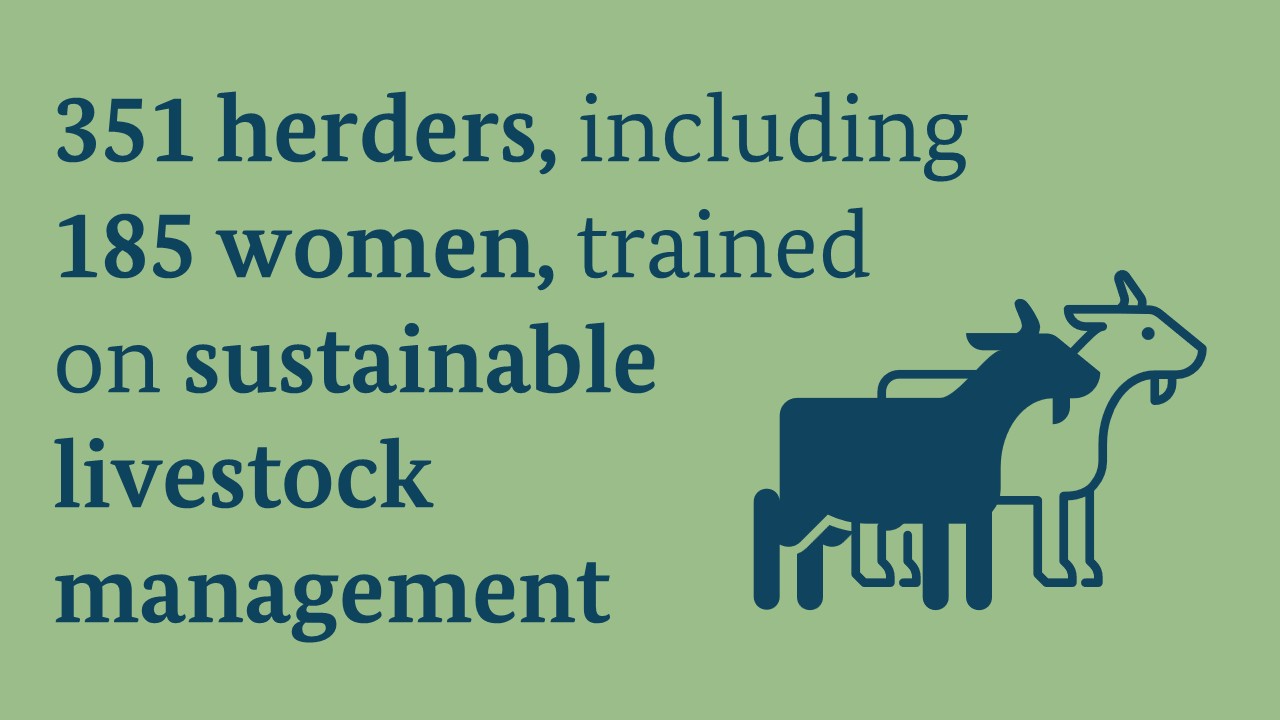
The project specifically empowered women to take leadership roles in cooperatives and participate in community decision-making. By supporting women to assume leadership positions, this approach helps them achieve greater financial independence while building resilience to climate change. Of the 351 herders trained, 185 were women.
Participating herders applied animal-friendly, hygienic standards and improved the quality and yield of livestock products. Two cooperatives – comprising 103 households – earned the “Responsible Nomads” certification, enabling them to establish direct supply agreements with major national companies.
International recognition for local action
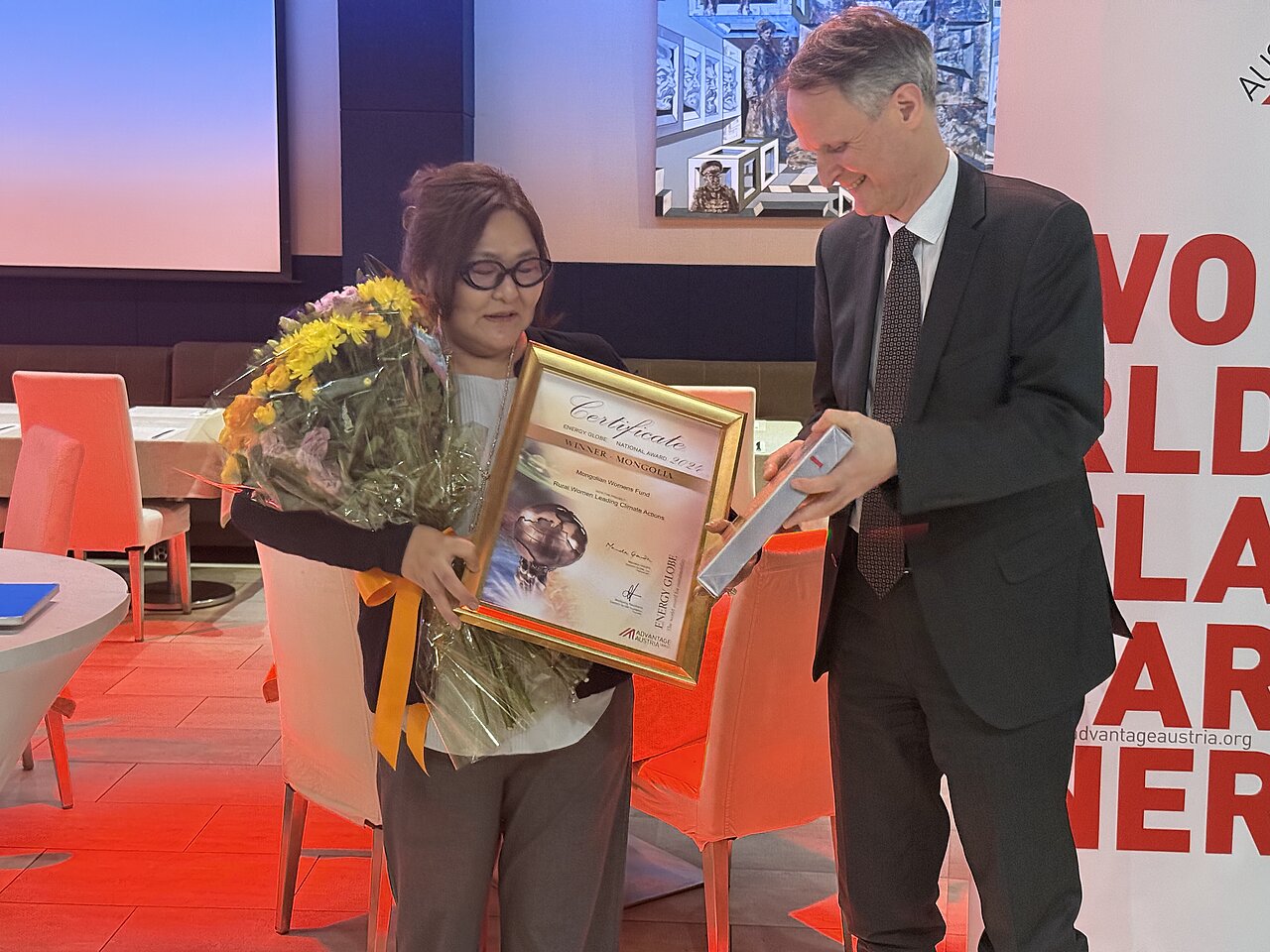
The impactful work on local climate change adaptation has already been recognised internationally. In 2025, MONES was awarded by an international jury of energy and environmental experts with the Energy Globe National Award Mongolia for their climate action project. Established in 1999, the Energy Globe Award highlights and recognises projects focused on sustainable and innovative solutions to global environmental challenges.
About IKI Small Grants
IKI Small Grants, implemented by the German federal enterprise Deutsche Gesellschaft für Internationale Zusammenarbeit (GIZ), funds local actors which are the driving force for change and essential for effective climate and biodiversity action worldwide. The programme is part of the International Climate Initiative (IKI), which is commissioned by the Federal Ministry for the Environment, Climate Action, Nature Conservation and Nuclear Safety (BMUKN). IKI Small Grants fosters bottom-up solutions while strengthening capacities of local actors.
The link has been copied to the clipboard
Contact
IKI Office
Zukunft – Umwelt – Gesellschaft (ZUG) gGmbH
Stresemannstraße 69-71
10963 Berlin