
Harnessing the Power of Nature: How Communities Are Fighting Climate Change

The International Climate Initiative supports projects that put ecosystem-based adaptation into practice through the Global EbA Fund.
Floods in Nepal, rising seas in Bangladesh, and extreme weather in Vanuatu — climate change is hitting hard. But across these regions, communities are turning to nature for solutions. Three projects supported by the Global EbA Fund illustrate how ecosystem-based adaptation (EbA) can work in practice — locally driven, inclusive, and focused on long-term resilience.
The Global EbA Fund, co-managed by IUCN and UNEP and financed by the International Climate Initiative (IKI), supports innovative EbA approaches that strengthen both people and ecosystems in the face of climate impacts.
BAGAR: Building Resilient Floodplains in Nepal
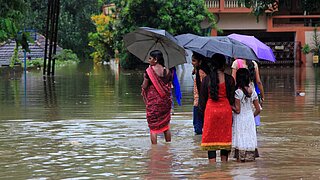
In Nepal’s Bagmati River Basin, regular and climate-induced monsoon floods and sedimentation have left fertile floodplains uncultivable, threatening food security and livelihoods — especially for women and marginalised groups.
The BAGAR project works with communities in Marin and Gadhimai Municipalities to develop agroforestry-based adaptation plans. By restoring floodplain ecosystems with native fodder species, the project supports climate-resilient agriculture, reduces flood risks, and models sustainable land management that can be scaled across other flood-prone areas.
Tidal Rivers, Local Voices: A People’s Plan in Bangladesh
Southwest Bangladesh is on the frontlines of climate change and sea-level rise. One promising solution is Tidal River Management (TRM) — restoring river ecosystems to reduce waterlogging and enhance resilience. Yet without community input, TRM’s potential remains limited.
This project supports a Community-Based Tidal River Management (CBTRM) model in the Betna-Marichhap river basin, co-developed with local people and authorities. It includes:
- A participatory People’s Plan
- An inclusive governance model
- Engagement with climate finance actors to support long-term investment
The resulting roadmap aims to guide future EbA upscaling efforts across the region.
ClimateWatch Vanuatu: Blending Science and Tradition
In Vanuatu, traditional weather knowledge is fading, while modern forecasts often go unused. ClimateWatch Vanuatu bridges this gap by engaging communities as Citizen Scientists.
Launched in 2023, the ClimateWatch mobile app (available in local Bislama) enables communities to monitor ecosystem changes across land, sea, and agriculture — blending traditional and scientific data into hybrid climate forecasts. The project fosters resilience, strengthens local engagement, and helps preserve indigenous knowledge for future generations.
About the Global EbA Fund
With a growing portfolio expected to reach 100 projects by 2027, the Global EbA Fund supports both small (up to USD 250,000) and medium-sized (up to USD 500,000) grants. These initiatives bring ecosystem-based solutions to scale, fostering climate resilience through nature.
The link has been copied to the clipboard
Contact
IKI Office
Zukunft – Umwelt – Gesellschaft (ZUG) gGmbH
Stresemannstraße 69-71
10963 Berlin
Funding priority
IKI Strategy
The IKI aims to achieve maximum impact for the protection of the climate and biodiversity. To this end, it concentrates its funding activities on prioritised fields of action within the four funding areas. Another key element is close cooperation with selected partner countries, in particular with the IKI's priority countries.