
How indigenous wisdom supports climate adaptation

An IKI project in Guatemala is supporting dialogue with Indigenous peoples in order to rediscover their traditional knowledge - and make it available for sustainable land use.
Symbiotic relationships between ecosystems and cultures have existed for millennia. Habitats and ecosystems have provided sustenance, a way of life, and cultural identity to Indigenous peoples and, in exchange, these groups have adapted their practices to ensure the health of both these ecosystems and the biodiversity within them.
Studies have shown that traditional practices prevent or mitigate resource depletion, species extirpation, and habitat degradation. Understanding and promoting approaches under these traditional practices is therefore crucial to protecting the world’s limited resources, achieving genuinely sustainable development and contributing to climate change adaptation.
Traditional Mayan knowledge for sustainable agriculture and forest management
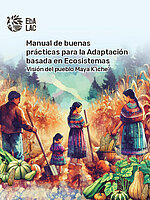
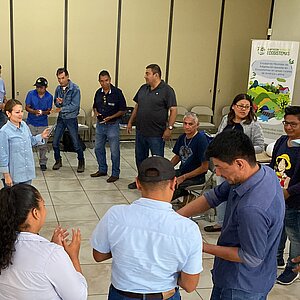
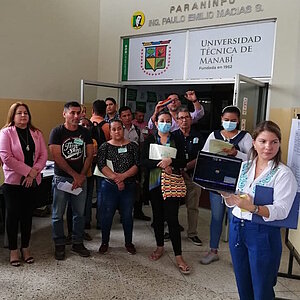
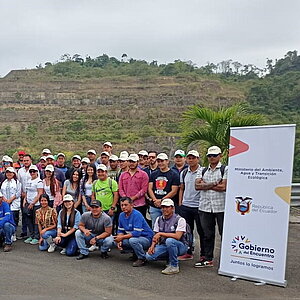
In Guatemala, the IKI-project “Scaling up-up Ecosystem-based Adaptation measures in rural Latin America” has worked closely with public sector actors, community and Indigenous leaders in the systematisation, understanding and promotion of traditional practices of the Mayan K’iche people. These practices have been recognised as vital ecosystem-based adaptation (EbA) approaches for addressing environmental challenges arising from climate variability.
The Guatemalan Mayan K’iche belief is that nature is integrated and interrelated, and that humans are an element within this relationship. Within this vision, this Indigenous group has established clear measures for ensuring water and food security, and for the use of other natural resources – measures founded on principles of integrity and respect for nature.
The IKI project has captured these approaches and measures within the Good Practice Handbook for Ecosystem-based Adaptation. The Handbook highlights holistic and environmentally sound practices towards agricultural production that ensure adequate soil and water management as well as measures for the sustainable use of other natural resources and the integrity of biodiversity, such as lumber and medicinal plants.
The handbook also highlights forest management measures, which include selection of tree species, seed selection, planting or reforestation, clearing, management of vegetative parts or pruning, management to avoid forest fires, and harvesting of trees suitable for use.
Ütz Awän: demonstrating sustainable land use through agroforestry
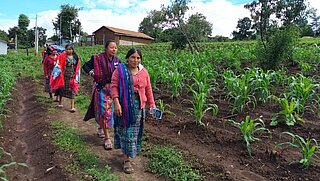
In addition, the project has provided an overview of an agroforestry system - the Ütz Awän model - that arises from the adaptation of practices of the Kaqchikel Indigenous communities in Guatemala. The model depicts a complex agroforestry system that promotes different multi-stratum and multi-crop structures which interact and complement each other, and how each element (water, organic matter, different plants and trees) supports the others in their health and growth.
The overview explains various practices of soil preparation and management, sowing, harvesting, etc. and shows how natural processes are facilitated. In this way, human use can be guaranteed without the need for chemical substitutes such as fertilisers, while at the same time preserving ecosystem services and biodiversity.
The Kaqchikel People have developed this model through strategies to survive and adapt to different environmental conditions and the effects of climate change. The main use of the species found in the model is for food, but they are also used for medicine, firewood, timber, fodder, green manure, food wrapping, food packaging, medicine, ornamentation, borders and shade, among other things.
Conclusion
These examples highlight the importance of listening to and respecting the voices and knowledge of Indigenous peoples – the world’s most experienced stewards of nature. They clearly demonstrate how Indigenous knowledge can contribute to biodiversity conservation, sustainable development, and climate change adaptation.
The link has been copied to the clipboard
Contact
IKI Office
Zukunft – Umwelt – Gesellschaft (ZUG) gGmbH
Stresemannstraße 69-71
10963 Berlin
Funding priority
IKI Strategy
The IKI aims to achieve maximum impact for the protection of the climate and biodiversity. To this end, it concentrates its funding activities on prioritised fields of action within the four funding areas. Another key element is close cooperation with selected partner countries, in particular with the IKI's priority countries.