

Madagascar: Strengthening communities for adaptation to climate change

An IKI project is strengthening the resilience of remote communities by combining disaster risk reduction, agroecology, and participation of local actors and the population.
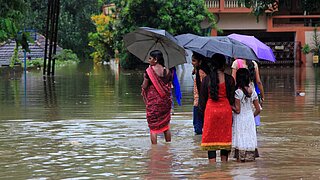
In 2024 alone, Madagascar was affected by several extreme weather events: three severe cyclones, a tropical storm, and a drought caused by El Niño hit the country and its population severely, leaving some 4.7 million people in need of humanitarian assistance and almost two million with virtually no access to food. The impacts of the climate crisis are clearly discernible in secluded regions, where most people live on self-subsistence from the yield of their farming.
In order to tackle these challenges, the project “Increasing resilience and rural livelihoods of most vulnerable farmer households in Antanambao-Manampotsy district, Madagascar,” which is funded by the International Climate Initiative (IKI), focuses on improving the resilience of the population in the fields of agriculture, water management, and disaster risk management.
Involvement of the population: Local committees for disaster preparedness
In view of the regularly occurring extreme weather events and prevailing poverty, the Madagascan Red Cross (MRC) is taking a holistic approach to the implementation of the IKI project. A central element here is the establishment and empowerment of local committees for disaster preparedness.
These groups consist of community representatives and local public officials who play a key role in their respective region, not only in raising awareness of the dangers but also as first responders in case of emergencies. By focusing on early warning systems, trainings and simulation exercises, the communities are experiencing for the first time a local disaster risk management system that is linked to the national system.
In a participatory risk analysis, community members meet to identify the most important local risks and develop local action plans. This creates a common understanding of how the community can prepare for and protect itself against extreme weather events.
In addition, feedback committees are established to serve as a feedback mechanism for the population in the project region. This promotes transparency, trust and participation, which form important bases for long-term resilience.
Growing coffee and cinnamon to secure livelihoods
In June and July 2025, the IKI project distributed more than 5,700 young coffee and cinnamon plants to 477 vulnerable families living on the east coast of Madagascar in the Antanambao-Manampotsy district.
Initially, a comprehensive study was conducted to determine that coffee and cinnamon were the most suitable cash crops to sell in the district and to secure the livelihoods of the rural population despite the impacts of climate change.
The Red Cross also offered practical training courses for the local farmers. The training courses taught the participants how composting and organic fertilization can strengthen the resilience of the plants and increase their yield.
“These regenerative cultivation methods increase harvest yields and thus play a major role in counteracting slash-and-burn forest clearance,” emphasises Monsieur Razafindratasy Alphonse José, director of the Environment and Forestry Office of Antanambao-Manampotsy. The reason for slash-and-burn clearance in the district is often the low agricultural yields, which are to be compensated by enlarging the cultivation areas.
Women are given special support to enable them to participate in the training courses as one of the most vulnerable groups in the district.
The district office for agriculture and livestock farming is accompanying the measures on site and ensuring that knowledge transfer and practical implementation are closely connected.
Adaptation is also a priority in project management
The implementation of the project is particularly challenging, due to the fact that the Antanambao-Manampotsy district is rather isolated. For example, heavy rainfall last year and heavy-duty transport caused the condition of the only access road to deteriorate to such an extent that the district could only be reached on foot, by bicycle or by motorbike for several months.
Despite these conditions, the project team remains functional and is adapting its humanitarian work to reach the vulnerable population groups. When distributing the young coffee and cinnamon plants, for instance, various options were developed to bring them as close as possible to the farmers despite the challenging conditions.
Another example: due to the fact that no native seedlings are available in the project region for reforestation purposes, the team is planning to relocate plant seedlings from the healthy parts of the forests. For this purpose, the project team will spend several nights in the forest in August 2025, as the region can only be reached after a several hour-long walk.
However, with well-organised working methods, good planning, and coordination, the various challenges can be mastered – whether poor road conditions or time-consuming measures to build trust with local actors.
Factors for successful and sustainable adaptation to climate change
The reality in Madagascar shows that working with vulnerable population groups in remote areas needs long-term commitment to achieve success in climate change adaptation (CCA). These are the people usually do not have access to climate financing.
MRC as crucial part of the national DRM system strengthens cooperation between local, regional, and national actors. The integration of the short-term and long-term perspective for the adaptation to the climate crisis ensures that strategies are sustainable even after the project ends.
Effective changes are achieved when communities take responsibility themselves, supported by a strong network. The Red Cross and Red Crescent Movement acts as a facilitator, combining humanitarian principles with specific assistance to the most vulnerable population to prepare for extreme weather events and long-term climate change adaptation.
Background information
The IKI project is funded though IKI Medium Grants and implemented by the Madagascar Red Cross in cooperation with the German Red Cross. As the national Red Cross Society, the MRC is the largest national humanitarian actor in the country and an integral element of the national disaster risk management system.
About IKI Medium Grants
With the IKI Medium Grants (IMG) programme, which is implemented by Zukunft - Umwelt - Gesellschaft (ZUG) gGmbH, the German government funds projects for climate action and biodiversity conservation that specifically involve smaller civil society actors in developing and emerging countries.
Click here for all IMG details
The link has been copied to the clipboard
Contact
IKI Office
Zukunft – Umwelt – Gesellschaft (ZUG) gGmbH
Stresemannstraße 69-71
10963 Berlin
Funding priority
IKI Strategy
The IKI aims to achieve maximum impact for the protection of the climate and biodiversity. To this end, it concentrates its funding activities on prioritised fields of action within the four funding areas. Another key element is close cooperation with selected partner countries, in particular with the IKI's priority countries.