
Scientific data for successful adaptation planning
Climate change adaptation needs scientifically reliable information. In Benin, stakeholders from politics and science launched the process of assessing vulnerabilities to improve adaptation planning.
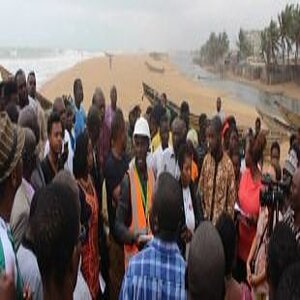
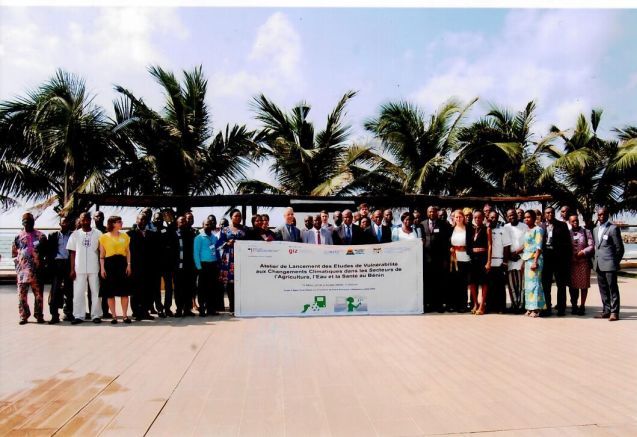
The process of conducting scientifically reliable Vulnerability Assessments has been launched on March 15th in Benin and earlier this year in Senegal with great attention by the public and political and scientific stakeholders. The Minister of Living Environment and Sustainable Development in Benin, Mr. José Tonato, emphasized during the launch ceremony the importance of adaptation measures for his country and stressed out the significance of scientifically reliable information for political decision makers in order to ensure the efficient and sustainable development of Benin.
An important instrument for the long term planning of adaptation is the development and implementation of the National Adaptation Plans (NAP), a process in which the medium-term and long-term changes necessary to reduce the vulnerability to climate change are identified. By launching the NAP process, the countries are integrating adaptation to climate change into their national and sectoral development planning. In the agricultural sector this includes for example the use of new cultivation methods or switching to other varieties that are more resilient against the changing weather patterns. However, the LDCs often lack the expertise for sound, politically well-established NAP processes.
The project “Support for national climate change adaptation plans in French-speaking sub-Saharan Africa”, supports its partners in Benin, Senegal and Burkina Faso in the NAP process. It is financed by the International Climate Initiative (IKI) of the Federal Ministry for the Environment (BMU) and implemented by Deutsche Gesellschaft für Internationale Zusammenarbeit (GIZ) GmbH in cooperation with the non-profit climate science and policy institute Climate Analytics. An essential step in this process is the collection and analysis of scientifically reliable data on potential impacts of climate change. Only by having those data, suitable adaptation measure can be taken. The project supports ministries, climate service providers and civil organizations in increasing the scientific capacities and knowledge on impacts, vulnerability, adaptation options and strategies.
Part of these measures is the development of Vulnerability Assessments in which sector-specific risks are identified, based on scientific analyses. These assessments will help to assess the current and future vulnerability in specific regions or sectors key to the country and where adaptation measures should be implemented with priority. In the process of the development of these assessments for the agricultural, water and health sectors, researchers from 12 scientific institutions and national climate service providers in Benin are involved.
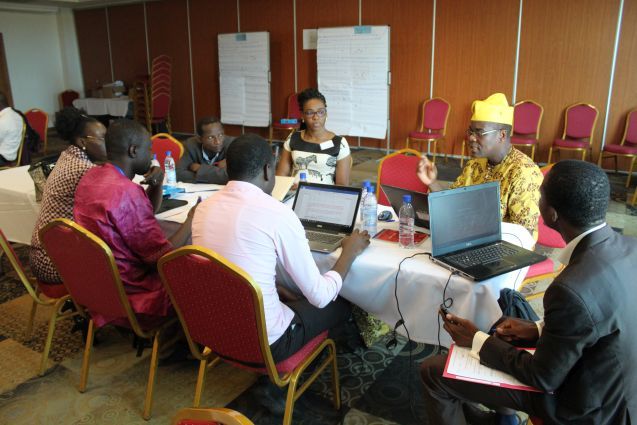
These scientific institutions and national climate service providers, such as meteorological institutes and universities, are supported in collecting and analyzing information about potential risks associated to climate change and identifying adaptation options. In a next step, this information will be fed into policy documents such as the National Development Plan or sector specific development plans, for example the National Development Plan for the Health Sector (PNDS). It is important that political decision makers are involved in the process from the beginning on. This ensures that adaptation is taken into consideration in all sectoral and national policies of the countries.
The link has been copied to the clipboard
Contact
IKI Office
Zukunft – Umwelt – Gesellschaft (ZUG) gGmbH
Stresemannstraße 69-71
10963 Berlin