
Shaping Brazil’s path to COP30 and beyond

Through participation, innovation and communication, the IKI Interface project in Brazil helps turn the country’s climate commitments from paper into practice.
When Brazil opens its doors to the world at COP30 in Belém, much of the groundwork that enables the country to present credible and ambitious climate policies will have been laid with the support of the Climate Policy Programme II (PoMuC II) – the central IKI interface project in Brazil. PoMuC II has become an important partner for Brazil’s climate governance stakeholders, ensuring that climate commitments move from paper to practice, while bringing together ministries, states, municipalities, civil society such as youth and indigenous representatives, and the private sector in a single conversation about the nation’s future.
Inclusive planning for Brazil’s 2024–2035 Climate Plan
Over the past year, this role has taken on a visible form. The project has supported the Ministry of Environment and Climate Change (MMA) and the Interministerial Committee on Climate Change (CIM) in developing the new 2024–2035 Climate Plan, the most comprehensive planning framework in Brazil’s climate history. Seven sectoral mitigation plans were opened for consultation in July 2025, covering energy, agriculture, transport, cities, industry, mining and waste. Through its technical expertise and facilitation, PoMuC II helped transform the exercise into a participatory, inclusive process aligned with Brazil’s Nationally Determined Contribution (NDC). Indigenous leaders, women’s organisations, and youth movements have sat at the same table as federal ministries and governors, bringing climate justice into the heart of policymaking.
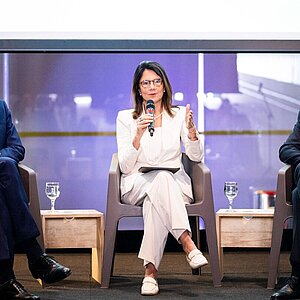
This spirit of co-creation is also evident in the Federative Dialogues on the Climate Plan, where more than 200 representatives from states and municipalities exchanged practices and debated how subnational action can reinforce national goals. By supporting ABEMA, the association that unites state environmental agencies, PoMuC II has enabled commitments at the state level to become part of a coherent national pathway. The result is not only better policies on paper, but also stronger ownership by those who will implement them on the ground.
Supporting Brazil’s main national instrument for financing climate action
However, policies need resources, and here too PoMuC II has made a difference. Working alongside the MMA, the project is supporting the development of a new methodology for the Climate Fund (Fundo Clima), Brazil’s main national instrument for financing climate action. This approach will strengthen governance, improve transparency in the allocation of resources, and create clearer criteria for selecting projects and investment vehicles.
Accelerating innovation for the Amazon
At the same time, PoMuC II is opening new spaces for innovation. One important example is the Climate Innovation Hub, which PoMuC II has co-created with the Impact Hub and Catal1.5°T to accelerate climate ventures in Brazil, with a special focus on the Amazon region. The programme supports start-ups that develop technologies ranging from sustainable bioeconomy value chains to digital forest monitoring, helping them to refine their business models, connect with impact investors, and position themselves on the national and international stage.
Communication as a strategic tool
One of the most distinctive marks of PoMuC II has been its effort to reshape how climate action is communicated and understood in Brazil. Rather than treating communication as an accessory, the programme approaches it as a strategic tool to bring diverse actors into the centre of the climate story.
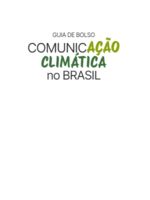
Through this lens, young people are not seen as an audience to be informed, but as storytellers of their own realities. Indigenous leaders, women’s organisations and local communities are not just consulted, but invited to help frame how climate policies are explained to society. And political partners themselves, such as the MMA, look to PoMuC II, for example to help shape a communication strategy for Brazil’s new Climate Plan. The impact of this approach can already be felt. A pocket-sized guide on climate communication has travelled far beyond its initial audience, becoming a reference among journalists and civil society and even drawing formal recognition from government partners.
Connecting the IKI Community in Brazil
PoMuC II also carries out a distinct task as the IKI Interface in Brazil. Beyond supporting policies, its role is to connect the many actors and projects working under the IKI umbrella, creating spaces for exchange, and to consolidate and make available specific knowledge relevant to climate practitioners. This ensures that Brazil’s climate efforts are seen not as isolated actions, but as part of a broader, integrated portfolio.
This connecting role takes many shapes. At the national level, the annual IKI Brazil Meeting has become a flagship space to connect projects, ministries and civil society, while the forthcoming IKI Brazil website will serve as a permanent hub for knowledge sharing and visibility. Regular encounters with other interface projects in the region ensure that Brazil’s experience informs and is enriched by neighbouring countries. The upcoming IKI Conecta magazine is also a joint product of the IKI interfaces in the region.
The link has been copied to the clipboard
Contact
IKI Office
Zukunft – Umwelt – Gesellschaft (ZUG) gGmbH
Stresemannstraße 69-71
10963 Berlin
IKI priority country Brazil

Funding priority

The IKI at COP30

Related Videos

Related Publications
-
 11/ 2024 | Educational material
Climate Communication Pocket Guide – A Practical Tool for Journalists and Communicators
Portuguese (external link)