
Ten Years After Paris: Global Mobility Demands Accountability
240 participants from 31 countries, 33 sessions, one shared goal: taking responsibility for climate action in transport. Transport and Climate Week 2025 sent a strong signal for the next decade.
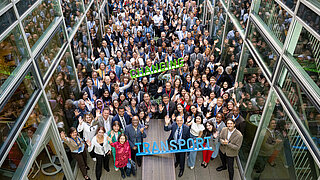
Berlin once again became the meeting point for the international transport community in September 2025. Ten years after the Paris Agreement, 240 representatives from politics, administration, and civil society gathered at the 8th Transport and Climate Week. The motto set the tone: “Time to Be Accountable – Showcasing Achievements, Driving Transformation.”
Organised with the support of the International Climate Initiative (IKI), this annual flagship event has become a central platform for advancing climate action in the transport sector. Over the years, IKI has enabled practitioners, experts, and decision-makers from around the world to learn, exchange ideas, and forge partnerships for a net-zero transport future.
The 2025 Focus: Accountability and Transformation
Transport and Climate Change Week 2025 centred on four key aims and embedded each aim into a dedicated day:
- understanding and mapping the system,
- spotlighting proven strategies,
- visualising clear goals,
- and enhancing accountability
Regional diversity was a hallmark of this year’s edition, with participants joining from Africa, Asia, the Caribbean, Latin America, the Middle East, Oceania, and South-East Europe. By bringing together perspectives from across continents, the week underscored that accountability in transport is a truly global challenge.
The week was marked by panels and expert sessions on the four key aims. The specific topics of the trainings ranged from regulating clean vehicles, decarbonization of informal transport and scaling e-buses to financing sustainable mobility.
Stories of change from Africa and Latin America showed how diverse the pathways to transformation can be.
Symposium Day: A Call to the Next Decade
The Symposium Day opened the event to a wider audience. High-level discussions on climate targets up to 2035, global value chains, and maritime innovation underlined a simple fact: whether it’s e-buses or sea transport, transformation is global and cross-sectoral.
Particular weight came from the words of Rita Schwarzelühr-Sutter, Parliamentary State Secretary at the German Federal Ministry for the Environment, who was among the panellists of the high-level panel “Targeting Transport Decarbonisation: What Is Needed up to 2035?”
She described transport as “one of the most pressing areas” for climate action and recalled the Paris Agreement as both a milestone and a promise. She also emphasised that accountability means to deliver, pointing to NDCs as the foundation for international support and investment and urging that targets must not only be declared, but achieved through concrete measures in the next five years. She also reminded participants that “transport is also a social question” and called for a just transition.
From Data to Decisions: IKI Projects Share Best Practices for Climate-Friendly Transport
Beyond panels and expert sessions, the 2025 Transport and Climate Week emphasized peer learning and exchange. Intensive trainings, regional dialogues, and networking sessions provided a space for participants to share experiences and develop common solutions.
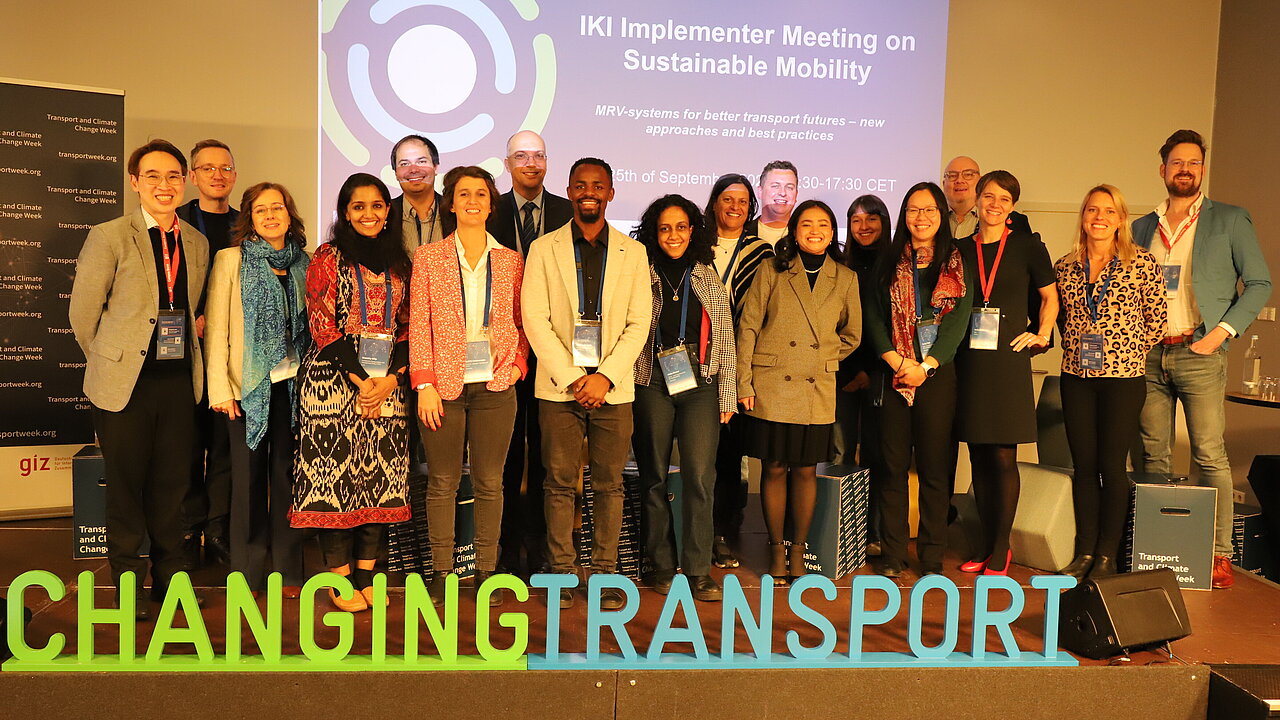
The IKI community took full advantage of the opportunity: The IKI Transport Implementers’ Meeting served as a central platform to exchange knowledge, learn from one another, and design new approaches for sustainable mobility.
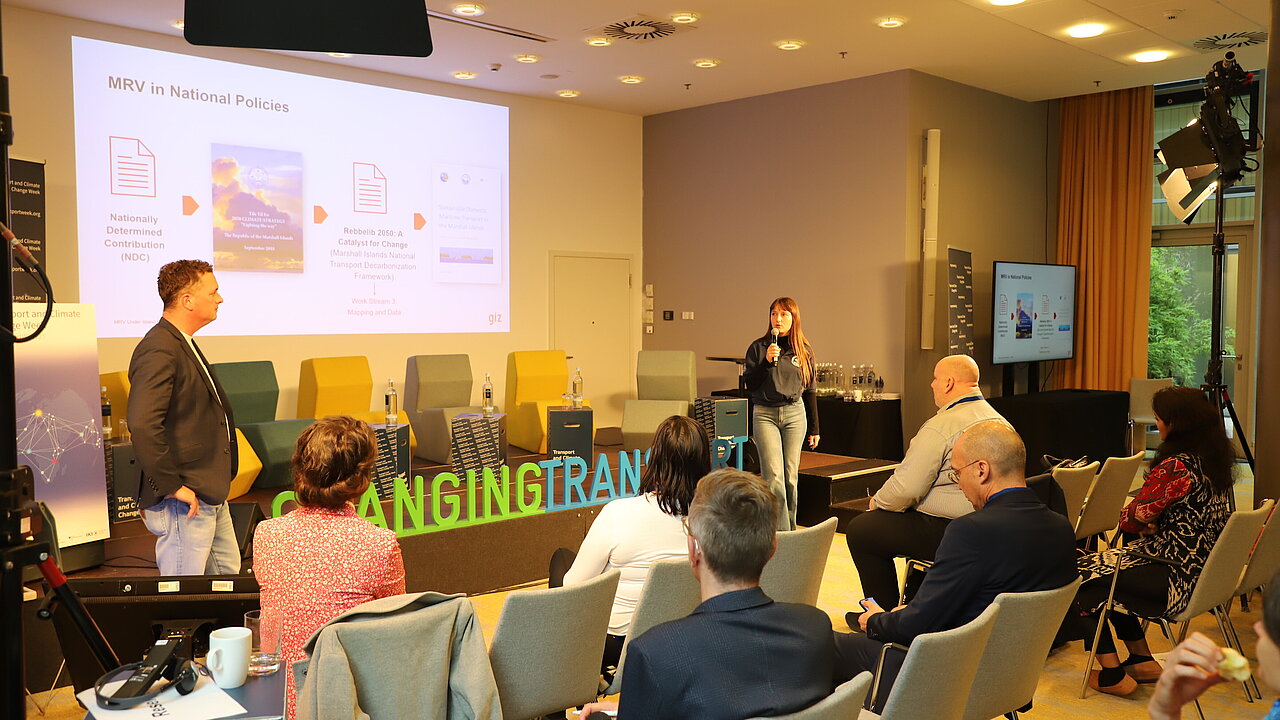
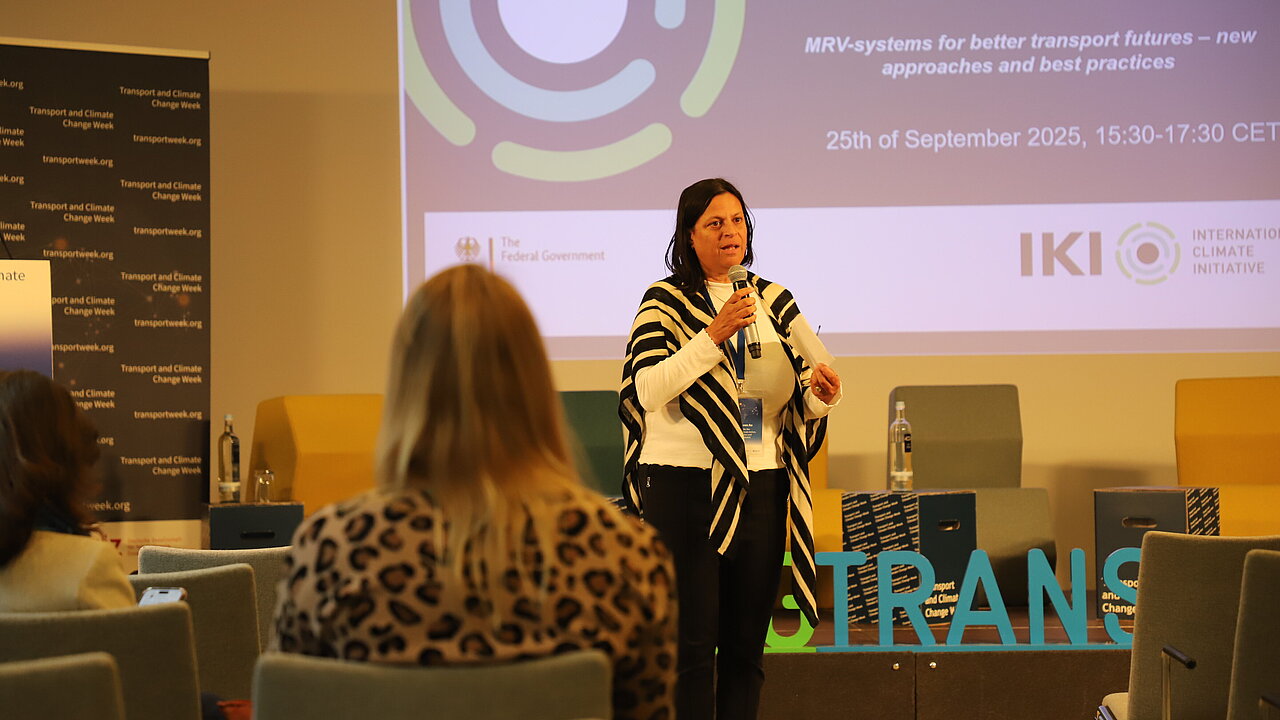
This year’s focus was on monitoring, reporting, and verification (MRV) systems — critical tools to ensure transparency and accountability in climate-friendly transport initiatives. Around 20 participants explored how MRV systems can strengthen institutional capacities, foster partnerships, and lay the groundwork for scalable solutions and climate-focused investments.
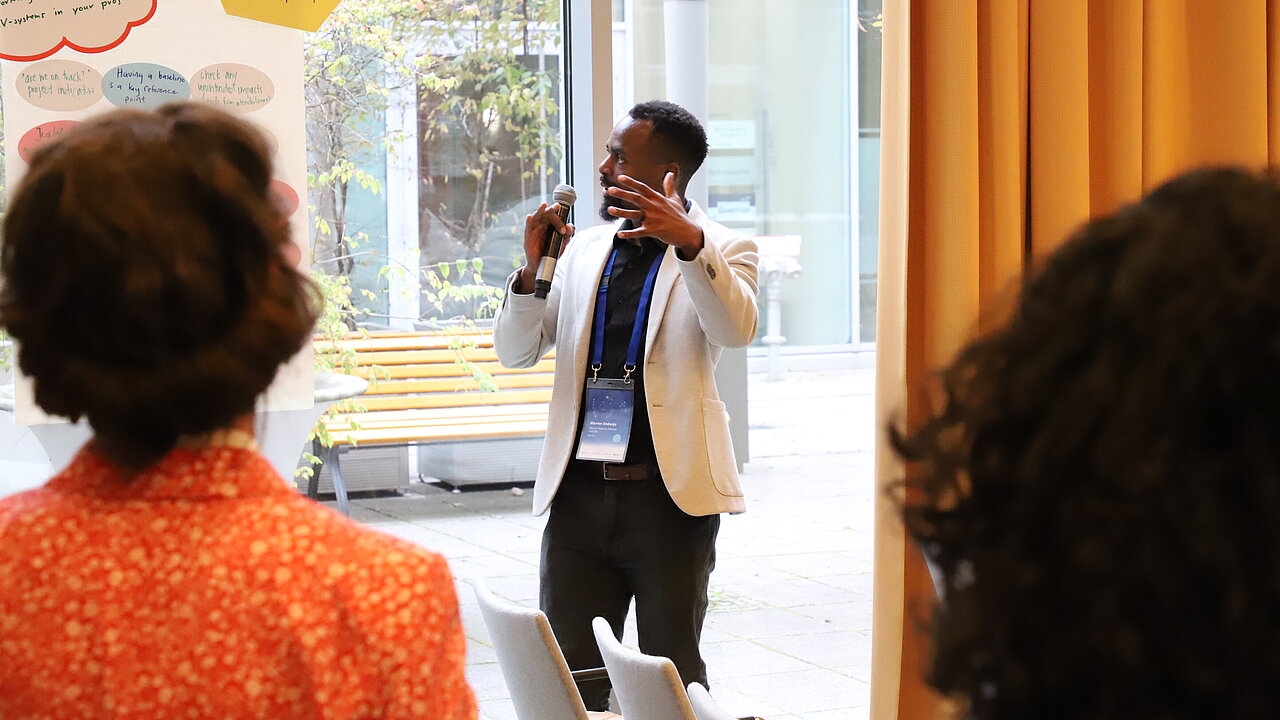
Practical examples were highlighted, including insights from the Low Carbon Sea Transport project. Best practices ranged from digital tools to participatory data collection, illustrating how MRV systems can support both technical and social dimensions of transport decarbonization.
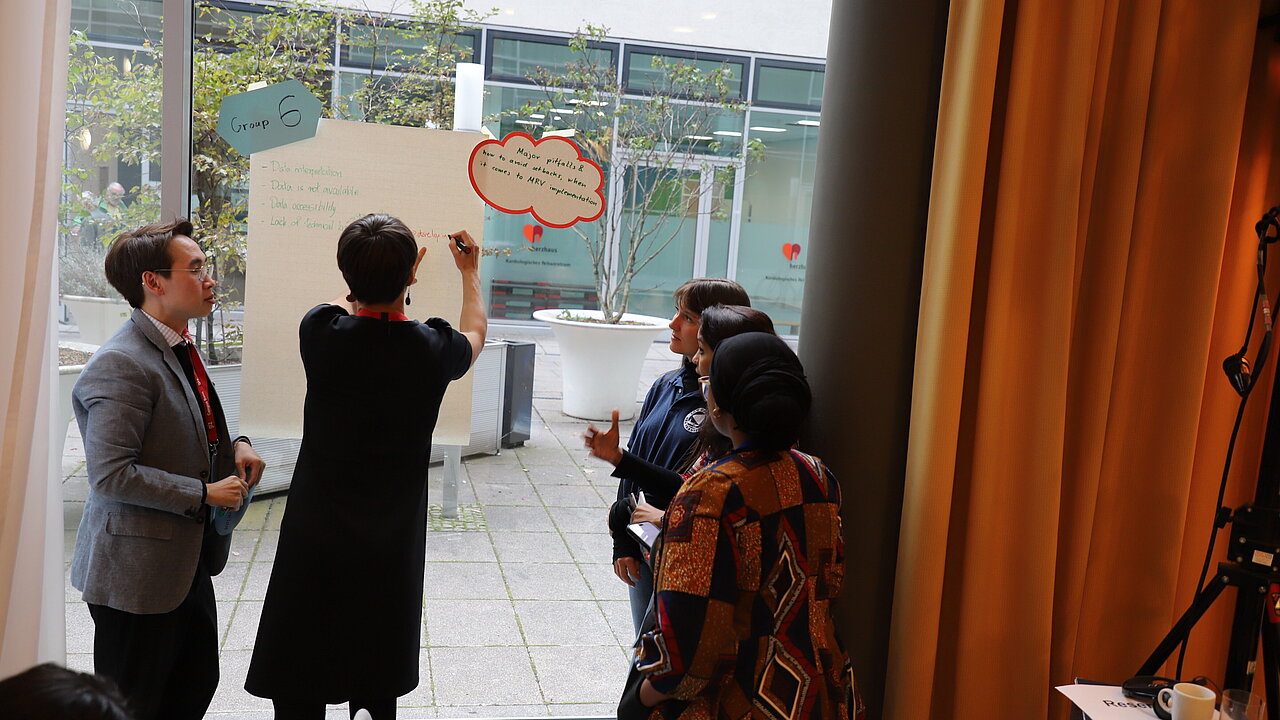
Participants also addressed challenges, such as data gaps, limited institutional capacity, and the need for long-term financing. The discussions reinforced a key message: MRV systems are more than technical instruments — they are vital for advancing sustainable, climate-friendly transport and ensuring that projects deliver measurable impact.
Highlights Beyond the Sessions
At the heart of Transport and Climate Change Week is peer learning and exchange. During the week, participants took part in 1.5 days of four parallel in-depth trainings, which provided space to engage with real-world cases, share lessons across regions, and strengthen the skills needed to accelerate transformation in their own contexts.
This interactive format encouraged open dialogue, helping participants connect experiences from different regions and identify common solutions for decarbonising transport. To capture these moments and share them more widely, the week also featured daily summary videos, which highlighted key discussions, interviews, and extended the exchange beyond Berlin.
The full playlist can be accessed here
A Global Community of Action
As the 8th edition of Transport and Climate Change Week concluded, one message rang clear: accountability must guide the next decade of action. Supported by the IKI, the week demonstrated that the transport sector can lead the way in achieving net zero, but only if measurable goals, shared responsibility, and united global effort remain at the core.
The conversation will continue in 2026, when Transport and Climate Change Week will return in a virtual format to broaden global participation. With IKI’s support, the event will remain a hub for accountability, peer learning, and the transformation of transport worldwide.
Impressions of the „IKI Transport Implementers’ Meeting“
The link has been copied to the clipboard
Contact
IKI Office
Zukunft – Umwelt – Gesellschaft (ZUG) gGmbH
Stresemannstraße 69-71
10963 Berlin
Transport and Climate Change Week 2026
Funding priority

The IKI Strategy
The IKI aims to achieve maximum impact for the protection of the climate and biodiversity. To this end, it concentrates its funding activities on prioritised fields of action within the four funding areas. Another key element is close cooperation with selected partner countries, in particular with the IKI's priority countries.