
Mobilize Net-Zero – Facilitating the global transport transformation
Transport accounts for a quarter of energy-related CO2 emissions, growing faster than in other sectors. A global transformation of transport is pivotal for limiting global warming to 1.5 °C. The project aims for national governments to increase their commitments towards decarbonizing transport with the support of international partnerships. To this end, establishing a partnership of pioneering countries is being explored. Through this partnership and exchange platforms such as Transport and Climate Change Week, international learning is being promoted and awareness is raised. An online tool based on artificial intelligence (Transport Transformation Tracker) informs stakeholders about the status of reforms. In East Africa, a flagship project on paratransit will be prepared and knowledge on the decarbonisation of transport will be disseminated. In Latin America, sustainable mobility encouraging electrification and a shift to public transport is promoted in ten countries.
- Countries
- Argentina, Brazil, Colombia, Costa Rica, Dominican Republic, Mexico, Panama, Paraguay, Peru, Rwanda, Uruguay
- IKI funding
- 4,270,000.00 €
- Duration
- 12/2022 till 01/2030
- Status
- open
- Implementing organisation
- Deutsche Gesellschaft für Internationale Zusammenarbeit (GIZ) GmbH
- Political Partner
-
- Ministry of Economy and Finance (MEF) - Peru
- Ministry of Environment - Panama
- Ministry of Environment - Uruguay
- Ministry of Environment and Energy (MINAE) - Costa Rica
- Ministry of Environment and Natural Resources - Dominican Republic
- Ministry of Environment and Sustainable Development (MADES) - Paraguay
- Ministry of Finance (MF) - Brazil
- Ministry of Finance and Public Credit - Mexico
- Ministry of Infrastructure Rwanda
- National Planning Department of Colombia
- Secretariat of Strategic Affairs of the Presidency of the Nation - Argentina
- Implementing Partner
-
- Agora Verkehrswende – Agora Transport Transformation gGmbH
State of implementation/results
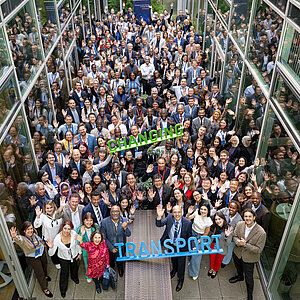
- The Transport and Climate Change Week 2025 took place in Berlin from 22 to 26 September as an invitation-only event. The 8th edition was held under the motto “Time to Be Accountable – Looking at the past, shaping the future” and once again facilitated peer learning, the exchange of national experiences, and the strengthening and development of global and regional networks (www.transportweek.org). A total of 2,240 people from 32 different countries took part. The next edition in 2026 will be held virtually from 5 to 9 October.
- On 11-13 June 2024 the event "Regional Exchange on Minibus Electrification in Africa" took place in Kigali, bringing together decision-makers from government bodies, and representatives from academic institutions in the region to discuss how to work together to modernise the minibus sector across the continent. The event was organised in co-operation with the Volvo Research and Educational Foundations (VREF), MobiliseYourCity, and the Transformative Urban Mobility Initiative (TUMI) (changing-transport.org/…).
- Publication of a good practice paper on updating NDCs in June 2024 (changing-transport.org/…).
- The project has assessed the status quo of 100 international partnerships currently engaged in decarbonising the transport sector and its subsectors. The analysis serves as a basis for exploring strategic options to strengthen climate ambition in transport through international partnerships.
- The "NDC Transport Tracker" (changing-transport.org/…), which originally was developed by the project Advancing Transport Climate Strategies (TraCS), was updated and its relaunch presented to the public on 29 August 2023. It is an online database providing information on transport-related content in government documents such as Nationally Determined Contributions (NDCs) and Long-Term Climate Strategies (LTS). NDCs and LTS are continuously analysed, and the results are published online. (github.com/…).
- By 15 January 2026, 110 countries had submitted their third NDCs. Notably, 32 of these include transport-related targets for reducing greenhouse gas emissions, and 96 NDCs set out measures to reduce emissions in the transport sector
- As part of the NDC update process, the project supported GIZ teams in 12 countries to help Ministries of Transport integrate climate goals into national plans.
- It also collaborates with international partners to advance transport climate policy. To this end, the “Transport Data Commons” (TDC) portal was developed. It enables the transport sector to contribute data and positions the TDC as a resource for development banks, both as beneficiaries and as potential funders. Its importance has been recognised by the United Nations, which has included the TDC as a key tool for open data within the framework of the UN Decade of Sustainable Transport.
- The Changing Transport newsletter has returned. Published quarterly, it features updates on recent activities and developments available via the Changing Transport Knowledge Portal. (civicrm.changing-transport.org/…;reset=1).
- RWA:
- In 2024, the first regional exchange on minibus electrification was held in Kigali, fostering collaboration among African governments and academia. A discussion paper followed.
- In April 2025, Uganda held consultations to present its paratransit reform roadmap to key stakeholders and operator associations.
- A preliminary study on bus electrification in inter-city transport and in secondary and satellite towns was completed in November and December 2025 and validated in collaboration with stakeholders.
- Latin America:
- The E-Motion Community of Practice was launched during Transport and Climate Change Week 2025, bringing together key stakeholders at national and regional level from nine Latin American countries.
- 71 stakeholders from Panama, Paraguay and Uruguay took part in virtual training sessions on the basics of electric mobility and electric buses.
- A study tour to Chile brought together transport officials from Panama, Uruguay and Paraguay. Participants gained first-hand insights into Chile’s transition from combustion-engine to electric buses, as well as into the operation and maintenance of electric vehicle fleets.
Latest Update:
10/2026
Project relations
Legend:
The link has been copied to the clipboard