
Initiative Resource Efficiency and Climate Action (IREK) II
The G20 emerging economies are characterised by strong industrial growth. This is associated with increasing resource consumption and greenhouse gas emissions. The project therefore initiated the implementation of integrated strategies and programs to promote resource efficiency, circular economy, and climate protection in industrial sectors in the priority countries Argentina, Indonesia and Mexico. To this end, it strengthened the skills of decision-makers in the public sector and supported the implementation of measures to promote resource efficiency and circular economy for national industrial companies. It also helped to sensitize partner countries to improved data management and to use methodological approaches to quantify the contribution of resource efficiency to climate protection. In addition, the project supported international dialog processes for resource efficiency and climate protection, especially in the G20 context, in close cooperation with the BMUV.
- Countries
- Argentina, Indonesia, Mexico
- IKI funding
- 2,989,914.68 €
- Duration
- 03/2021 till 03/2024
- Status
- completed
- Implementing organisation
- Deutsche Gesellschaft für Internationale Zusammenarbeit (GIZ) GmbH
- Political Partner
-
- Ministry of Environment and Forestry (KLHK) - Indonesia
- Ministry of Environment and Natural Resources (SEMARNAT) - Mexico
- Ministry of Environment and Sustainable Development - Argentina*
State of implementation/results
- Project completed.
Global:
- Together with VDI-ZRE, the project developed an online seminar series on resource efficiency for small and medium-sized enterprises in the metalworking industry. The training content was further developed on a sector-specific basis and contextualized by local experts for the partner countries Argentina and Mexico.
- The project cooperated with the International Resource Panel (IRP) of the United Nations. The aim was to contextualize the findings and recommendations of the 2020 global IRP report ("Resource Efficiency and Climate Change: Material Efficiency Strategies for a Low-Carbon Future") in Argentina, Mexico, and Indonesia. The national priorities and characteristics of the three countries were explored in depth, highlighting material efficiency strategies with the most significant potential for reducing greenhouse gas emissions. Preliminary results were presented at the 30th meeting of UNEP/IRP in Bangkok (June 2023).
- On 01/12/2022, IREK II supported the European Resources Forum (ERF) with a session on "Resource efficiency and circular economy - policy experiences and stories from Indonesia, South Africa and Uruguay".
Mexico:
- The Public Education and Training Institute of the State of Guanajuato (IECA), with support from the project, developed a course on resource efficiency and climate change mitigation for businesses. This took place twice in a hybrid format in 2022 and 2023. Many of the 30 companies that participated are already working on concrete plans for implementing resource efficiency measures in their businesses. Due to high demand, the course was held again in autumn 2023 in cooperation with the Ministry of the Environment in Guanajuato with ca. 150 companies. In addition, with the support of the project, IECA piloted a new course on eco-design with nine participants in spring 2023.
- In the state of Guanajuato, the project supported the Ministry of Environment and Economy in developing a strategy to promote resource efficiency and a circular economy. With the strategy, Guanajuato's government sets specific goals that it plans to implement by 2024, or 2030, to enable the state to become a leader in circular economy by 2050.
- For high-ranking representatives of Mexican state environmental authorities, the project organized a dialogue with two IRP scientists in November 2021, in which they presented essential results of the work of the Intergovernmental Panel on Climate Change and discussed possible conclusions for Mexico.
- IREK II supported the Ministry of Environment of Guanajuato, SMAOT, and the National Association of State Environmental Agencies of Mexico, ANAAE, in organizing a high-level dialogue forum on resource efficiency, circular economy and climate change mitigation in León/Guanajuato on 2.2.2023. The forum was attended by the governor of Guanajuato, the environment ministers of three Mexican states, and high-level representatives from the environment ministries of other Mexican states.
Argentina:
- With the preparation of strategy papers for the decarbonization of the building materials industry and the metal processing industry, the project supported the ongoing national climate planning. In close cooperation with the Argentine Ministry of the Environment, six resource efficiency measures were identified in the building materials industry and nine in the metal industry together with important national stakeholders, and proposals for concrete policy instruments to promote them were developed. The results will be incorporated into the national climate plan.
- Together with the Argentine Metal Industry Umbrella Association (ADMIRA) and the National Ministry of Economy, the project conducted the first pilot series of webinars on resource efficiency for small and medium enterprises in the metalworking industry. ADIMRA's training institute integrated the webinar as an integral part of their training program.
- Through studies and the promotion of an opinion-forming process, the project has made a significant contribution to ensuring that the use of recycled concrete for load-bearing and non-load-bearing components is approved and regulated for the first time in the new concrete building regulation CIRSOC200:2023.
- Together with the Argentine Metal Industry Association (ADIMRA), the project conducted another course series on resource efficiency for SMEs as a webinar and as a face-to-face event in two regions. The Ministry of Economic Affairs also offers a training format for sustainable production in SMEs. IREK II supported this training format with a component on resource efficiency in form of a cross-sector webinar series and another regional face-to-face event.
Indonesia:
- Since November 2022, the project has been supporting the Ministry of the Environment in establishing a national environmental product declaration programme. This important tool contains information on a product's material consumption and impact on global warming and thus contributes to strengthening resource efficiency as well as climate protection. A guideline outlined initial recommendations, such as advancing the establishment of the programme and creating institutional arrangements for the introduction of the declaration system. The Ministry of the Environment is implementing this roadmap together with its subordinate institutions.
- Life cycle assessment (LCA) is a method for calculating the environmental impact of products and services throughout their life cycle. The project developed trainings for ministry and company representatives to learn how to use and conduct LCAs. Considering the IRP study and the establishment of the new Indonesian capital, the focus of the training was on the building materials sector.
Latest Update:
04/2026
Further links
- Study: Resource Efficiency Potentials for the metal industry white goods sub-sector in Argentina
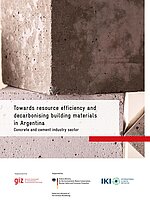
- Paper: Towards resource efficiency and decarbonisation of the metal industry materials in Argentina
- IRP Technical Guidelines: Resource Efficiency and Climate Change -Material Efficiency Strategies for a Low-Carbon Future in the Residential Construction Sector in Argentina, Indonesia and Mexico
- Strategy: Guanajuato Circular. Eficiencia de Recursos y Economía Circular 2050
- Video: Guanajuato Circular. Eficiencia de Recursos y Economía Circular 2050
- Factsheet to a case study from Argentina: How recycling of material in the construction industry can reduce emissions
- Factsheet to a case study from Indonesia: How optimised design in the construction industry can reduce emissions
- Flyer on a study model: A systemic approach to resource efficiency policies
- Video recording referring to the IRP Technical Guidelines
- Video: Good Practice Example from a Mexican company
- Video: Good Practice Example from an Argentinian company
- Factsheet to a case study from Ecuador: How optimised design in the leather industry can reduce emissions
- Factsheet to a case study from Mexico: How optimised design in the construction industry can reduce emissions
Project relations
Legend:
The link has been copied to the clipboard