

The decade of implementation
How the IKI is developing further as a funding instrument
To limit climate change and species loss, we not only need to develop new solutions but must ensure we implement existing ones systematically and ambitiously. Accordingly, the International Climate Initiative (IKI) is continuously developing as a funding instrument to keep improving its funded projects.
In 2023, this process was spearheaded by the ‘Strategy of the International Climate Initiative up to 2030’, which defines how the IKI intends to make the greatest possible contribution to tackling the climate and biodiversity crisis in its partner countries in the years to come, by the end of this ‘decade of implementation’.
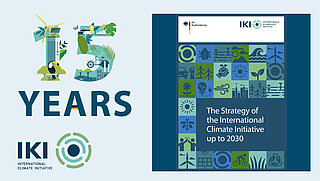
The overarching goal for this strategy is to create a climate-neutral economic framework that is not only more resilient towards the impacts of climate change but should also be embedded in the natural cycles of healthy ecosystems. The key to this is sectoral transformation, with the result that the IKI is focusing more strongly on this aspect. Accordingly, IKI projects in partner countries are working towards the goal of limiting agricultural subsidies that harm the climate, for example, as well as improving the general conditions for the expansion of renewables. To maximise the outcomes from its activities, the IKI has defined prioritised fields of action within its four funding areas. The strategy defines targets in the areas of raising ambition, improved general conditions, measures for climate change mitigation, biodiversity and/or adaptation to the impacts of climate change by means of pilot and scaling-up projects, and leveraging private finance. The strategy therefore has a direct influence on day-to-day work at the IKI.

Implementation of the IKI Gender Strategy with the Gender Action Plan
One of IKI’s criteria for success is the integration of gender aspects into all planning and implementation steps to ensure that climate change mitigation and biodiversity conservation projects achieve the best possible outcomes. Gender is decisive in determining how strongly individuals are impacted by climate change. As one example, women outnumber men in the agricultural workforce – a sector that is particularly vulnerable to the impacts of a changing climate. Women are exposed to excessive heat when working out in the fields, for example, and crop failures result in loss of income. At the same time, women and people with non-binary gender identities contribute their own perspectives and insights, which should be integrated and accounted for when managing transformational processes. These are therefore important target groups for measures, and for creating thought-leaders and decision-makers in climate change mitigation and biodiversity conservation.
After the introduction of the Gender Strategy in 2021, the IKI focused on its implementation in the years that followed. In a pilot phase lasting from 2022 to 2023, the IKI Gender Team drew up the IKI’s Gender Action Plan, which was completed in the fourth quarter of 2023. In its five fields of action, titled ‘Governance, scope and accountability’, ‘Criteria for implementing organisations and adaptation of processes’, ‘Gender competence (internal and external)’, ‘Knowledge management and communication’ and ‘Resources and budget’, the IKI Gender Action Plan reflects the goals of the IKI Gender Strategy and therefore the promotion of gender justice (more information about the goals of the IKI Gender Strategy).
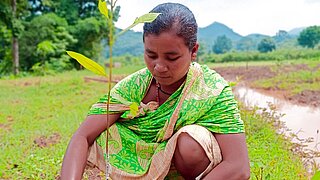
The plan comprises a total of 24 measures that were prepared in the pilot phase and are to be implemented by the IKI Gender Team successively until the beginning of 2026 (all measures in the IKI Gender Action Plan at a glance).
Since 2022, gender-responsive project planning and implementation has been mandatory for IKI implementing organisations. All IKI projects must prepare a gender analysis and project-related gender action plan, so as to consider risks for gender-based discrimination on the one hand and potential for gender-positive approaches on the other. he IKI Gender Guidelines, published in 2023, support the projects in this work (full details of the IKI Gender Guidelines). Also in 2023, the IKI published a guide to gender-responsive event planning, with the aim of ensuring that all genders can participate equally in IKI events.
In 2023, the IKI also increased its focus on preparations for the IKI Gender Community of Practice (IKI GCoP), which started work in early 2024. At this time, core topics were defined, making use of approaches that included participatory measures. The community supports IKI implementing organisations in implementing the IKI Gender Strategy and improves knowledge transfer between stakeholders. In this way, the IKI GCoP promotes gender justice within the framework of its projects (find out more about the IKI GCoP).

IKI Safeguards Policy and IKI Exclusion Criteria enter into force
The IKI safeguards system aims to prevent negative impacts on people and the environment while simultaneously maximising the positive, ecological and social effects of IKI projects.
In January 2023, the IKI Safeguards Policy and IKI Exclusion Criteria entered into force, and have complemented the IKI’s safeguard system since then. The Safeguards Policy sets out the guiding principles and procedures that are to be used to safeguard environmental and social standards in IKI projects. Among other things, the policy is based on the principles of social and ecological sustainability, the conservation of biodiversity, the upholding of international human and labour rights, and freedom from discrimination.
The IKI’s Exclusion Criteria define the types of activities that cannot receive IKI funding. These include activities that are in breach of international agreements to which the German Federal Government is a signatory party (such as the ILO’s Core Labour Standards). Also excluded from IKI funding are other high-risk topics where compliance with stringent environmental and social standards cannot be guaranteed (for example activities involved with the trade or production of certain highly dangerous pesticides).

The publication of the policy was met with positive feedback from the international community. In one study, published by the Office of the United Nations High Commissioner for Human Rights (UN OHCHR), the policy was cited as a best-practice example in relation to the upholding of international human rights agreements.
The publication of the Safeguards Policy and Exclusion Criteria increases the quality, coherence and efficiency of projects as well as the overall funding programme. Both documents also guarantee a high level of transparency.
Find out more here about the IKI safeguards system.
-
 01/ 2023 | IKI values
Safeguards Policy of the International Climate Initiative
English (PDF, 3 MB, barrier-free)
-
IKI Independent Complaint Mechanism as best-practice example
Another pillar of the IKI’s responsibility framework – the IKI complaint mechanism – has also met with high acclaim at international level. The Independent Complaint Mechanism (IKI ICM) is the point of contact for individuals who have (potentially) suffered negative social and/or environmental impacts as a result of IKI projects, or who wish to report the misuse of IKI funds. The rules of procedure for the IKI Independent Complaint Mechanism have now been included in the Good Policy Paper – a collection of best-practice approaches published by a group of civil society organisations and think tanks, which include the German NGO urgewald.

This collection of excerpts from the rules of procedure of international development and climate finance institutions’ complaint mechanisms represents the current state of opinion on independent, accessible and transparent mechanisms, and serves as a point of reference for designing new complaint mechanisms. The IKI ICM has received a strongly positive recommendation because it offers those making a complaint the option to select a problem-solving or auditing procedure, and to switch between these procedures as required.
Local content in the IKI
The IKI was already working on updating its existing local content guidelines back in 2022. The main assumption here is that improving the degree of local inclusivity makes IKI projects more effective and sustainable. Climate and biodiversity measures are especially effective when they are adapted to local circumstances and based on local knowledge, and involve local experts while offering opportunities for this kind of participation. The participation of local actors in IKI projects is crucial to long-term project success.
Accordingly, IKI projects should typically ensure that at least half of IKI funding is implemented in the partner countries/regions by local members of the consortium, contractors/subcontractors or recipients of finance.
From the 2022 thematic call, which ended in 2023, onwards the IKI has been auditing this rule at the selection process stage. The rule is also continuously audited during project implementation, with one instrument for this auditing being the annual reports submitted by projects. Internationally, this rule represents a highly ambitious approach that has granted the IKI a pioneering role in international funding work.

Improving data quality for IKI standard indicators
The IKI uses a set of Standard Indicators (SIs) to record selected results across the entire funding programme. For each project, the SIs are a supplement to their individual, project-specific objectives and indicators. Since 2021, the SI Helpdesk at ZUG has evaluated the standard indicators on an annual basis.
In order to improve the data quality of the Standard Indicators, the SI Helpdesk is continuously developing further forms of support for projects and offers individual consultation for projects. For SI 1, for example, the SI Helpdesk held online seminars on greenhouse gas mitigation in the energy, transport, buildings and AFOLU (agriculture/forestry and other land use) sectors. It also prepared guidance documents on sector-specific calculation methods, including calculation examples, and offered FAQ sessions for projects (recordings and guidance documents available here).
IKI Annual Report 2023
This article is part of the IKI Annual Report 2023. Learn more about the IKI Year 2023 ...
The link has been copied to the clipboard