

Adapting to climate change, preserving identity
In Mexico’s Mezquital Valley, Indigenous families are adapting to drought while protecting their livelihoods, land and cultural identity.
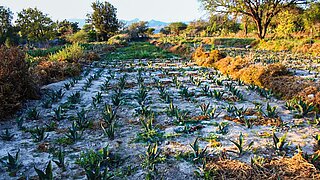
The Mezquital Valley in central Mexico is a semi-arid ecosystem home to diverse plants and wildlife, as well as Indigenous Hñähñu (Otomí) communities that have traditionally conserved and sustainably used natural resources, particularly maguey (agave) and cacti such as prickly pear and lechuguilla agave.
Water is a decisive and increasingly scarce resource. In recent years, longer and more intense droughts have compounded existing challenges. In Cardonal, Hidalgo, the grassroots territorial organization Magueyal, Sujeto y Comunidad (Magueyal) has worked with local families for more than 30 years to secure water for household and productive needs.
According to Araceli Méndoza, Magueyal’s operations coordinator, water scarcity has contributed to out-migration. Poor, alkaline soils also make agriculture difficult, limiting families’ ability to generate income.
When traditional livelihoods decline
Until the mid-20th century, family economies in Cardonal relied heavily on maguey. It was used to produce pulque, a fermented beverage made from agave sap, as well as for its leaves, which were sold for preparing barbacoa (a slow-cooked meat dish) and for many other purposes. But beer displaced pulque, making maguey production economically unviable.
Lechuguilla agave was also widely used. Its fiber was turned into ropes, brushes, brooms, bags and clothing. These products were largely replaced by cheaper plastic alternatives, despite their environmental impact.
These changes, combined with limited economic opportunities, have driven many people to migrate to cities such as Mexico City or to the United States. Yet many families remain on their land, combining commerce with farming and relying on crops for both household consumption and additional income.
Climate change raises the stakes
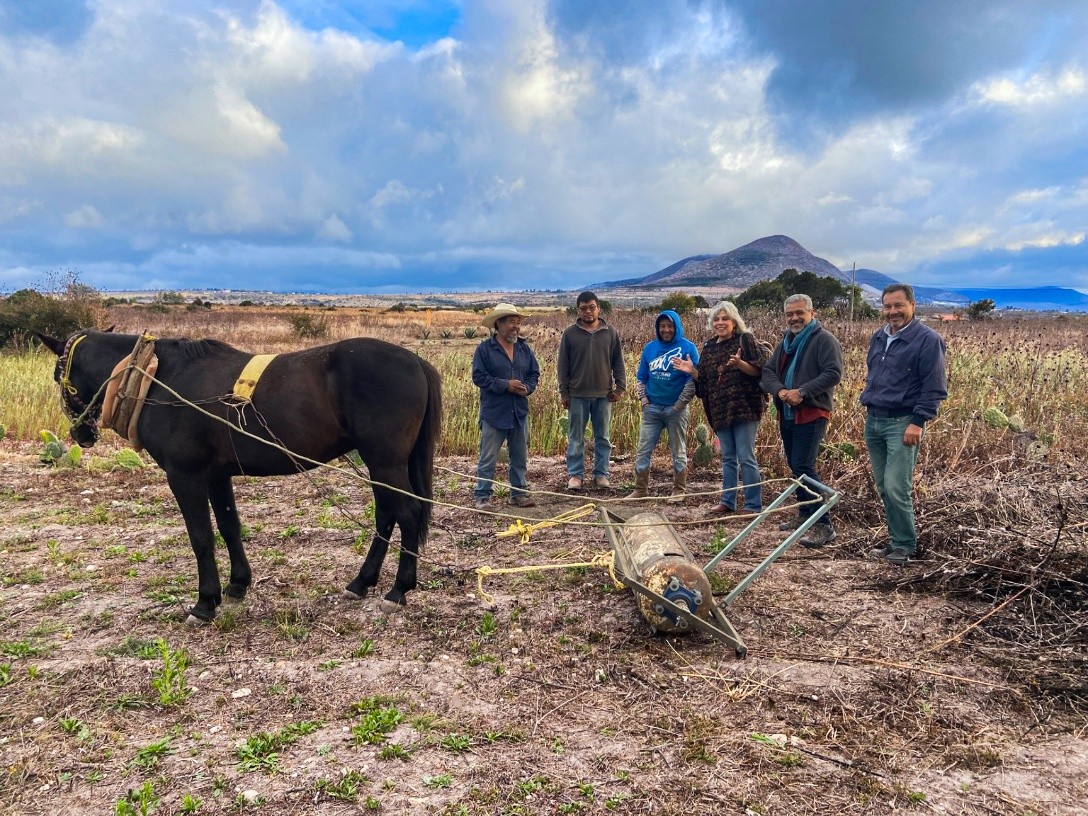
Climate change is making this increasingly difficult. “We have experienced a very severe drought over the past four years,” Araceli says.
“Nevertheless, people have tried to tend their milpas – the traditional plots used for growing maize and other crops – but the plants have not grown. They continue to plant because corn is central to their identity and culture and they want to preserve their seeds.
Building an adaptation strategy
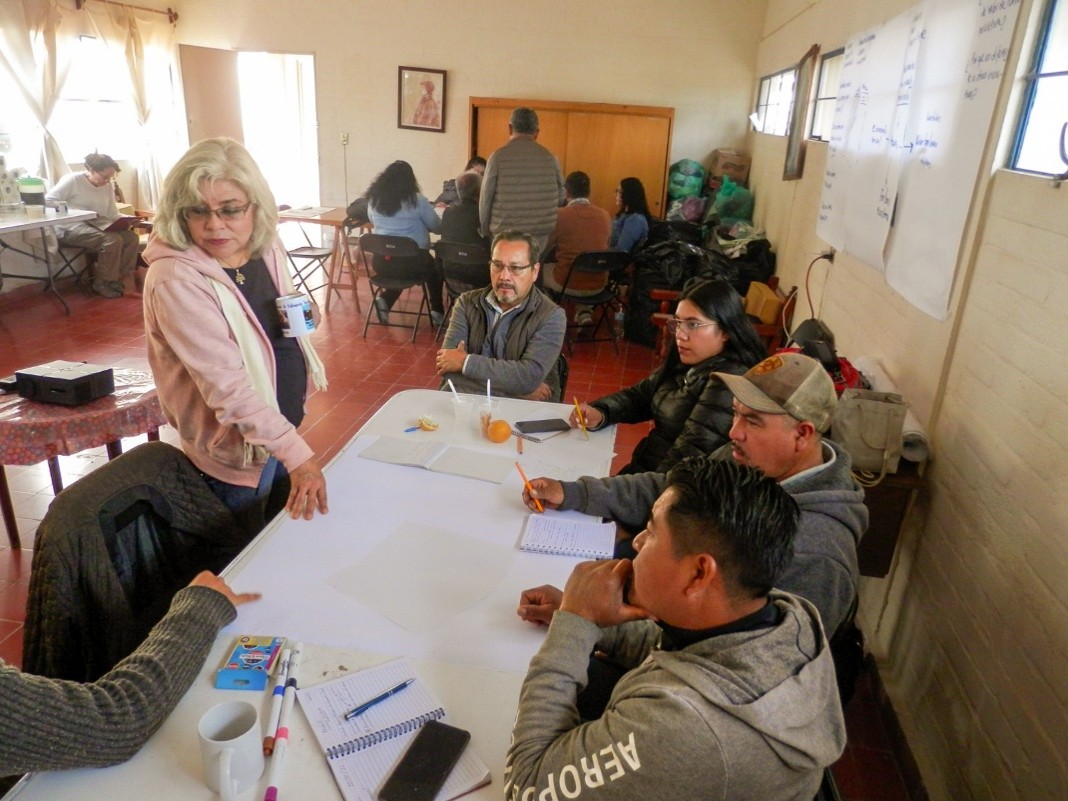
Against this backdrop, Magueyal, supported by Germany’s International Climate Initiative (IKI), supports predominantly Indigenous smallholder families in Cardonal and neighboring municipalities to strengthen the resilience of their productive systems.
The IKI project worked with communities, local authorities and technicians to develop a Climate Change Adaptation Plan for the Cardonal region. The plan provides guidelines for adapting productive systems and the wider territory to changing environmental and climatic conditions.
Fortino Chávez, Magueyal’s director and a native of the region, describes the adaptation plan as a roadmap for strengthening smallholder resilience, with water at its center. It prioritizes Ecosystem-based Adaptation (EbA) measures to retain soil moisture and capture water for use during droughts.
Araceli highlights progress from measures such as planting maguey among milpa crops, using cover crops and providing shade with drought-resistant trees. On many family plots, these practices have improved soil quality and crop yields. The project also produces biofertilizers, vermicompost and other organic fertilizers from families’ organic waste.
“We have made very significant progress at the plot level, but climate change adaptation must be territorial,” Araceli says. The IKI project is therefore working with municipal and state authorities and seeking synergies with policies and programs such as the federal Sembrando Vida initiative.
Strengthening communities for the long term
Fortino stresses: “Climate change adaptation is a social process. We need to strengthen community governance and the social fabric so that, at the territorial level, we can move in the same direction.”
The IKI project is also promoting leadership development and meaningful participation by women and young people, who are often excluded from decision-making.
“We seek to provide comprehensive support—not only training in production, but also to help develop social actors who exercise their right to participate in all matters concerning their territory,” Araceli says.
Adaptation is a medium- and long-term process: “We are not going anywhere. We will continue with this commitment for as long as we can, while seeking a reciprocal commitment from producers, because this process requires the participation of everyone involved in the territory.”
The link has been copied to the clipboard
Contact
IKI Office
Zukunft – Umwelt – Gesellschaft (ZUG) gGmbH
Stresemannstraße 69-71
10963 Berlin