


Bright futures: clean energy in rural Kenya
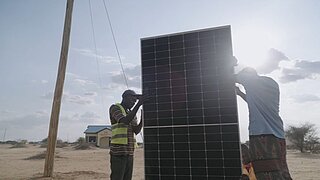
With support from Germany’s International Climate Initiative (IKI), the residents of a remote village in Kenya now have access to clean energy and water.
In the remote, arid Garissa County of Kenya lies Elan village – a small town with little vegetation across hundreds of miles. Here, nights used to bring an abrupt stillness. But today, as the sky turns indigo, soft solar lights begin to bloom. The darkness that once shaped daily life is slowly giving way to light, safety, and opportunity. These lights are proof of the change made possible with the support by Germany's IKI Small Grants programme, which supports local organisations worldwide in turning climate and biodiversity solutions into tangible improvements for the communities they serve.
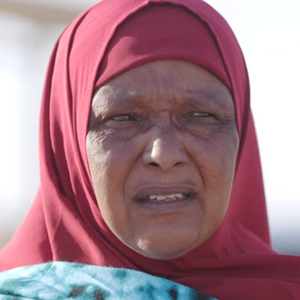
Elan finally has electricity. It's a very happy moment for us.
Habon’s children can now study when it’s dark while she and other villagers, mostly female, can fetch water conveniently.
From darkness to opportunity
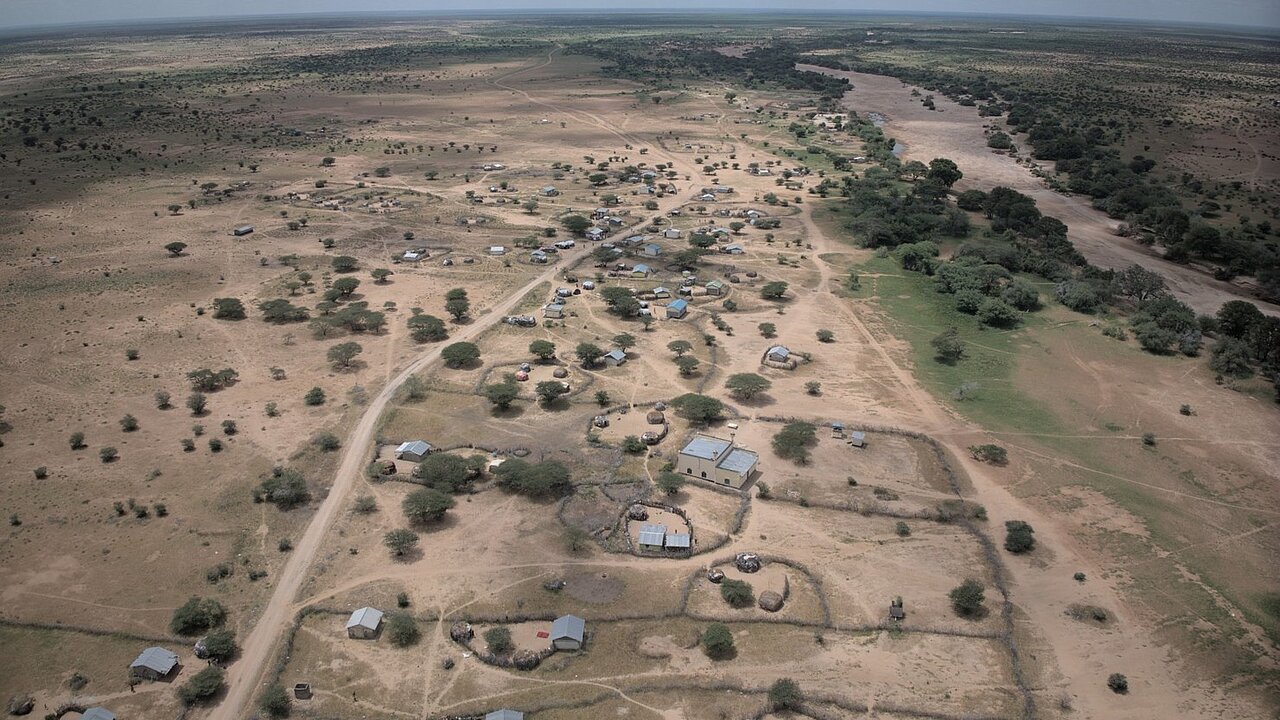
Over one third of Kenya's population, primarily in rural areas, lives without electricity. This challenge is particularly acute in Garissa County, where only few have access to electricity. Insufficient access amplifies challenges such as food insecurity, scarce water, and climate risks which are severely impacting day-to-day life.
In 2021, the local organisation Power Shift Africa pledged its support for the transition to low-carbon energy solutions. With support from the IKI through its Small Grants programme, the organisation launched a project to address climate change and energy deficiency in Kenya. IKI Small Grants empowers local organisations to turn ideas into action and solution into real change – for people and planet.
Consequently, drawing on its understanding of the local context, the organisation worked together with communities to identify practical solutions that respond to their everyday needs. Fatuma Hussein, the programme manager, observed that it is especially women and children who are put at risk. They face unsafe night-time conditions, limited learning hours and restricted access to essential services such as energy, education and healthcare.
now benefit from newly installed solar mini grids and a water pump system making their lives easier.
Putting communities at the centre

The project significantly expanded renewable energy access and capacity across the county. By developing small grid systems and connecting 275 households to them, the project has brought light to the community and reduced dependence on carbon-intensive energy sources. Crucially, the project placed communities at the centre of the process: local residents were involved in shaping the solutions and putting them into practice, helping to ensure that the infrastructure responds to local needs and can be used and managed locally. At the same time, community participation and inclusive energy planning helped ensure that the benefits of the transition reach people who are often underserved.
This approach is important for lasting impact: rather than simply providing infrastructure, the project strengthens people’s ability to shape and sustain solutions that work for their own communities. The impact extends beyond simply having electricity. Solar-powered street lighting enables people to move around more safely after dark. For example, they can run errands and shops can stay open later. Improved access to water also reduces the need for residents to travel long distances, giving families more time for education, livelihoods and other activities.
A model for climate action
The experience in Elan demonstrates that climate action can deliver immediate and practical benefits for communities. Renewable energy reduces reliance on carbon-intensive energy sources while improving access to essential services. For other projects and decision-makers, the experience offers an important lesson:
Clean energy solutions are more likely to create lasting impact when communities are not only beneficiaries, but active partners in designing and implementing the solutions.
It is equally important to strengthen local organisations so that they can continue the work independently. In Elan, the local organisation will continue strengthening local capacity and supporting climate-friendly energy solutions, helping more communities in Kenya move towards a cleaner, more inclusive and resilient future.
Thanks to the IKI project, life in Elan for Habon Sambur Gaboy and her community members has quietly changed for the better with clean energy, access to water, and opportunity. Most importantly, the project shows what can happen when local people are empowered to be part of creating the solutions that shape their own future.
About IKI Small Grants
The project is funded by IKI Small Grants. This funding instrument is strengthening local solutions for effective climate and biodiversity action. It is part of the International Climate Initiative, commissioned by the Federal Ministry for the Environment, Climate Action, Nature Conservation and Nuclear Safety (BMUKN). IKI Small Grants fosters bottom-up solutions while strengthening capacities of local actors. It is run by Deutsche Gesellschaft für Internationale Zusammenarbeit (GIZ).
The link has been copied to the clipboard
Contact
IKI Office
Zukunft – Umwelt – Gesellschaft (ZUG) gGmbH
Stresemannstraße 69-71
10963 Berlin