
Circular economy in Mozambique: Building a sustainable infrastructure
A new waste recovery facility in Nacala-Porto is set to improve recycling, create economic opportunities and support better living conditions for local communities.
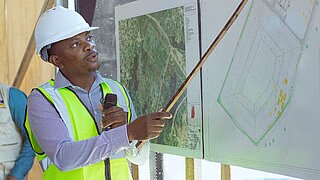
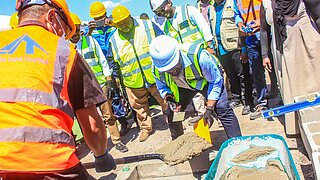
In September 2026, construction began on a new Material Recovery Facility in the Mathapué neighbourhood of Nacala-Porto. The laying of the first stone marks the first physical investment under the National Programme for Sustainable Waste Management (ValoRe programme), to move into construction, turning plans for improved waste management, material recovery and recycling into tangible infrastructure.
The Material Recovery Facility is expected to process and recover around 200 tonnes of materials per quarter once operational.
It will form part of a broader effort to strengthen Nacala-Porto’s integrated waste management system and create new opportunities along the waste value chain, from collection and sorting to recovery and recycling.
The construction is currently scheduled for completion in May 2027.
Building the foundations of an integrated system
The Material Recovery Facility is the first of several infrastructure investments planned for Nacala-Porto under ValoRe. The first construction lot includes the facility and associated supporting infrastructure. A second lot will cover the development of a sanitary landfill and composting centre.
Together, these investments are intended to provide the physical backbone for the municipality’s future integrated waste management system.
For a rapidly expanding city facing increasing pressure on urban services, the investment is also expected to open up new economic opportunities. The Municipality of Nacala-Porto sees improved waste management as an opportunity to increase recycling and recovery while creating conditions for jobs, income generation and small businesses.
The laying of the first stone represents more than the start of a project; it represents a new way of looking at one of the major challenges facing our city. We want to promote recycling, give greater value to waste, and create the conditions for these activities to generate jobs, income and small businesses.
New perspectives
For residents of Mathapué, where the new infrastructure is being built, the project is closely linked to expectations of improved living conditions and new economic opportunities.
The people of Mathapué are looking forward to better living conditions as the waste landfill is completed and recycling services begin. In fact, I was hoping the work would be finished today so that we could start profiting from it.
The comments also highlight the importance of preparing for the period after construction. Beyond completing the infrastructure, the project will need an operational model that enables the facilities to function effectively and sustainably over the long term.
Preparing for sustainable operations
For Enabel, one of the implementing partners supporting ValoRe, work on the future operation of the facility is already underway.
We have been working with the Municipality from the outset to think about how the Centre can be operated sustainably over the long term. Exploring public-private partnerships is part of that work, and can help create a model that is both operationally sound and economically viable.
The planned infrastructure is expected to connect Nacala-Porto’s waste management system with a more structured market for recovered materials. This could create opportunities for private-sector involvement and new economic activities along the value chain, while also providing a pathway towards a more formalised system for workers already engaged in waste collection and recovery.
The next phase
With construction now underway, the focus will extend beyond delivering the new facility.
Over the coming months, the partners will also work on the operational model, partnerships and market connections needed to ensure that the infrastructure can support a functioning and sustainable waste recovery system once it is completed in 2027.
IKI support to the Mitigation Action Facility
The construction of the Material Recovery Facility is supported by the Mitigation Action Facility. This multi-donor programme provides technical assistance and funding to help implement ambitious mitigation actions. It drives decarbonisation in the three priority sectors energy, transport, and industry. One of its key funding partners is the German Federal Government, which channels support via the International Climate Initiative (IKI).
The link has been copied to the clipboard
Contact
IKI Office
Zukunft – Umwelt – Gesellschaft (ZUG) gGmbH
Stresemannstraße 69-71
10963 Berlin