
“The IKI Workshop for Central America and the Caribbean Through My Eyes and Through my Camera Lens”
A report by Melisa Jerez Cerda, project staff member of the IKI project ACCIÓN Clima
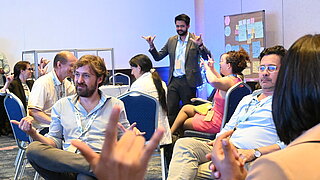
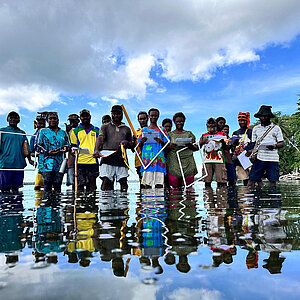
It is not every day that you have the opportunity to be part of a regional incubator for climate solutions. For this reason, I would like to share what I experienced — and what my camera captured — during three inspiring days at the 5th IKI Workshop for Central America and the Caribbean.
Under Costa Rica’s radiant sun, the capital city provided the perfect setting last summer for this annual gathering of more than 20 projects funded by Germany’s International Climate Initiative (IKI). The aim? To connect, identify synergies and exchange fresh ideas.
What I value most about these events is the opportunity to meet peers working towards a shared purpose. I had the chance to learn more about two projects based in the Dominican Republic — Caribbean Resilient Communities and EbA Facility (REDDOM) — thanks to their insightful representatives Carlota, Alex and Jesús.
Day 1: Building Connections
This was the most dynamic day — and my personal favourite!
Getting Closer to the IKI
We began by learning more about IKI’s priorities through presentations by Felipe Gómez, Policy Adviser at the German Federal Ministry for the Environment, and Petra Nieland, Project Manager at the IKI Office at Zukunft-Umwelt-Gesellschaft (ZUG) gGmbH, IKI´s project management agency.
IKI Marketplace
We then explored the Ideas in Infusion fair, where each IKI project showcased its objectives, activities and achievements through vibrant and creative stands.
One highlight was seeing real coral skeletons used by the project Enhancing adaptive capacities of coral gardeners in Golfo Dulce, Costa Rica. These samples illustrated their hands-on work in establishing coral nurseries and implementing restoration initiatives.
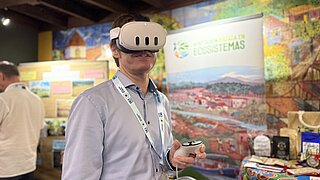
We also visited the EbA LAC programme stand, where we took part in a fully immersive virtual reality experience exploring the San Juan–La Selva Biological Corridor and its on-the-ground conservation efforts.
Ideas 360°
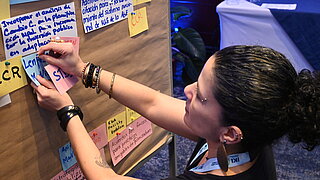
Later, during Ideas 360° — a world café–style session — we identified opportunities for future collaboration, including:
- Launching two new nature-based entrepreneurship support programmes
- Supporting Costa Rica’s NDC update process
- Testing a pilot reef restoration model with stakeholders in Golfo Dulce and Cahuita
Day 2: Technical Dialogues
The second day focused on in-depth technical discussions held in parallel thematic tracks:
- NDC 3.0: Strengthening Climate Ambition in Central America and the Caribbean
- Resilient Coasts, Thriving Communities: Ecosystem-Based Adaptation (EbA) in the Caribbean and Central America
- Green Fiscal Reform: Aligning Public Finance with Climate Transition and Green Economies
- NDCs, NAPs and NBSAPs: A Shared Work Agenda?
Day 3: Field Visits
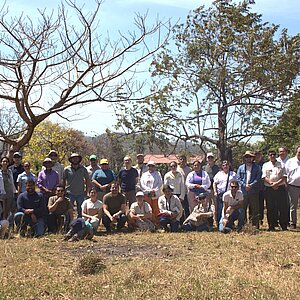
We concluded the workshop with field visits that allowed us to see the real-world impact of the projects — and meet the people behind them.
Cool Mountain Air, Composting and Mushroom-Based Alternatives to Plastic
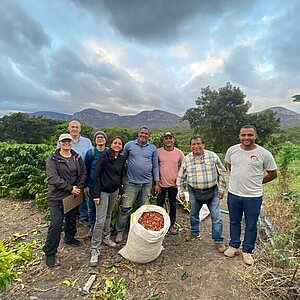
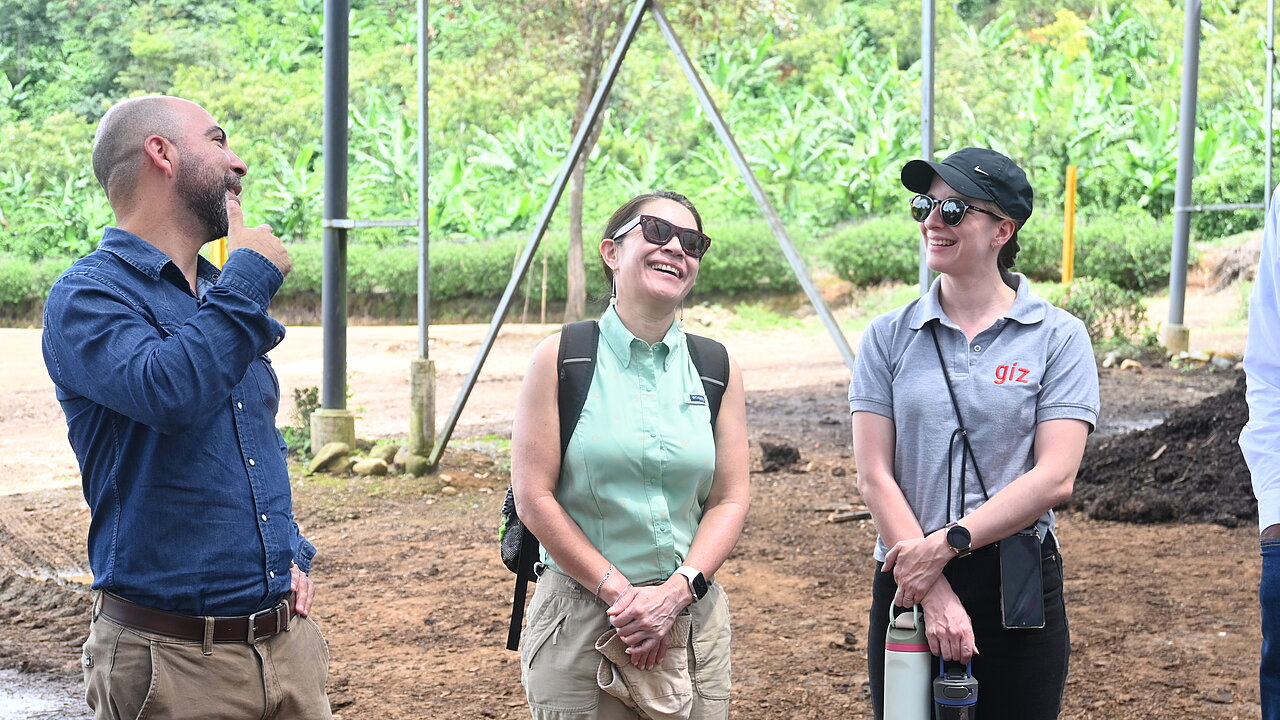
High in Costa Rica’s mountains, we learned about ACCIÓN Clima’s efforts to promote a circular economy and sustainable waste management.
Key initiatives included:
- The “Green Sheep” Programme: One hundred families across León Cortés, Dota and Tarrazú are now composting as part of this awareness campaign, which began as a pilot and has since become a permanent initiative in response to Costa Rica’s landfill crisis. The IKI project ACCIÓN Clima supported feasibility studies, training and implementation.
- A Public–Private Partnership: Local governments partnered with the CoopeTarrazú coffee cooperative to compost all organic waste collected by municipalities.
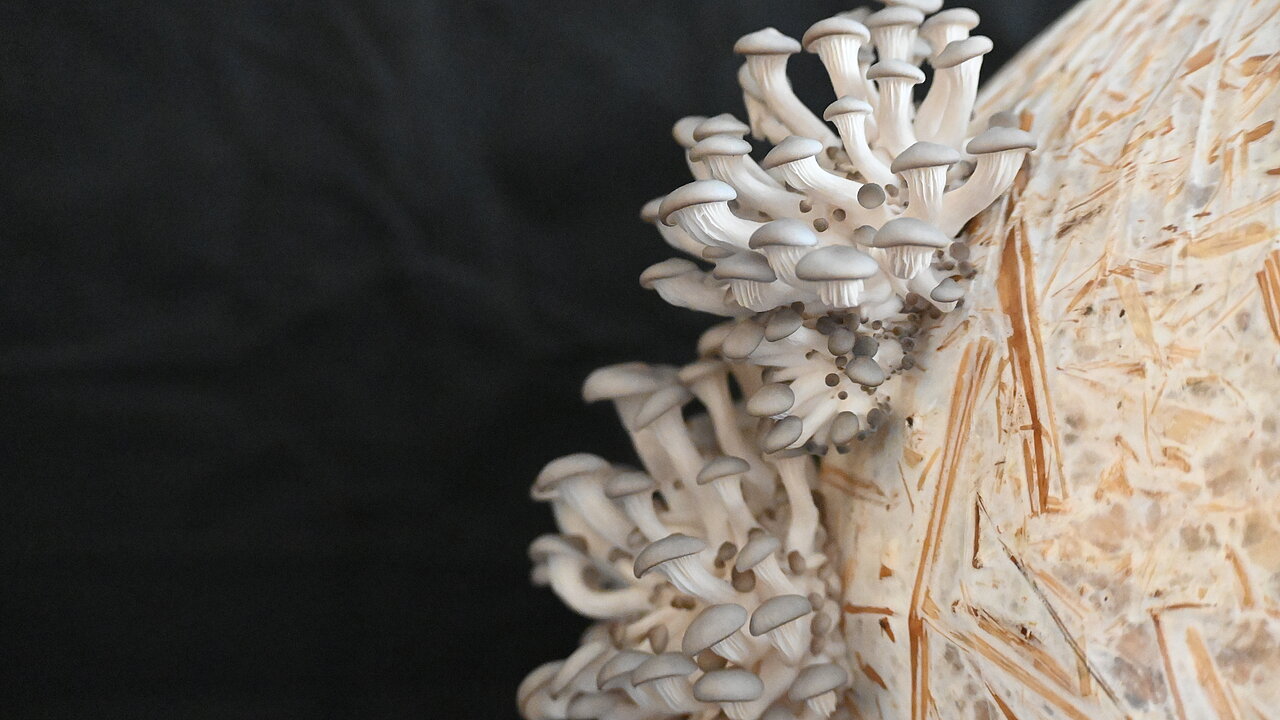
- Smatter’s Innovation: This start-up uses fungi as a raw material for products such as Mycopots — biodegradable plant pots that replace conventional plastics and enrich the soil.
A Glimpse into Mangrove Restoration and Coastal Value Chains
Our second field visit took us to sunny Puntarenas on Costa Rica’s Pacific coast, where the TRANSFORMA-INNOVA Programme (PTI) is working to strengthen livelihoods, conserve ecosystems and improve marine and coastal resource management. Highlights included:
- Community-Led Mangrove Restoration: In La Pitahaya and El Establo, local communities began restoring mangroves over four years ago, with continued support from Conservation International, a member of the PTI consortium.
- Strengthening Ecotourism and Addressing Illegal Fishing: We explored how the programme supports local tourism while tackling complex marine challenges.
- The “Ecogourmet: Hook to Plate” Model: This sustainable fishing initiative is being implemented at Isla Cocos Restaurant, promoting responsible seafood practices.
My personal takeaways
These three days were a powerful reminder that regional collaboration, bold ideas and community-driven solutions are not only inspiring — they are essential. I am grateful to have witnessed it all, camera in hand.
The link has been copied to the clipboard
Contact
IKI Office
Zukunft – Umwelt – Gesellschaft (ZUG) gGmbH
Stresemannstraße 69-71
10963 Berlin