

New shoots for climate action, biodiversity conservation and communities
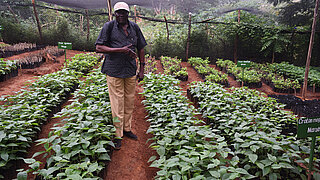
73,000 newly planted trees, 93 hectares of restored forest and annual emissions reductions of 415 tonnes of CO₂ equivalent – these are the tangible results of an International Climate Initiative (IKI) project in Tanzania.
Yet the project's most enduring achievement goes beyond the numbers. Three rural communities have gained the knowledge, confidence and ownership to protect their forests and actively shape their own future.
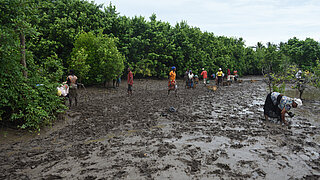
Anyone visiting the villages of Vumari, Kigurusimba and Msaraza in Tanzania's Same and Pangani districts today will see young trees taking root on former clear-cut areas, in mangrove ecosystems and even in school grounds and church compounds.
But the transformation extends far beyond the landscape. It is reflected in communities that have taken responsibility, make decisions together and are committed to safeguarding their natural resources for generations to come.
Participation as the foundation for forest conservation
Rather than organising reforestation from the outside, the PRO-NDC-ACT project, funded by Germany's International Climate Initiative (IKI), placed local communities at the centre of its approach.
Community members helped design the restoration activities, made key decisions and implemented the measures themselves. Local Project Implementation Committees (LPICs) served as a vital link between the villages and the project partners. Training courses, workshops and shared learning provided the knowledge and skills needed to ensure that forest conservation efforts continue well beyond the project's lifetime.
Tailored solutions for different landscapes
The results speak for themselves. A total of 93 hectares of degraded forest were restored. Around 73,000 trees were planted across the Eastern Arc Mountain forests, the unique East African Coastal Forests and the mangrove ecosystems at the mouth of the Pangani River.
Where severe degradation meant conventional tree planting was unlikely to succeed, communities adopted a highly effective alternative: Farmer Managed Natural Regeneration (FMNR). By selectively managing existing shrubs and naturally regenerating trees, forests are supported to recover under their own natural processes.
The restored forests will increase carbon storage and reduce greenhouse gas emissions by around 415 tonnes of CO₂ equivalent each year. At the same time, they are recreating habitats for numerous plant and animal species in some of East Africa's most biodiverse forest ecosystems.
Tree nurseries become learning hubs
The project's social impact has been just as significant. Tree nurseries were established in all three villages, producing almost 125,000 seedlings from 40 indigenous tree species. What began as project facilities soon evolved into local learning hubs for sustainable forest management, attracting visitors from neighbouring communities. Knowledge about native species, seed collection and forest restoration now remains firmly rooted within the communities themselves.
Women and other groups that are often underrepresented in decision-making took on important responsibilities throughout the project. Their active participation strengthened not only their role within the community but also their confidence in their own abilities. Working together fostered a stronger sense of community and shared ownership—essential foundations for long-term conservation success.
Creating new livelihood opportunities
The project also created new economic opportunities. Introducing beekeeping provided additional sources of income while helping to reduce pressure on surrounding forests.
At the same time, forest rangers received additional training, protected area boundaries were more clearly demarcated, and awareness of the value of healthy forest ecosystems increased among local communities.
Lasting impact beyond the project
Before the project concluded, village councils, Local Project Implementation Committees and district authorities agreed on clear responsibilities for the future. These range from regular forest patrols and nursery maintenance to seed collection for future planting seasons. The district governments of Same and Pangani have also committed to providing continued financial and technical support for these activities.
The experience of Vumari, Kigurusimba and Msaraza demonstrates that successful forest restoration is about far more than planting trees. It is about enabling communities to become long-term stewards of their natural environment.
To help replicate this success, a practical guidance document based on the PRO-NDC-ACT approach is being developed. It will support other communities across Tanzania in launching similar locally led initiatives, contributing to the country's climate commitments while strengthening biodiversity and rural livelihoods.
About the IKI Medium Grants
The Pro NDC Act project was funded under the IKI Medium Grants programme. With the IKI Medium Grants the German federal government supports projects for climate action and biodiversity conservation that particularly involve smaller civil society actors in developing and emerging countries. The IKI Medium Grants funding instruments is implemented by Zukunft – Umwelt – Gesellschaft (ZUG) gGmbH.
Together with the IKI Large Grants and IKI Small Grants, the IKI Medium Grants complete the competitive funding instrument form IKI Compete.
The link has been copied to the clipboard
Contact
IKI Office
Zukunft – Umwelt – Gesellschaft (ZUG) gGmbH
Stresemannstraße 69-71
10963 Berlin