

Parbati’s journey into Nepal’s electric future

Women are finding new pathways into Nepal’s electric transport transition, creating opportunities in a traditionally male-dominated sector.
For more than 20 years, Parbati Shrestha has driven Kathmandu’s narrow, crowded roads. Every morning before sunrise, she takes the wheel of her Safa Tempo – a small electric three-wheeler – that has quietly powered the city since the 1990s. For Parbati, driving is more than just a job. It is her lifeline.
Her journey reflects how the Nepal – Electric Transport project is helping ensure that the country’s transition to cleaner mobility creates new opportunities for women in a traditionally male-dominated sector.
The love I have for my children is just as strong as my love for driving. Driving is what gave me the ability to care for them. If I had given it up, I would have given up everything.
Nepal’s transport sector
Nepal’s transport sector has undergone rapid change in recent years. Today, transport accounts for around 12.5% of the country’s greenhouse gas emissions, driven by heavy reliance on road transport: nearly 98% of transport energy consumption comes from road vehicles, most of which run on imported fossil fuels.
At the same time, Nepal is increasingly turning toward electrification. The government is promoting electric buses, trams and other vehicles, with targets for 90% of private and 60% of public vehicle sales to be electric by 2030, supported by tax incentives and expanding charging infrastructure.
Kathmandu, a city under pressure
Kathmandu’s bowl-shaped valley, surrounded by mountains, traps air pollution. Since the 1990s, rapid urbanisation and population growth have significantly worsened air quality as the number of road vehicles has increased.
Public transport remains limited: for many residents, the nearest public transport stop is farther away than a typical walking distance. The city has no metro, operational light rail or bus rapid transit system.
It was in this context that electric mobility first took root.
The quiet revolution of Safa Tempos
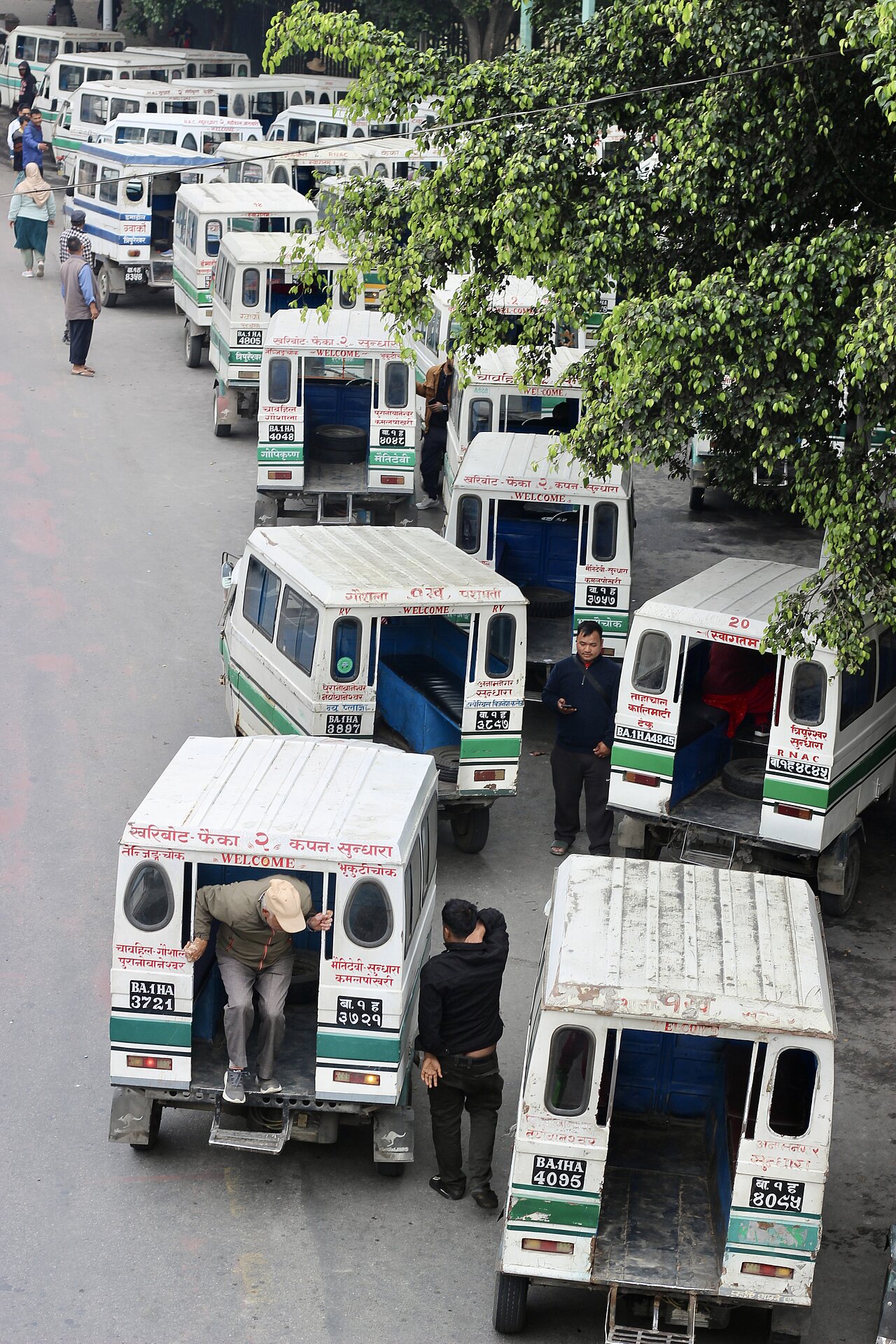
As air pollution worsened, the Nepalese government decided to phase out polluting three-wheelers in the late 1990s. Safa Tempos emerged as an alternative. Battery-powered, locally assembled and well suited to Kathmandu’s narrow streets, they quickly became essential to the city’s transport network.
After the Nepal government banned diesel Tempos in 1993, many electric three-wheelers were on the road. By the early 2000s, the fleet had grown to more than 600 vehicles.
At a time when electric mobility was still a niche concept globally, Kathmandu had already created one of South Asia’s earliest examples of electric public transport. Safa Tempos have remained a vital part of daily life in the valley, demonstrating that electric transport can work in a developing urban context.
Challenging social norms
When Parbati became a driver in 2003, transport was considered a male domain in Nepal. Women made up only a minority of transport workers with social expectations, safety concerns and limited access to training keeping many out of the sector.
But Parbati saw things differently.
She enrolled in driving training alongside 16 others. Six of them were women.
Driving a Safa Tempo gave her something other jobs could not: control over her income and working hours. As an owner-operator, she could decide when to drive, how long to work and how to manage her finances. Her earnings became the foundation of her household. They paid for rent, food, and her children’s education. They also covered the constant costs of running a vehicle: battery replacements, maintenance, loan repayments.
A fleet reaching its end
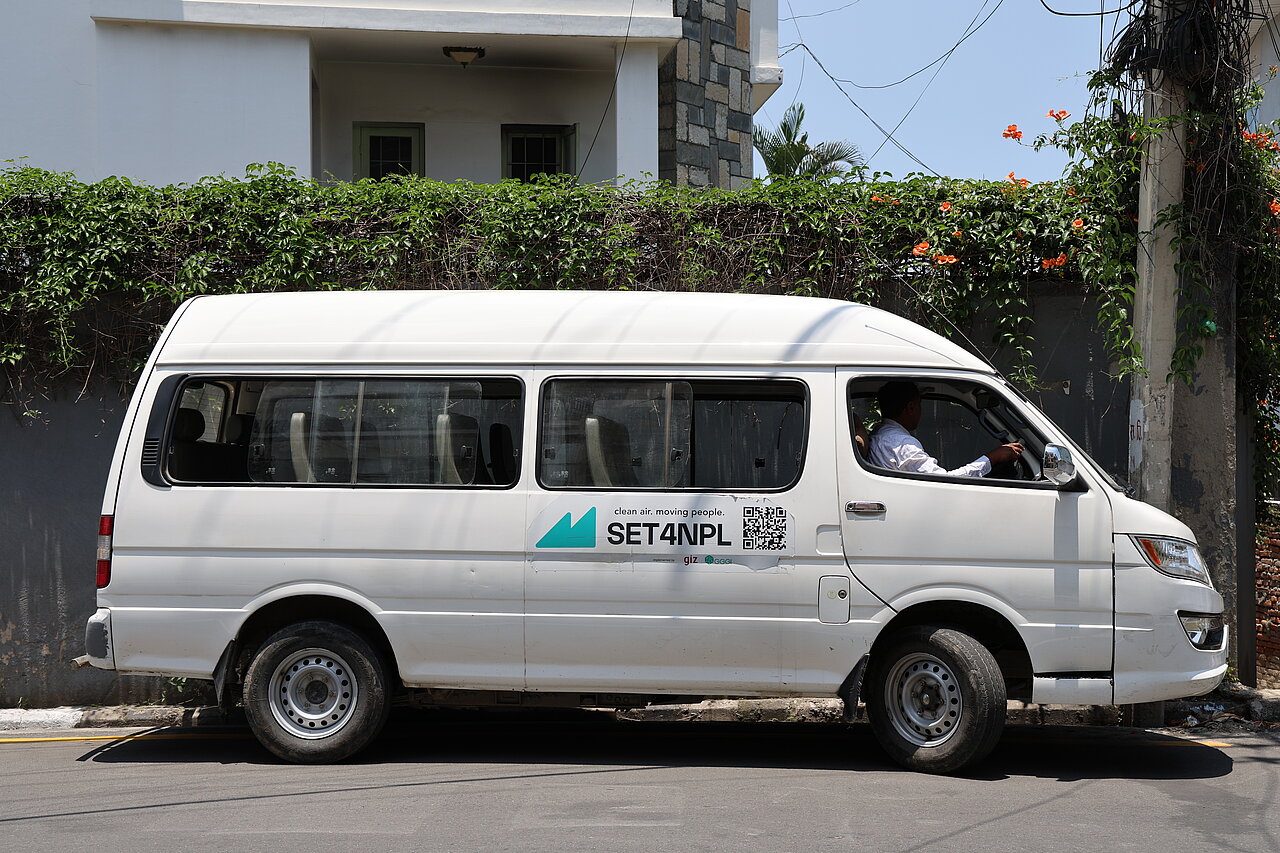
Today, the system that facilitated Parbati’s career is under threat. The Safa Tempo fleet is ageing. Originally granted 20-year operating permits, many vehicles have received and already used the 10-year extension. That extension is now nearing its end, with only a few years remaining and no clear decision about what comes next.
Replacing vehicles requires significant investment, while affordable credit remains difficult to access. High battery costs mean that many drivers rely on informal financing or second-hand parts to keep their vehicles running. Meanwhile, new types of electric vehicles are entering the market.
For drivers who have spent decades behind the wheel, the future of the Safa Tempo fleet is therefore deeply personal.
Driving into the future
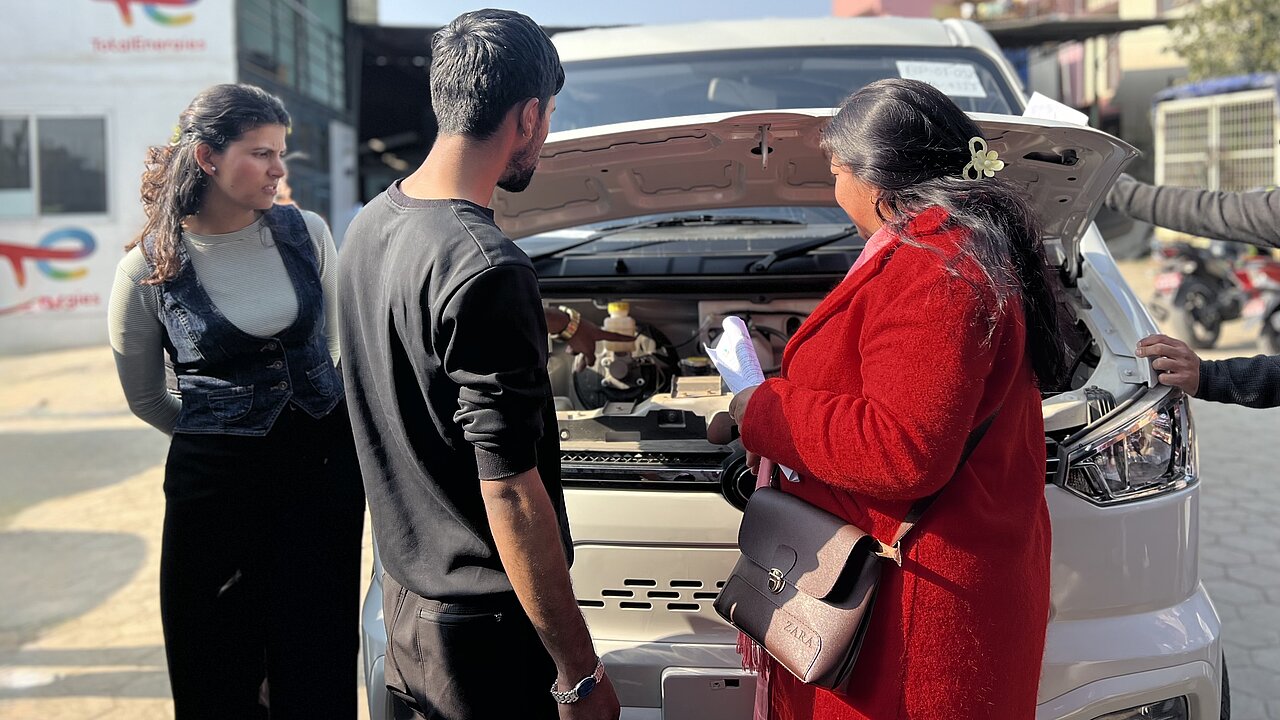
The Nepal – Electric Transport is working to ensure that Nepal’s shift toward electric mobility is both inclusive and sustainable. A key focus is supporting women to participate in the next generation of electric transport.
For Parbati, this meant stepping into the next phase of her career. When the project launched a training programme for electric microbus drivers, she applied.
Moving from a three-wheeler to a larger vehicle requires a new licence, different driving skills and confidence to operate in more demanding conditions.
Training includes figure-eight manoeuvres, hill starts and circuit navigation. With guidance from instructors and support from peers, confidence grows.
Closing the financing gap
Parbati now holds a four-wheeler licence. But the vehicle is another matter. In 2025 the central bank tightened the loan-to-value ratio on hire purchase from 80:20 to 60:40, doubling the deposit a buyer has to put down.
The project’s subsidy package closes part of that gap but not all of it, and for women drivers, that 40% is a considerable barrier, and it falls hardest on women drivers, who have historically had far less access to credit and to property in their own names.
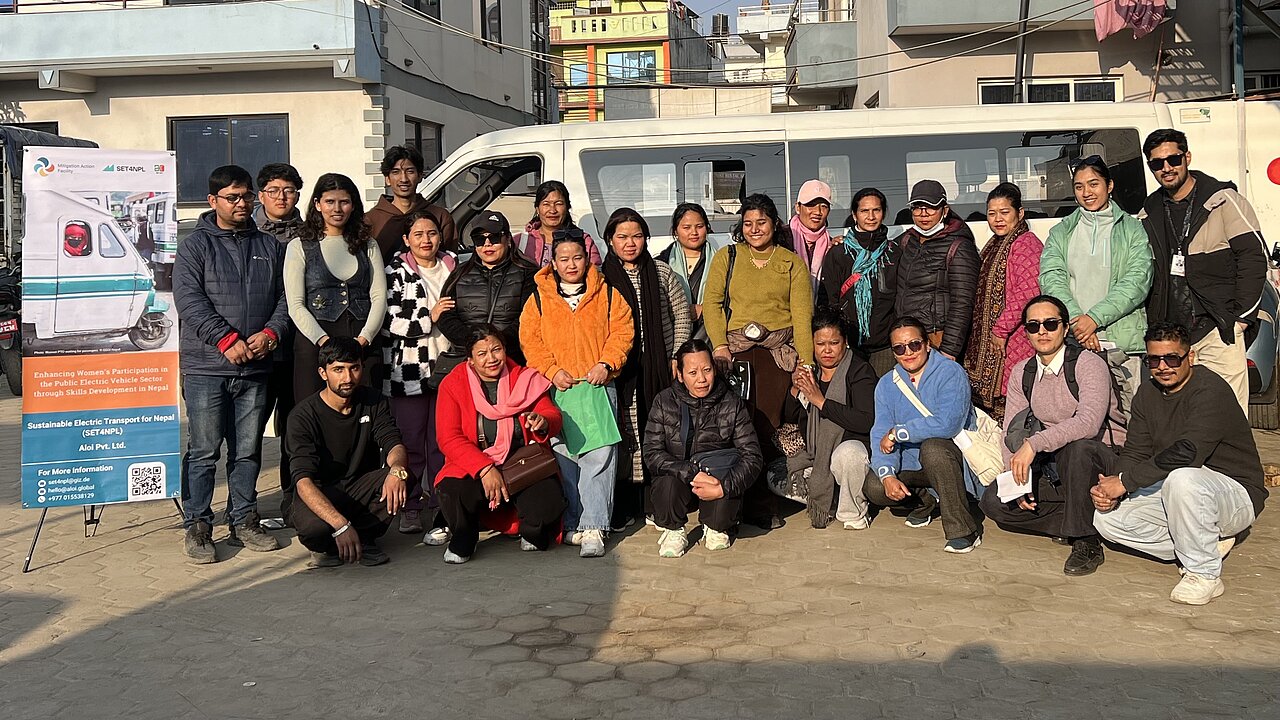
Since the training, Parbati has also encouraged others in the Safa Tempo community to join the second training cohort. She spoke up about how this training has created a community of women with shared skills, ambitions and a support network as they move into the electric microbus sector. Interest among women is growing and applications for the programme have increased, with many women learning about it through word of mouth.
Her experience shows that women are ready to enter and further shape Nepal’s electric transport sector – when they are given the opportunity.
Parbati has spent twenty years running her own vehicle on her own terms. She intends to keep doing so.
The project’s success in numbers
The Nepal – Electric Transport project has so far managed to reduce emissions by 22 t CO2e.
IKI support to the Mitigation Action Facility
The project is funded by the Mitigation Action Facility. This multi-donor programme provides technical assistance and funding to help implement ambitious mitigation actions. It drives decarbonisation in the three priority sectors energy, transport, and industry. One of its key funding partners is the German Federal Government, which channels support via the International Climate Initiative (IKI).
Note
On 26 August 2026, a mountain and glacier collapse into the Lhende River triggered a large-scale debris flow along the border between Nepal and China, which severely affected Rasuwa and the surrounding districts. The disaster damaged roads, bridges and other infrastructure, and disrupted public transport and livelihoods in the affected areas. At the time, around 195 vehicles supported by the project were in operation in the affected region. According to an initial assessment, 14 vehicles may have been lost along the Rasuwagadhi–China border corridor, whilst the potential impact on a further 181 vehicles travelling on nearby routes is still being assessed.
The situation highlights the vulnerability of transport infrastructure and livelihoods to climate-related hazards, as well as the importance of strengthening the resilience of Nepal’s transport system in the long term.
The link has been copied to the clipboard
Contact
IKI Office
Zukunft – Umwelt – Gesellschaft (ZUG) gGmbH
Stresemannstraße 69-71
10963 Berlin
About the project
The Nepal – Electric Transport project is driving the electrification of public transport in the country. By 2030, 85% of newly purchased micro- and minibuses are expected to be electric, 3,500 electric vehicles are to be deployed, charging infrastructure expanded, and the policy and institutional framework for e-mobility strengthened. The project is supported by the Mitigation Action Facility.
Discover the details: Nepal – Electric Transport