
Protection of aquatic ecosystems in the north-eastern Himalayan region of India

In the north-eastern Himalayan region of India, the protection of the unique aquatic biodiversity in four states by applying community-driven, climate-friendly approaches received support through an IKI project.
With Indo-Burma and the Himalayas, India’s north-eastern region accommodates two of the 34 global biodiversity hotspots. The diverse flora and fauna there is threatened by climate change, in particular in 19,150 km of rivers, 23,972 ha of reservoirs, 143,740 ha of lakes, 40,809 ha of ponds and 2,780 ha of rice cultivation fields with fish farming. These unique freshwater ecosystems provide valuable ecosystem services for the local population.
The project “Protection and Sustainable Management of Aquatic Resources in the North-Eastern Himalayan Region of India” (NERAQ), financed by the International Climate Initiative (IKI), supported the sustainable and climate-friendly handling of aquatic resources in the states of Manipur, Assam, Meghalaya and Nagaland from 2020 until the middle of 2025. The project was implemented by the Deutsche Gesellschaft für Internationale Zusammenarbeit GmbH (GIZ) in close cooperation with the Indian and German ministries of the environment.
Healthier aquatic ecosystems

The NERAQ project worked in close cooperation with biodiversity councils, authorities, scientific institutions, NGOs and local communities. Examples of project actions included support in updating state biodiversity plans and in the development of integrated wetland management plans.
Preservation measures were fostered by the village councils and biodiversity management committees. Destructive practices were prohibited, invasive species removed, spawning grounds better protected and traditional fishing practices revitalised. For the first time, the vulnerability of certain fish species to climatic conditions in the region was examined as well.
New income-generating opportunities for local households, such as weaving, piggery and poultry farming as well as snail and fish farming in rice cultivation areas reduced dependence on wild-caught products and, as a result, reduced the pressure on the ecosystems.

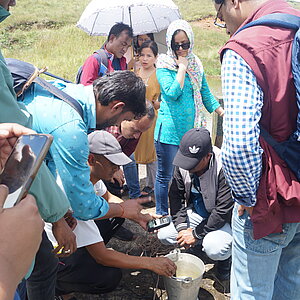
In addition, village communities and traditional institutions received tools for the monitoring of water bodies, such as the real-time monitoring of rivers and other waters.
Documentation of traditional knowledge on aquatic resources

The project attached much importance to regional research through the documentation of traditional knowledge.
In Nagaland for instance, the village community of Poilwa uses biodegradable fishing equipment and catches according to the lunar calendar, using methods that harmonise with climate-conscious strategies. Kohima Science College recognised the worth of this indigenous knowledge and integrated it into its standard curriculum to preserve it for future generations in the course of formal education.
In Manipur, youth initiatives additionally strengthened this knowledge: students documented popular folk stories about aquatic ecosystems. This fostered early awareness and promoted educational engagement. At the same time, young community members monitored rivers applying indicators developed locally, thus contributing to the preservation of traditional practices.
The combination of traditional knowledge with modern methods enabled hybrid approaches to identify and protect climate refugia and biodiversity hotspots.
A methodological manual documents the profound knowledge of aquatic ecosystems in four pilot areas. In March 2025, this compilation was added to the collection in the newly established visitors’ centre near Khliehshnong (Meghalaya).
Participative approaches as the foundation for success
With its’ measures, the project strengthened the commitment and the sense of responsibility of the local population for the management of aquatic resources and showed how successful nature conservation can be when it is borne by local communities - thus providing other countries and regions with a scalable model.
The link has been copied to the clipboard
Contact
IKI Office
Zukunft – Umwelt – Gesellschaft (ZUG) gGmbH
Stresemannstraße 69-71
10963 Berlin
Related Publications
-
 05/ 2025 | Educational material
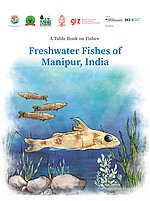
Freshwater Fishes of Manipur, India: A Table Book on Fishes
English (PDF, 10 MB)