
Water companies on the way to CO2 neutrality
Urban water at the confluence of climate action and the Sustainable Development Goals (SDGs)
As global temperatures rise, the water cycle is changing most dramatically, most unpredictably, and with some of the greatest consequences for people everywhere. Climate change is disrupting water availability and quality, amplifying floods and storms, and increasing the frequency of droughts. For water-sector decision makers, all of these impacts add up to a fundamental disruption: decisions that were once based on historical data are now afloat in uncertainties about the climate of the future.
At the same time, the water sector itself can take up the role of drivers of climate change. Water and wastewater management are energy intensive processes, causing significant carbon emissions whenever fossil energy sources are used. In addition, wastewater processing can be a source of the highly potent greenhouse gases methane and nitrous oxide.
Municipal systems, global commitments
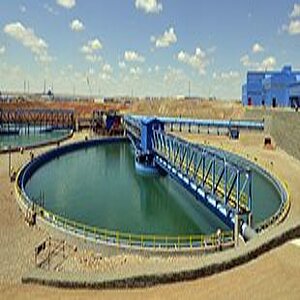
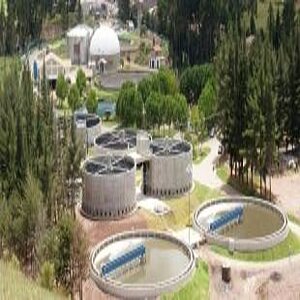
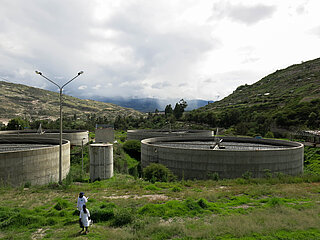
Strong mitigation potential lies in urban water and wastewater systems, whose energy consumption, mostly driven by fossil fuels, makes up as much as 40% of municipal energy use in some cities. In developing and emerging countries, water and wastewater utilities often rely on inefficient pumps, leaky distribution lines and dated treatment technologies. They emit carbon dioxide from their energy use, and even more potent greenhouse gases (methane and nitrous oxide) from the breakdown of untreated or poorly treated sewage.
A climate-smart roadmap
Since 2014, the IKI project Water and Wastewater Companies for Climate Mitigation (WaCCliM) has been working with selected countries and utilities to prove that in the urban water sector, climate mitigation action can be achieved alongside climate-resilient sustainable development.
WaCCliM’s experience shows that the production, treatment, distribution and collection of potable water and wastewater in emerging and developing countries can make important contributions to the implementation of Nationally Determined Contributions (NDCs) and Sustainable Development Goals (SDG).
So far, however, only a few governments are addressing in their NDCs the fact that there is also considerable potential for reducing greenhouse gas emissions in the water and wastewater sector.
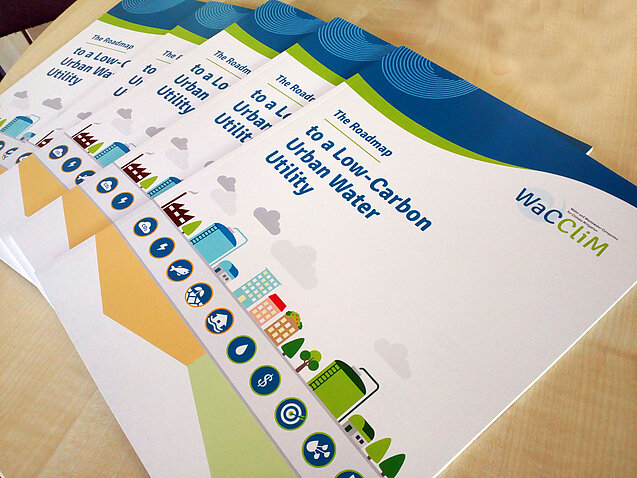
It is here that WaCCliM is guiding countries to mitigation opportunities, starting at the utility level. The project has introduced a roadmap of systematic steps and measures towards low-carbon water and wastewater utilities that can also plan for climate risks and improve their services to better support sustainable development. Helping utilities on this path is the project’s Energy Performance and Carbon Emissions Assessment and Monitoring Tool (ECAM), which any utility can use to assess its emissions and pinpoint opportunities to use less energy or even generate its own energy. ECAM also functions as an important tool providing data for measuring, reporting and verifying (MRV) systems for the sector and helps to monitor compliance with NDCs.
Toolbox available worldwide: Utility as pioneers
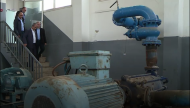
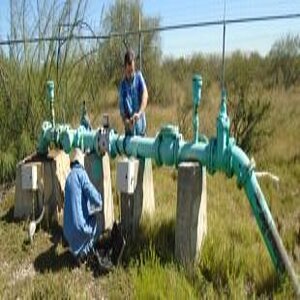
WaCCliM has piloted mitigation solutions, ranging from energy-efficient pumps to technologies for generating power with wastewater biodigesters, with utilities in Jordan, Mexico, Peru and Thailand. The measures prioritised in these pilots have achieved total mitigation equivalent to 10,000 tons of carbon dioxide or planting 50,000 trees per year.
WaCCliM is also introducing adaptation thinking by helping the pilot utilities develop climate risk plans, advising utility personnel on ways to build water system resilience to the risks identified, reducing water losses and recycling treated wastewater. The toolbox of both mitigation and adaptation planning measures will be available to utilities everywhere on the knowledge platform Climate Smart Water.
Through these tools WaCCliM´s approach can substantially help meet NDCs across developing and emerging countries, and by building climate-smart urban water systems, it can help achieve the SDGs, too. This is a big vision, and it has to be achieved on a local, national and global scale. So while WaCCliM works with national and international partners to enable local action, it does this with a larger transformation in mind. The water and wastewater utilities using WaCCliM tools to pioneer greenhouse gas benchmarking and climate-smart planning are becoming national sector leaders, and they are providing evidence for an increased consideration of water as a sector for combined mitigation and adaptation action in the next round of NDCs. As that happens, they will also be poised to make a significant contribution to the sustainable development agenda.
The link has been copied to the clipboard
Contact
IKI Office
Zukunft – Umwelt – Gesellschaft (ZUG) gGmbH
Stresemannstraße 69-71
10963 Berlin