
When climate protection helps save costs – Mexico’s transition to a low-carbon water sector
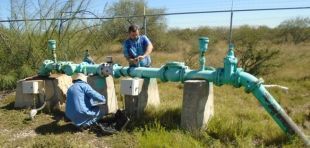
Two water and wastewater utilities are leading the way towards a sustainable and low-carbon urban water sector in Mexico by implementing the WaCCliM approach.
In the state of Guanajuato in Mexico, two water utilities in San Francisco del Rincón and Purísima del Rincón participated between 2014 and 2018 as pilot utilities in an innovative approach to reduce greenhouse gas (GHG) emissions through improved efficiency of water and wastewater treatment services.
The urban water cycle in Mexico accounts for up to 5% of the total GHG emissions in the country. In order to reduce their emissions and to save costs at the same time, the two utilities pioneered implementation of the Roadmap to a Low-Carbon Urban Water Utility in Mexico. SAPAF (Sistema de Agua Potable y Alcantarillado de San Francisco) operates the utility that is responsible for the water supply and sewage collection in San Francisco del Rincón, while SITRATA (Servicio de Tratamiento y Deposición de Aguas Residuales) is responsible for operating the wastewater treatment plant (WWTP) shared by the two municipalities. Together, they applied the roadmap developed by the Water and Wastewater Companies for Climate Mitigation (WaCCliM) project, a joint initiative by the Deutsche Gesellschaft für Internationale Zusammenarbeit (GIZ) GmbH and the International Water Association (IWA). It focuses on mitigation and also helps raise awareness to ensure that water utilities play an active role in reducing their carbon footprint instead of merely adapting to the consequences of climate change.
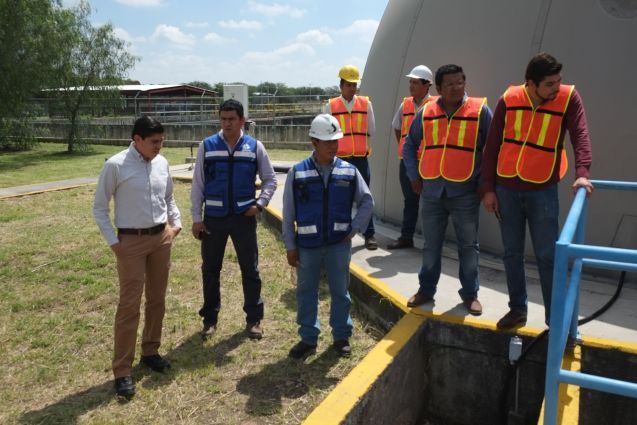
As part of the roadmap, an initial baseline assessment of the two utilities identified untreated wastewater as the main source of GHG emissions in the urban water cycle. Consequently, SAPAF constructed collectors to increase the wastewater treatment coverage, thus avoiding 2,500 tonnes CO2-eq per year, which is equivalent to the annual emissions of 830 compact cars per year1 and represents a reduction of 40% of the total emissions in their operation area.
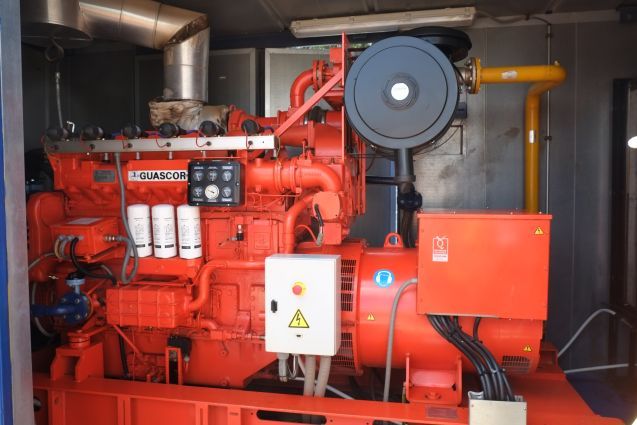
The increased wastewater received by the common wastewater treatment plant posed a new challenge to SITRATA, which had to treat a larger volume without access to additional funds. To overcome this problem, the utility focused on two aspects: optimising the aeration process and improving biogas production to generate electricity for internal consumption. SITRATA managed to reduce the energy consumption per cubic meter treated by approximately 10% and produces 155,000 kWh annually through its cogeneration system using the methane generated in the anaerobic sludge digestion process; work is ongoing to increase this amount.
Following the lead of SAPAF and SITRATA, the utility in Moroleón, SMAPAM (Sistema Municipal de Agua Potable y Alcantarillado Moroleon), has also started to implement the WaCCliM approach. Efficiency measures in the water supply system have already led to a reduction of 6% in the electricity SMAPAM consumes for pumping. This includes replacing the least efficient pumps in the system and implementing programmes to reduce water consumption by the population, thus leading to less water needing to be pumped and as a result water and energy being conserved. The next step for the utility is to identify and reduce water losses in the distribution system, which are directly related to high energy consumption. WaCCliM is supporting the analysis of water losses and modelling of the distribution network.
In the neighbouring state of Querétaro, assessment studies on pumping stations supported by the WaCCliM project have led the State Water Commission of Querétaro to allocate 2 million pesos (approx. EUR 100,000) to implementing measures to enhance the efficiency of the pumping stations. In Chihuahua, a state located in the north of Mexico, the utility in Parral has also showed great interest in the WaCCliM approach. After an initial energy performance evaluation supported by the WaCCliM project and the renovation of some of its equipment, the utility is using its own funds to continue with additional studies, including the modelling of the distribution network and identification of possible points to optimise in the operating system.
These success stories in Mexico will encourage other water and wastewater utilities to contribute to climate change mitigation while improving service levels and reducing operational costs.
1The number of cars was determined using the emission factor of CO2 (g/km) per car model, assuming that a car travels a total of 15,000 km per year. A mean emission value of nearly 3 tonnes/car per year was calculated. http://www.ecovehiculos.gob.mx/ecovehiculos/ (in Spanish)
The link has been copied to the clipboard
Contact
IKI Office
Zukunft – Umwelt – Gesellschaft (ZUG) gGmbH
Stresemannstraße 69-71
10963 Berlin