
Without pollinators there is no life
Discover how Latin America and the Caribbean are taking action to protect pollinators with the support of the IKI-funded project “Regional action for enhanced protection of pollinating insects and pollination services in Latin America and the Caribbean (PoliLAC)”.
Can you imagine a world without fruit, coffee, or chocolate? Impossible! In fact, more than 75% of the world’s food crops depend on pollinators such as bees, butterflies, and flies. Pollinating insects are essential for food production, food security, and the economy, while supporting human and ecosystem health.
In Latin America, these little heroes are essential for crops such as cacao, avocado, watermelon, pumpkin and many more. Without them, most of the fruits, flowers, and seeds we love would simply disappear.
Raising awareness of pollinators in Latin America and the Carribbean
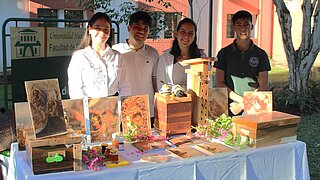
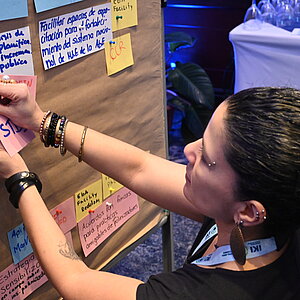
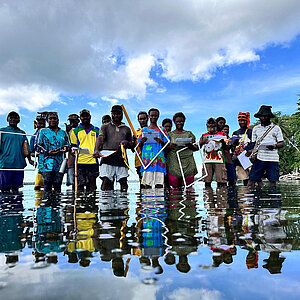
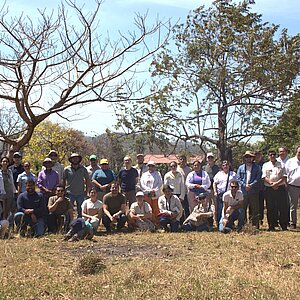
Recognising the critical importance of pollinators, several countries in Latin America and the Caribbean organised events and activities in May, as part of the "World Bee Day". The month was dedicated to raising awareness of the vital role that insect pollinators play in our ecosystems and promoting practices that support their conservation.
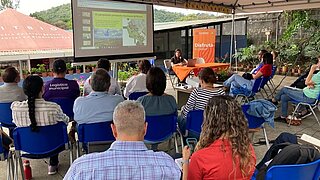
In Paraguay, the National University of Asuncion organised a seminar on "Biodiversity and the productive economy”. More than 90 representatives of public and private institutions, producer organisations, teachers and students participated. One of the main conclusions was the need to create a national network for the protection of pollinators.
In Costa Rica, the first interinstitutional and intersectoral Congress on Biodiversity was held to discuss how to build more friendly communities for pollinating insects. In addition, the municipality of Nicoya held the first Bee Fair to discuss measures to protect these insects in public spaces, with the participation of honey and honey derivative producers.
In Mexico, workshops and field trips were organised with children and young people to observe how pollinating insects visit and interact with some of the medicinal plants native to their community. A workshop was also held with the Bee Research Center (CIABE) of the University of Guadalajara to exchange ideas on how to conserve pollinating insects in the Nevado - Manantlán corridor.
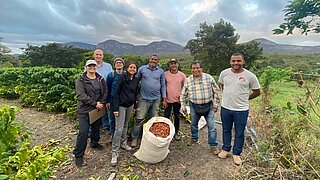
In Brazil, experts and researchers from the agricultural ministry (Ministério da Agricultura e Pecuária) and partners visited rural producers in the Chapada Diamantina region. The aim was to select pilot areas to implement pollinator-friendly practices, including conservation of natural habitats, planting of native species, crop diversification, reduction of pesticide use and certification of organic farming in coffee and passion fruit.
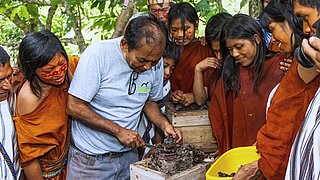
In Peru, 120 students toured the “El Caminito Verde” park, where they visited the butterfly farm, the beekeeping area, the native bee area and learned about crops that depend on pollination. At the local level, the first insect nesting aid was inaugurated in Oxapampa, with the participation of local authorities and representatives of indigenous peoples. There was also a symbolic planting of pollinator plants.
Protecting bees and other pollinators means protecting our future. That is why the PoliLAC project aims to protect natural ecosystems and adapt productive agricultural systems to safeguard pollinator ecosystem services and reduce the vulnerability of local communities associated with pollinator declines in Latin America.
The link has been copied to the clipboard
Contact
IKI Office
Zukunft – Umwelt – Gesellschaft (ZUG) gGmbH
Stresemannstraße 69-71
10963 Berlin