
Working together for a cleaner industry in Georgia
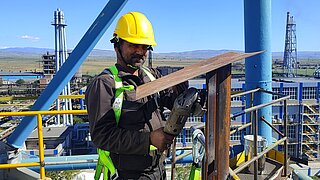
With support from the IKI, the Nitric Acid Climate Action Group (NACAG) is helping a major Georgian chemical producer cut greenhouse gas emissions from its industrial plant.
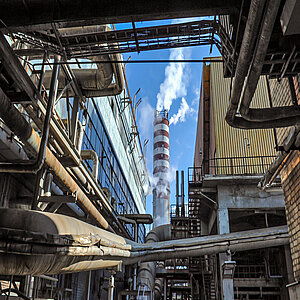
The production of mineral fertilisers is crucial to global food security and economic development. However, many older plants emit large amounts of greenhouse gases during production. The production of nitric acid in particular causes high emissions of nitrous oxide (N₂O). This greenhouse gas is around 273 times more harmful to the climate than CO₂. Against this backdrop, the Georgian chemical producer Rustavi Azot has taken a significant step toward reducing industrial greenhouse gas emissions in collaboration with the global initiative NACAG, which is supported by the IKI. The collaboration is an impressive example of how technological progress, political commitment, and corporate responsibility can work together to make concrete and measurable contributions to global climate protection.
Rustavi Azot: A key player in Georgian industry

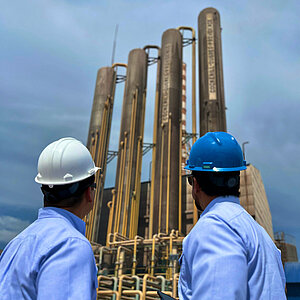
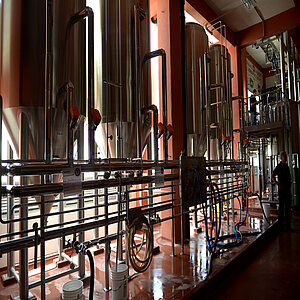
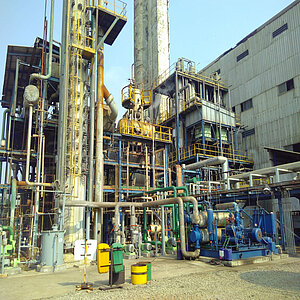
Rustavi Azot was founded in Rustavi in 1978 and is now one of the country's most important industrial plants. The company produces fertilizers and other chemical products, including ammonia, nitric acid, ammonium nitrate, oxygen, and industrial gases. Many of these products are essential for agriculture, industrial manufacturing, and economic development in Georgia and the region.
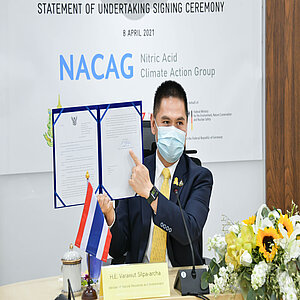
In recent years, Rustavi Azot has increasingly focused on modern, efficient, and sustainable production processes. Working with NACAG was therefore a logical step: the initiative offered the opportunity to combine technological innovation with corporate climate protection. The collaboration became possible after Georgia's Minister of Environment and Agriculture signed the Statement of Undertaking in March 2020 - a political commitment to introduce regulatory measures to reduce N₂O emissions from nitric acid production.
Sustainability at the heart of the company
To qualify for funding from NACAG, plant operators must undergo a comprehensive due diligence process. Although challenging for Rustavi Azot in 2022, this process was also invaluable: it provided an opportunity to compare existing procedures with international standards, identify potential for improvement, and further develop the company's own sustainability measures.
The assessment provided important insights into opportunities for optimization in the production process and for the further development of data monitoring and reporting. The company was encouraged to further expand responsible operating processes and align itself more closely with global best practices.
Mitigation technology: efficient, precise, and future-oriented

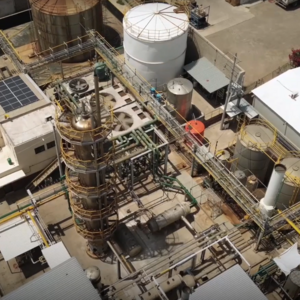
Following a successful international tender process, the contract was awarded in 2024 to the Estonian company Alvigo, with Clariant as a subcontractor. The system, installed in fall 2025, combines proven catalyst technologies for N₂O reduction with a state-of-the-art emissions monitoring system.
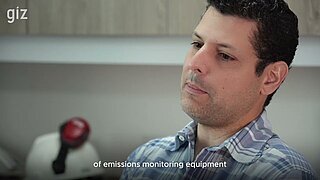
A particular advantage is the real-time monitoring, which enables continuous control of emission flows. This not only increases transparency but also improves efficiency and operational safety. At the same time, the technology has been integrated in such a way that production processes are hardly affected – a key factor for the plant's economic efficiency.
430,000 tons of CO₂ equivalents saved per year
As part of the collaboration, Rustavi Azot has implemented reduction technologies that save approximately 430,000 tons of CO₂ equivalents per year. This reduction is equivalent to the emissions of over two million passenger flights from Tbilisi to Berlin.
Rustavi Azot's commitment is also evident in financial terms: the company has invested significant funds of its own in the new technology and has committed to covering all operating and maintenance costs in the long term. This demonstrates a clear and lasting commitment to climate-friendly industrial production.
Outlook: A long-term commitment

Rustavi Azot plans to continue the modernization process initiated with NACAG. The focus is on further optimizing the existing N₂O reduction system to make emission reductions even more effective and stable in the future.
The company is also looking into introducing additional technologies that could contribute to further emission reductions. At the same time, Rustavi Azot continues to invest in training, process optimization, and strengthening technical skills so that its workforce can operate the new systems reliably and safely in the long term.
Shared responsibility, shared success
The cooperation between Rustavi Azot and NACAG shows that progress is possible when companies are willing to invest, when governments create clear framework conditions, and when international initiatives provide technical expertise and support.
Rustavi Azot sums it up: “Our plant believes that sustainability is not just a responsibility – it is an opportunity to redefine industrial progress. We are committed to reducing our environmental footprint through innovation, efficiency, and collaboration.”
The link has been copied to the clipboard
Contact
IKI Office
Zukunft – Umwelt – Gesellschaft (ZUG) gGmbH
Stresemannstraße 69-71
10963 Berlin


![[Translate to English:]](/fileadmin/_processed_/b/e/csm_2023043_NACAG_AdobeStock_162896684_Alexsei_96f01275b9.jpeg)