
Biodiversity Conservation in Wetlands through Integrated Water Resources Management
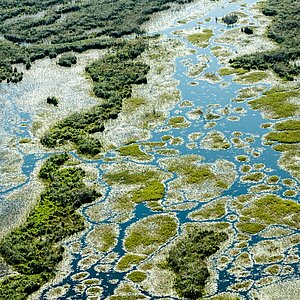
Tanzania has 115 recognized wetlands, covering around ten percent of the country’s land area. They are species-rich and productive ecosystems that provide important services, such as freshwater. However, about 90 percent of these areas are threatened by unsustainable water use and intensive agriculture. The project strengthens partner organisations to better manage water resources and ecosystems, helping to conserve biodiversity. It improves water governance by building the capacities of relevant institutions in integrated water resources management. At the same time, it promotes more efficient water use, for example in irrigation, and supports ecosystem-based adaptation in the upper Katuma River to maintain ecological minimum flows. In addition, the project shares experiences and approaches so they can be applied in Tanzania and internationally. This way, it contributes to the implementation of the national biodiversity strategy and targets of the Global Biodiversity Framework.
- Countries
- Tanzania
- IKI funding
- 4,000,000.00 €
- Duration
- 01/2024 till 05/2027
- Status
- open
- Implementing organisation
- Deutsche Gesellschaft für Internationale Zusammenarbeit (GIZ) GmbH
- Political Partner
-
- Ministry of Water and Irrigation, MoWI - Tanzania
- Implementing Partner
-
- International Union for Conservation of Nature and Natural Resources (IUCN) - Eastern and Southern Africa Regional Office
- Rikolto in East Africa
- SNV Netherlands Development Organisation - Tanzania
State of implementation/results
- Building technical capacities for water resource management and monitoring: Institutional and technical capacity in hydrology and biodiversity monitoring was strengthened. 8 hydrologists were trained in RS5 acoustic doppler current profiler and water quality monitoring, two will be deployed to Mpanda; A monitoring plan was drafted; A gauging station was installed at Msaginya River; rating curves were updated and restoration sites identified; SNV handed over hydrological equipment to the Lake Rukwa Basin Water Board; A biodiversity monitoring plan was drafted, and six monitoring sites selected in and around Katavi National Park.
- Fostering inclusive stakeholder engagement across sectors: Cross-sectoral engagement is key to integrated catchment management. 83 stakeholders (24 women) participated in workshops, trainings, and surveys related to Village Land Use Planning and hydrology.
- Improving water governance through strengthened water user associations (WUAs): To support participatory water governance, needs assessments were conducted for WUAs in Mpanda, Katuma, and Msaginya with 70 stakeholders. Challenges were identified, and 7 governance recommendations developed.
- Sustainable land use planning and governance for ecosystem protection: Participatory Village Land Use Planning (VLUP) was launched in Katuma, Tumaini, and Usense villages (as VLUP priority villages), covering 11,000 ha. This will result in three VLUPs and over nine by-laws promoting sustainable land and water use.
- Ecosystem restoration and resilient livelihoods: A tree nursery in Ifukutwa scaled from 100,000 to 250,000 seedlings, supporting reforestation and agroforestry. 30 Ushirika Group members (16 women, 14 men) benefit directly.
- Strengthening national biodiversity policy and planning: The project contributed to Tanzania’s Biodiversity Nationally Determined Contributions, with the International Union for Conservation of Nature providing technical input (wildlife and forestry). Target validation is expected in Sept 2025.
- Enhancing water use efficiency and promoting sustainable agriculture: 150+ livestock keepers were trained in water-saving practices. Three sites were identified for water troughs to reduce riverbank pressure. A Training of Trainers for 96 local champions is planned. Additionally, 174 rice and horticulture farmers were trained on sustainable irrigation via demonstration plots.
- Raising awareness and reducing pollution pressure: Awareness campaigns promote sustainable water use, liquefied petroleum gas pumps, and safe pesticide container disposal. Materials are in development with the Tanzania Plant Health and Pesticides Authority support.
- Knowledge sharing, research, and scaling up project impact: 3 concept notes were submitted for the 2025 Tanzania Wildlife Research Institute (TAWIRI) Conference by Lake Rukwa Basin, Katavi National Park, and TAWIRI. The project also contributed to the Other Effective Conservation Methods (OECM) National Dialogue in Morogoro.
- Strengthening knowledge management and communication: two knowledge management (KM) workshops (April & August 2025) with 20+ participants informed the development of a KM and communication plan. Two radio programs aired in August 2025, introducing the project and raising public awareness on biodiversity and resource protection.
Latest Update:
04/2026
Project relations
Legend:
The link has been copied to the clipboard