
UNDP Climate Promise
The flagship initiative UNDP Climate Promise helps 120 developing countries and emerging economies to enhance their Nationally Determined Contributions (NDCs). This has led to a significant increase of mitigation and adaptation ambition ahead of COP26 in Glasgow. To continue this momentum, Germany supports the next phase of the Climate Promise moving from “pledge to impact” as a key contribution to the NDC Partnership. The aim is to implement NDCs in a way where climate targets are met while contributing towards the Sustainable Development Goals (SDGs). The IKI contribution will provide technical support to 17 frontrunner countries. In addition, this project will contribute to data and knowledge generation and advocacy, including support to the 2023 Global NDC Conference.
- Countries
- Armenia, Bangladesh, Belize, Jamaica, Laos, Lebanon, Mali, Namibia, Nepal, Nigeria, Pakistan, Panama, Uganda, Uruguay, Chad, Zimbabwe, Niger, Argentina, Bolivia, Chile, El Salvador, Ethiopia, Gambia, Ghana, Guatemala, Montenegro, Senegal, Togo, Tunisia, Viet Nam, Zambia, Dominican Republic, Guinea, Malawi, Mauritania, Morocco, Angola, Turkmenistan, Uzbekistan, Costa Rica, Peru, Sao Tome and Príncipe
- IKI funding
- 40,000,000.00 €
- Duration
- 01/2022 till 12/2028
- Status
- open
- Implementing organisation
- United Nations Development Programme (UNDP)
- Political Partner
-
- Diverse climate change relevant institutions in the respective partner countries/Diverse klimarelevante Institutionen in den entsprechenden Partnerländern
State of implementation/results
- Pillar 1: Scale and speed of NDC implementation:
- Climate finance:
- Belize and Uganda have engaged new climate finance units on NDC actions and development planning. Belize also held a “write shop” on preparing climate change proposals for state and non-state actors and Zimbabwe prepared 3 project concepts and validated a draft investment report with stakeholders.
- Climate finance analyses/NDC financial strategies have been prepared in Mali, Zimbabwe, Chad, Chile and Togo, while Bolivia and Belize prepared strategies for energy and “blue green” investments respectively. Thailand prepared a national Integrated National Financing Framework (INFF), while Sao Tome and Principe is in final consultations on its INFF. Nepal raised awareness on a provincial climate change financing framework. Ghana held a national financing dialogue that helped align climate finance with the INFF.
- Uganda developed draft carbon market guidelines, regulations, and training manual, while Zimbabwe released a national carbon credit framework and launched a Carbon Registry. Armenia is advancing a carbon tax package.
- Climate budget tagging guidance prepared by Armenia, El Salvador, Nepal, Namibia, Tunisia, and Togo. Tunisia also prepared a guide on decarbonisation of financial institutions.
- Lebanon registered its Green Investment Facility in Luxembourg, while El Salvador is drafting a sustainable bond framework, including compilation of a project pipeline.
- Argentina held validation meetings in 20 provinces on climate change response plan budgets.
- Inclusive policy frameworks:
- Mainstreaming of NDCs and climate action in: Belize (sectoral development strategies for agriculture, energy, transport, and solid waste), the 2022-2026 Development Strategy, and other national processes; Uganda (3rd National Development Plan); Lebanon (mainstreaming toolkit for eight NDC sectors)
- Gender-responsive NDC roadmaps: Mali and Lao PDR.
- National strategies: Pakistan validated National Strategy to Combat Climate Change; Armenia finalized a Methane Reduction Roadmap; Bangladesh completed roadmap for National Hydrogen Strategy.
- Sectoral strategies: Armenia reviewed its 2023 Energy Balance, while Ethiopia and Zimbabwe prepared clean cooking energy strategy, Ethiopia also prepared a clean cooking investment plan. Ghana has mapped fossil fuel companies as an input to renewable energy assessment.
- Sub-national: Uruguay assessed capacity needs of gender focal points in subnational governments and consulted on guidelines for gender-responsive NDC measures in public planning; Pakistan prepared a socially-inclusive environmental policy for the Gilgit-Balitistan region and a Balochistan climate change policy report; Panama trained municipal stakeholders on calculating water footprints and climate vulnerability and risks; Belize consulted stakeholders on a low-carbon growth strategy for the Orange Walk district; Armenia developed four municipal sustainable energy policies and action plans. Chad consulted gender, diversity, and vulnerable populations offices of sub-national governments on a Gender and Climate Change Action Plan 2025 – 2030; Nepal carried out as per Local Adaptation Plans of Action (LAPA) Framework (2019) and drafted report on aligning gender equality and social inclusion (GESI) elements of LAPA Framework with the GESI Strategy and Action Plan on Climate Change (2020-30).
- Circular economy: Consultations in Panama on a 2050 circular economy roadmap; scoping study in Bangladesh to inform a national strategy.
- Water: Nigeria prepared a Water Basin Adaptation Action Plan and an assessment of the sector’s policy, regulatory and institutional landscape, which is under review.
- Legislation: Zimbabwe prepared a legal gap analysis for a draft Climate Change Bill and incorporated Article 6 considerations; Pakistan developed Energy Conservation Building Codes report. Senegal validated a National Renewable Energy Survey and finalised a compendium on the electricity code and Zambia completed a policy roadmap for productive uses of energy. Bolivia is updating its regulatory framework for the energy sector to support the NDC 3.0.
- Institutional strengthening: Chad and Zimbabwe operationalised National Technical Committees on Climate Change; Bangladesh drafted a gender-responsive institutional coordination mechanism, mandate, and plan; Belize hosted a Climate Crisis Forum for parliamentarians. El Salvador designed and applied a tool to identify and prioritize high-impact climate Policies, Actions, and Measures for its NDC.
- Workshops were held in El Salvador, Namibia and Uruguay (climate finance), Panama (gender equality and climate), and Zimbabwe (Climate Change Gender Action Plan). Panama also conducted eleven workshops in eight provinces and one indigenous territory to support Gender and Climate Change initiatives, while Lao PDR conducted three trainings on mainstreaming gender in six NDC priority sectors. Nigeria trained stakeholders on water governance and water management planning and held consultations on NDC options.
- Gender and climate change strategies: Uruguay (gender assessment for a National Adaptation Plan for the health sector); Chad; Lebanon, Lao PDR and Namibia (gender analysis and action plan); Belize (national strategy).
- Transparency/Measuring, Reporting and Verification (MRV):
- Jamaica has improved GHG data estimates for a retrofit of the nation’s first net-zero building, Panama has created a National Adaptation Data System within its National Climate Transparency Platform that includes 16 loss and damage indicators, and Senegal completed an extensive field survey on renewable energy installations.
- Belize raised awareness on its MRV platform and Uganda trained users in the Agriculture, Forestry and Land Use sector on its integrated MRV tool, while Tunisia trained institutions on carbon footprint guidance.
- Lao PDR validated an MRV coordination framework and engaged 10 companies to test a corporate carbon footprint tool, while Senegal is operationalizing an MRV roadmap for the energy sector and a national MRV platform. Ghana is updating its National Carbon Registry and strengthened an NDC investment and finance tracking tool.
- Implementation of priority NDC actions:
- Two e-vehicles were procured for a national e-mobility pilot in Belize for monitoring to inform design of national electric vehicles uptake strategy.
- Bolivia initiated NDC implementation in the energy sector, while Nepal finalized criteria to inform the piloting of innovative energy solutions for brick-kilns and Ghana completed a market opportunity study for EV charging stations.
- Private sector engagement:
- Belize defined the scope for a green jobs assessment and Jamaica prepared a Green Jobs Assessment Model Report and associated report on gender-responsive approaches to just transition.
- Uruguay developed a register of sustainable certifications, a roadmap for recognising good practices of companies, and a methodological guide and tool for estimating GHG emissions for three value chains.
- Zimbabwe engaged the private sector on green building standards, implications of the NDC for industry, sustainability reporting, and energy and water audits, while Senegal trained the private sector on NDCs.
- Namibia is identifying risks, barriers, and opportunities of private sector investment in NDC measures and Togo has finalized a private sector engagement strategy for NDC implementation and prepared project concept notes.
- Pakistan established eight green business centers in the northern Ghizer district and trained 30 participants to produce bio-degradable bags.
Pillar 2: Amplifying NDC and long-term ambition: - NDC 2.0 updates/revisions:
- Uruguay conducted consultations on its second NDC (submitted December 2022), including targeted outreach to youth, and strengthened gender considerations.
- NDC 3.0 updates/revisions:
- Panama defined net-zero carbon targets and updated scenarios of sea-level rise for its Second NDC (submitted June 2024), while Nepal completed mitigation analyses for its NDC 3.0 (submitted May 2025). Bolivia was supported on energy sector analysis for its NDC 3.0, while Angola was supported on drafting and consulting its NDC 3.0 (both submitted September 2025).
- Angola, Armenia, Lao PDR, Malawi and Uzbekistan completed NDC stocktakes including consultative processes, while Turkmenistan is nearing completion.
- Long-term strategies (LTS):
- Lebanon submitted its LTS for final validation, while Niger is analyzing sectors for a National Low Carbon Strategy and Bangladesh has developed an outline of its Strategy and Investment Plan for Achieving Net Zero. Togo commenced LTS development.
- In Vietnam, research is informing a plan to decommission one coal power plant as part of 2050 net zero goal.
Pillar 3: Lasting inclusivity through whole-of society engagement: - Jamaica engaged national stakeholders on NDC implementation priorities in preparation for the 27th Conference of the Parties of the United Nations Framework Convention on Climate Change (COP27), while Zimbabwe engaged youth to develop a position paper ahead of COP27.
- Belize signed the first-ever Youth Declaration on climate change in 2023.
- Lebanon trained three youth negotiators, two of whom attended COP27 and one who attended UNFCCC negotiations in Bonn in June 2023. Bangladesh trained 35 youth and Uganda trained 130 youth on negotiations ahead of COP28. Negotiators from Chad, Namibia, and El Salvador were supported to attend COP29.
- Panama trained 196 youth (134 women, 62 men) through a Climate Change Academy for Young Leaders, while Morocco is finalizing a youth training plan.
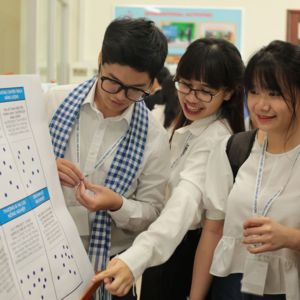
- Uganda is implementing a Greening Schools initiative and held a Youth and Innovations Expo 2023 to engage on climate action with 120 youth.
- Uruguay prepared a youth kit covering environmental and climate change issues.
- Panama produced a guide for incorporating a gender approach to promote women's effective participation in watershed committees, while Lao PDR analysed NDC-responsive social and environmental safeguards, focusing on community engagement and gender inclusion, to inform NDC-related projects.
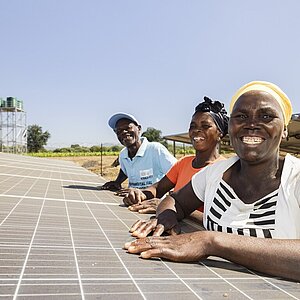
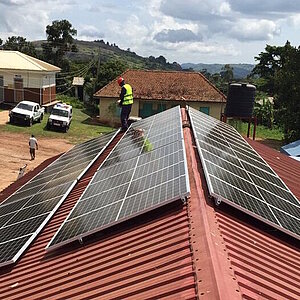
- 15 women were trained in The Gambia on solar PV installations, followed by a “training of trainers” coaching program, and five women- and youth-led renewable energy businesses received grants and business planning support, while in Ghana, an NGO (Artisanal Palm Oil Millers and Outgrowers Association) has installed and tested energy-efficient equipment at a palm oil mill for the benefit of women producers. A Green Career Launchpad was inaugurated in Pakistan, while Zambia awarded small grants on productive uses of energy to two organizations.
- Nigeria trained over 160 participants (women, youth, private sector and state commissioners) on Article 6.
Pillar 4: International awareness, advocacy, and partnerships: - Global and regional events:
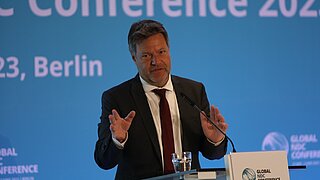
- Co-led Global NDC Conferences in Berlin in 2023 and 2025 (globalndcconference.org)
- Co-organized the NDC Partnership’s 2023/24 Raising Ambition Through Partnership webinar series (16 webinars to date attracting 1100+ attendees).
- Communications:
- 48 newsletters, 71 blogs, 57 photo stories, and 17 explainers featured on the Climate Promise website: English (www.climatepromise.undp.org), French (www.climatepromise.undp.org/fr), and Spanish (www.climatepromise.undp.org/es). In 2024, the website attracted 631,045 unique users (45% increase from 2023), with 978,754 total visits and 1,161,265 page views.
- The Monthly Promise newsletter has over 8875 subscribers.
- Award-winning Dear World Leaders campaign (www.dearworldleaders.org) exhibited at COP27 and at the UN General Assembly (twitter.com/…).
Latest Update:
12/2025
Further links
- Climate action from the ground up: Supporting local and regional governments and cities
- The State of Climate Ambition: Least Developed Countries Snapshot
- The State of Climate Ambition: Small Island Developing States Snapshot
- The Climate Dictionary (Available in English, French, Spanish, Arabic, Russian, Turkish, Kazakh, Kyrgyz, Thai, Mongolian, Serbian, Farsi, and Hindi)
- Technical Paper: Gender-responsive Climate Change Actions in Africa
- Climate Finance in Africa- An Overview of Climate Finance Flows, Challenges, and Opportunities
- Peoples’ Climate Vote
- Urban Content of NDCs: Local climate action explored through in-depth country analyses: 2024 Report
Project relations
Legend:
The link has been copied to the clipboard
Related Videos