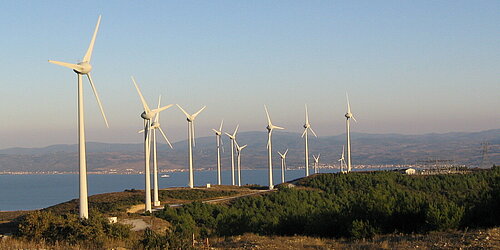
With its 85 million inhabitants, Türkiye has a high potential for economic development and is an important player in the region. The country has many opportunities for generating electricity from renewable energy sources, yet Türkiye is still dependent on fossil fuels.
In addition, the country is particularly vulnerable to the consequences of climate change, which can hamper the country's social and economic development.
Türkiye’s climate and biodiversity policy is gaining importance. International pressure to intensify global climate action, predictable changes in the economic framework conditions as well as the economic and social impacts of forest fires, floods and marine pollution are the reasons for the increased commitment of the Turkish government to climate change mitigation and biodiversity conservation. Türkiye is currently the 14th largest emitter of greenhouse gases in the world.
The war in Ukraine and the associated vulnerability of the (fossil) energy supply also emphasise the urgency of climate change mitigation measures that ensure energy security at stable and affordable prices.
The issue of biodiversity conservation is also gaining political importance in Türkiye.
As a country suffering severely from the impacts of climate change when compared to other OECD countries, Türkiye has entered into ambitious climate action obligations: In October 2021, the country ratified the 2021 Paris Agreement and committed to climate neutrality by 2053. However, if this goal is to be achieved, the Nationally Determined Contribution (NDC) presented by Türkiye in 2023 must step-up its already ambitious efforts.
In July 2025, Turkey adopted the first comprehensive national climate protection law. A central component is the introduction of a national emissions trading system (ETS). The National Energy Plan 2035 envisages a significant expansion of renewable energies; at the same time, Türkiye is increasing investments in domestic lignite and gas production.
The thematic priority in the cooperation with Türkiye is the IKI funding area for the mitigation of greenhouse gas emissions, especially with regard to monitoring, reporting and verification (MRV) systems, in the field of climate finance, industrial decarbonisation and in supporting the development of an ETS.
A bilateral project is supporting the Turkish Ministry of Industry in decarbonising the Turkish cement industry by implementing innovative pilot projects, improving the political framework and initiating investments in low-emission technologies. In this way, it is making an important contribution to Turkey's climate targets, strengthening the industry's competitiveness and creating new green jobs.
The IKI additionally flanks an untied financial credit provided by the German government with investment cost subsidies within the framework of a climate financing project, thus ensuring particularly ambitious and innovative climate action measures in Türkiye. This applies in particular to the areas of energy efficiency and renewable energies.
Furthermore, Türkiye is involved in regional and global projects, especially in the energy sector and in the mobilisation of climate financing.
Interface project
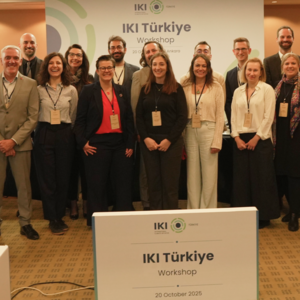
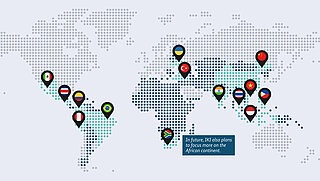
All priority countries of the IKI also engage in so-called IKI interface projects, which have permanent project offices in the capital city of the respective country. Alongside their own, country-specific project commission, these interface projects are also tasked with maintaining close contact to environment and climate ministries as well as networking with other relevant ministries in the field of climate and biodiversity policy. Beyond this, the interface projects also work to network all of the IKI projects in the country and region together so as to promote synergies.
Support in the areas of climate protection and biodiversity policy and climate financing
Consultation on NDC monitoring and reporting at national and sectoral level
Promotion of biodiversity conservation and ecosystem restoration initiatives
Function as an IKI interface: Promotion of dialogue on climate and biodiversity between the IKI projects in the country and between other stakeholders (networking opportunities and knowledge management).
Ministry of Environment, Urbanisation and Climate Change (MoEUCC)
Ministry of Agriculture and Forestry (MoFA)
Ministry of Industry and Technology (MoIT)
Ministry of Energy and Natural Resources (MoENR)
The IKI Strategy
The IKI wants to maximise its impact on climate action and biodiversity conservation. To this end, it concentrates its funding activities on prioritised fields of action within the four funding areas. Another key element is the close cooperation with selected partner countries, especially with the IKI’s priority countries.